
The short version: Sóller is a real town in a valley of orange and olive groves on the north-west coast of Mallorca, with its own market, secondary school, health center and shops that stay open in every month of the year. A wooden train has linked it with Palma since 1912, and a tram runs down to Port de Sóller, the round bay with two beaches and a promenade that fills with visitors in summer. The road tunnel that brought the valley closer to Palma no longer charges a toll. This guide explains how the town and the port live, the distances, and the homes, from modernist town houses to country houses in Fornalutx and Biniaraix.
A valley town that works all year
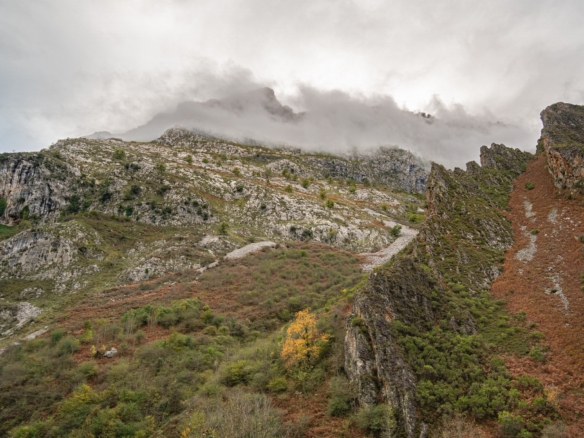
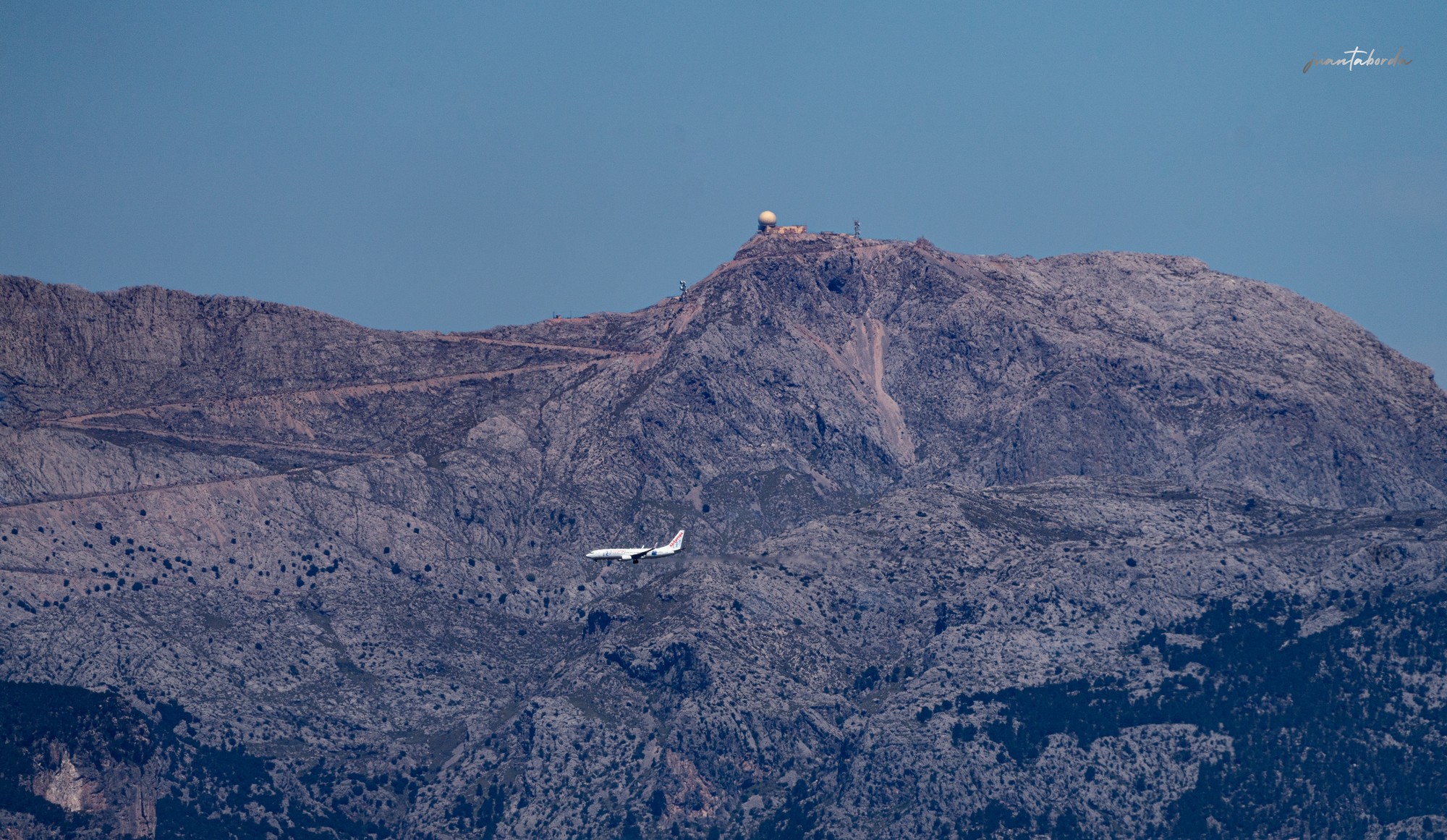
Sóller sits in a bowl of mountains open to the sea, at the foot of the Puig Major, which at 1,445 meters is the highest peak in the Balearic Islands, according to the town hall. The municipality takes in three places: the town itself, Port de Sóller on the bay, and the hamlet of Biniaraix on the slopes above. Fornalutx, further up the valley, is a separate municipality.
The valley grew rich on oranges and its port. The town hall’s history explains that from 1835 many families emigrated to the south of France and the Americas to open markets for citrus fruit, and the money that came back shaped the town.
In what we see, Sóller is not a resort that empties in November: it is a working town, with shops and cafés that keep their rhythm in January. That is the main difference between Sóller and the smaller villages of the Serra de Tramuntana, the mountain range along this coast.
The tunnel, the train and the tram
For centuries, mountains cut the valley off from Palma. The town hall dates the end of that isolation by road to 1997, when the Sóller tunnel opened under the Coll de Sóller. For years it was a toll road. That is no longer the case: the Consell de Mallorca, the island’s government, announced on 18 December 2017 that the tunnel would be free of charge from 29 December 2017, and it has had no toll since. The old road over the pass, with its many bends, remains open for those who prefer the view.
The train is part of the town’s identity. According to the Ferrocarril de Sóller, the company that runs it, the line to Palma was officially inaugurated on 16 April 1912 and electrified in 1929, and its wooden carriages are still in service. On 4 October 1913, the same company opened the first electric tram line in Mallorca, between Sóller and the port: 4,868 meters of track, and the three original 1913 tramcars are still part of the fleet (Tren de Sóller).
In daily practice, the residents we work with use the car every day and the tram and train as part of local life. From the port, boats run along the coast to coves such as Sa Calobra, according to the town hall.
Distances from Sóller and Port de Sóller
Driving times by OpenStreetMap routing, in free-flowing traffic, through the tunnel:
- Sóller to central Palma (the cathedral): about 26 km (16 miles), around 33 minutes.
- Sóller to Palma airport: about 31 km (19 miles), around 34 minutes.
- Port de Sóller to central Palma: about 30 km (19 miles), around 39 minutes; to the airport, around 37 minutes.
- Sóller to Port de Sóller: about 5 km (3 miles), around 9 minutes by car.
- Fornalutx to Sóller: around 7 minutes; Biniaraix to Sóller: around 5 minutes.
In summer and at rush hour, everything takes longer. Our guide to where to live in Mallorca puts these times next to every other area of the island.
Daily life: market, school and services
Saturday is market day. According to the town hall, the street market fills the center of Sóller on Saturday mornings from 8 am to 2 pm, Port de Sóller has its own on Thursday mornings, and the municipal market hall is open Monday to Saturday from 9 am to 1 pm; in the busiest months a Sunday market is added in the main square, Plaça de la Constitució.
For families, the town has its own public secondary school, the IES Guillem Colom Casasnoves; the Balearic government is expanding it for vocational cooking courses, due to finish in the third quarter of 2027 (Govern de les Illes Balears). International schools are in Palma and Calvià; our guide to international schools in Mallorca lists them with official details. Primary care is at the public Centre de Salut Serra Nord, in the town itself.
On the second weekend of May, the town hall’s calendar marks the Fira i Firó, when Sóller and the port re-enact the corsair raid of 11 May 1561 with mock battles between Moors and Christians.
Port de Sóller: the round bay
Port de Sóller lies at the end of a short road from town, around an almost circular bay. The town hall describes two beaches: Es Través, about 800 meters long, of sand and gravel, at the end of the road from Sóller; and Can Repic, about 250 meters, in front of a pedestrian promenade. Both have calm water, lifeguard towers and boat hire.
The port is still a fishing harbor: on the quays, the town hall notes, boat builders repair the llaüts, the island’s traditional wooden fishing boats. Above the water, the old quarter of Santa Catalina, the Cap Gros lighthouse and the Torre Picada, a 17th-century watchtower, look over the bay.
The port also has its place in film. Cloud Atlas was shot in Mallorca in 2011 with Tom Hanks and Halle Berry, with Port de Sóller as the main location (Mallorca Magazin, 2011; Majorca Daily Bulletin, 2013). Our guide to celebrities in Mallorca covers other productions too.
The homes: modernist town houses and country houses up the valley
In town, the most distinctive houses are the modernist ones. The town hall’s modernist route starts at the church of Sant Bartomeu and the Banc de Sóller on Plaça de la Constitució and continues along the Gran Via, lined with houses and small mansions of modernist inspiration built, in its words, with money that came from France and America. Can Prunera, on the main shopping street, is now a museum of the period. Around them are stone town houses of every size.
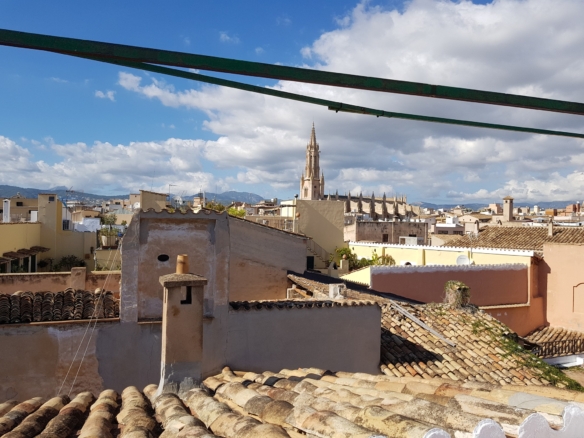
Up the valley, the picture changes. Biniaraix and Fornalutx are stone villages surrounded by country houses on terraced land, olive and orange groves and views down to the sea. Fornalutx is known for its painted roof tiles: according to its town hall, the Sóller valley has more of them than anywhere else on the island, with 28 inventoried buildings in Fornalutx and 56 in Sóller.
Few homes come up for sale across the Serra, and buyers who know what they want decide when one appears. Many houses are old, on slopes or narrow streets, so parking and access for a moving truck are among the first things to check.
Summer and winter in the valley
The town hall describes a valley with its own microclimate: mild winters and summers, rain in spring and autumn, and occasional snow on the peaks. The town keeps the same rhythm in every month, while the port changes with the season: more visitors, terraces and boats in summer, and in winter a harbor for the people who live there. Those who want a town to live in every day usually look in Sóller itself; those who want the water in front of them look at the port, knowing that July and August will be busy.
Who buys in Sóller
In what we see with our clients, Sóller and its port are much in demand among the Americans and Germans we work with. What they share is the wish to live in a real town with a life of its own all year, between the mountains and the sea. The trade-off they accept is the drive: every trip to Palma goes through the tunnel or over the pass.
What nobody tells you
The town was built for people on foot. Streets in the center are narrow, there are regulated parking zones in Sóller and the port, and the town has a low emission zone with its own access rules, all published by the town hall. And many older guides still mention the tunnel toll: it has been gone since 2017, which makes the valley feel much closer to Palma than the map suggests.
What you need to know
How far is Sóller from Palma?
About 26 km, around 33 minutes through the tunnel in free-flowing traffic, by OpenStreetMap routing; Port de Sóller is around 39 minutes away.
Is the Sóller tunnel still a toll road?
No. The Consell de Mallorca made the tunnel free of charge from 29 December 2017, and there has been no toll since.
Is there a secondary school in Sóller?
Yes. The public IES Guillem Colom Casasnoves is in Sóller. International schools are in Palma and Calvià.
When is the market in Sóller?
On Saturday mornings in Sóller and Thursday mornings in Port de Sóller; the municipal market hall opens Monday to Saturday, 9 am to 1 pm.
What is the difference between Sóller and Port de Sóller?
Sóller is the town in the valley, with services all year. Port de Sóller is the bay 9 minutes away, with two beaches, a promenade and more visitors in summer.
Where we work
We work across Mallorca from our base in the south-east, where you can browse homes in Santanyí, homes in Ses Salines and homes in Campos. Whatever area you are considering, the Sóller valley included, contact Villas y Fincas Mallorca and we will answer in English.
Updated October 2026. Driving times come from OpenStreetMap routing and vary with traffic; other facts come from the Consell de Mallorca, Ferrocarril de Sóller, the Govern de les Illes Balears and the town halls of Sóller and Fornalutx, consulted in October 2026, and the film reference from two news outlets. The descriptions reflect what we see with our clients and are for general information only.