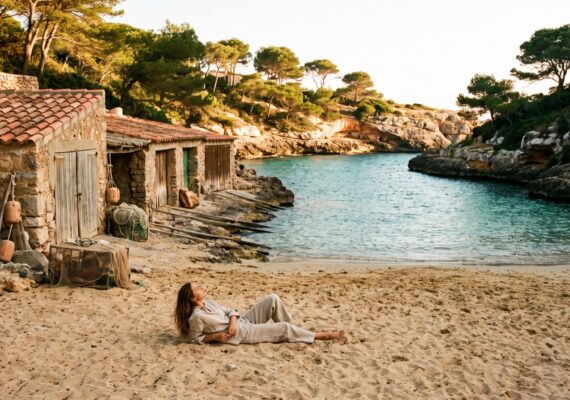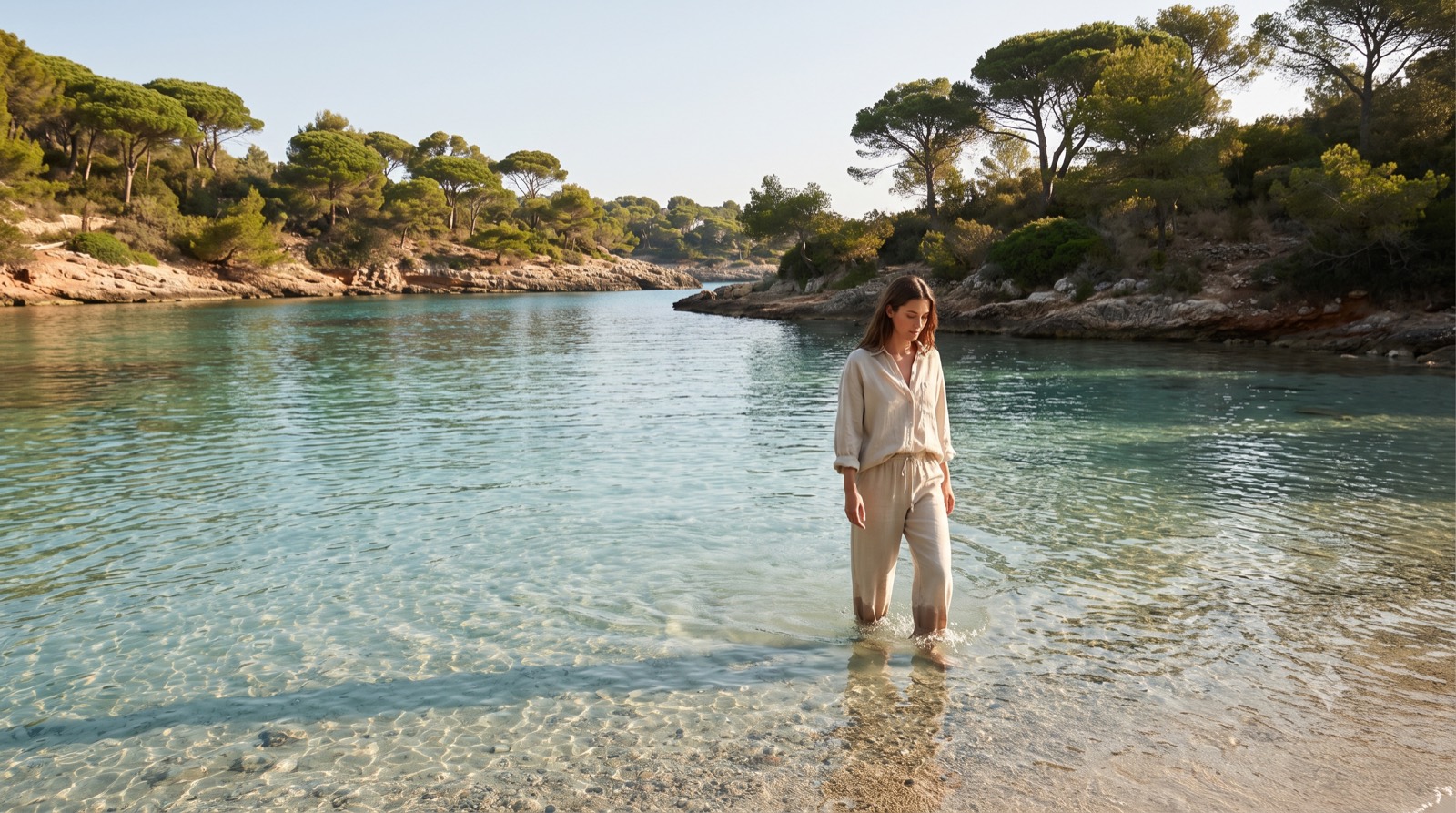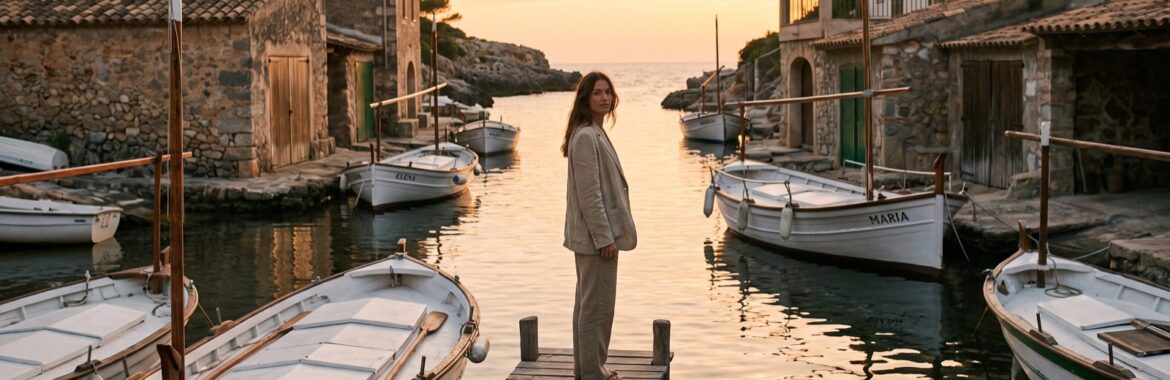
Cala Figuera is one of the most beautiful fishing harbours in the Mediterranean, and it sits right in our patch, the southeast of Mallorca. A pocket of whitewashed houses, fishing boats and boathouses leaning out over the water, within the municipality of Santanyí. Let’s be clear from the start so there are no surprises: Cala Figuera is, above all, a working fishing village with real charm, rather than a sandy beach. And that is precisely what makes it so special and so unlike everywhere else. We’ll tell you what it’s genuinely like.
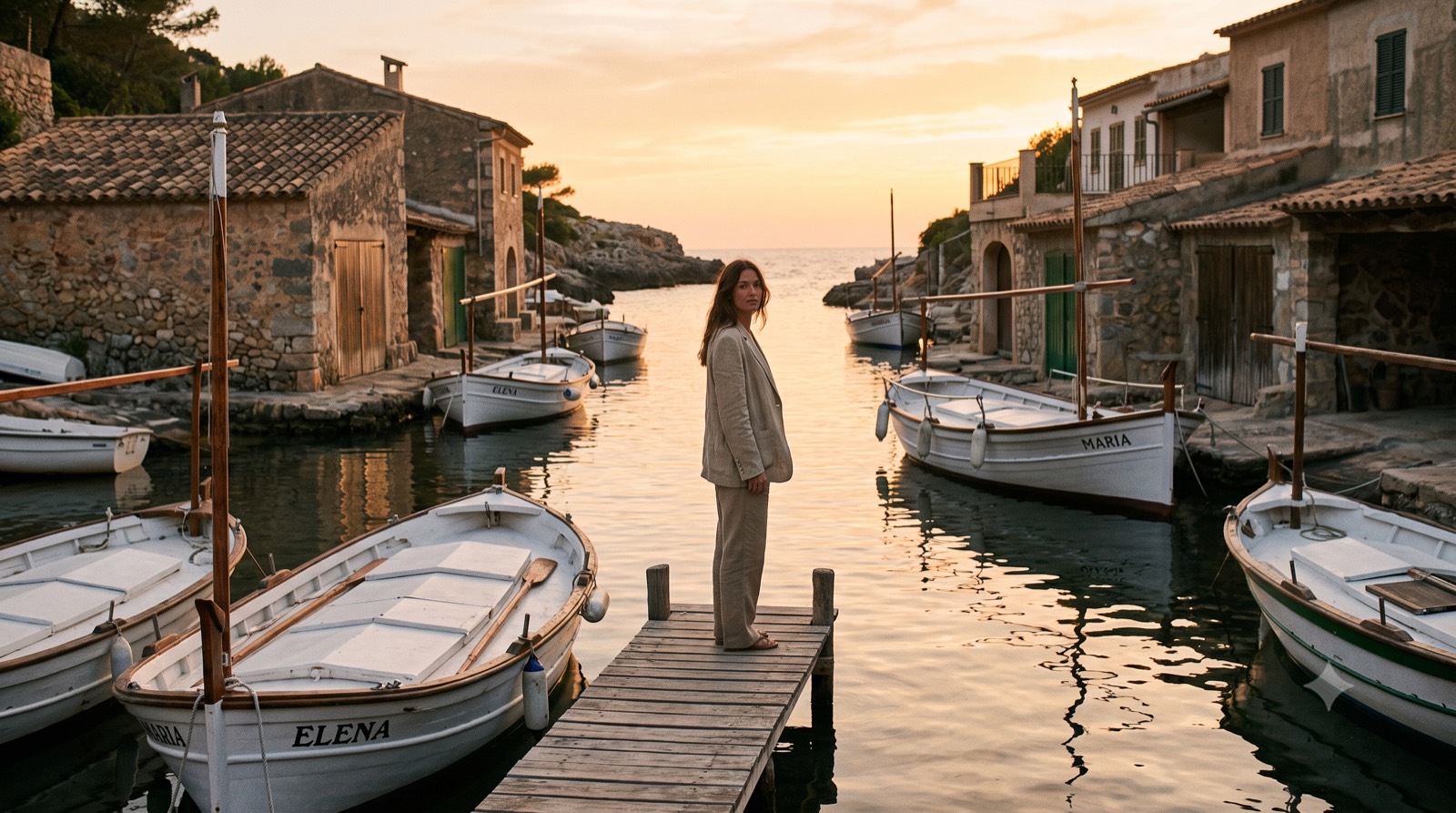
While much of Mallorca’s coast was reshaped by tourism, Cala Figuera held on to its character as a living fishing port. Its calm waters, brightly painted boats and timber slipways make up one of the most photographed and authentic scenes on the island. A place that never needed to reinvent itself, because it never stopped being what it always was.
The harbour
What Cala Figuera is like
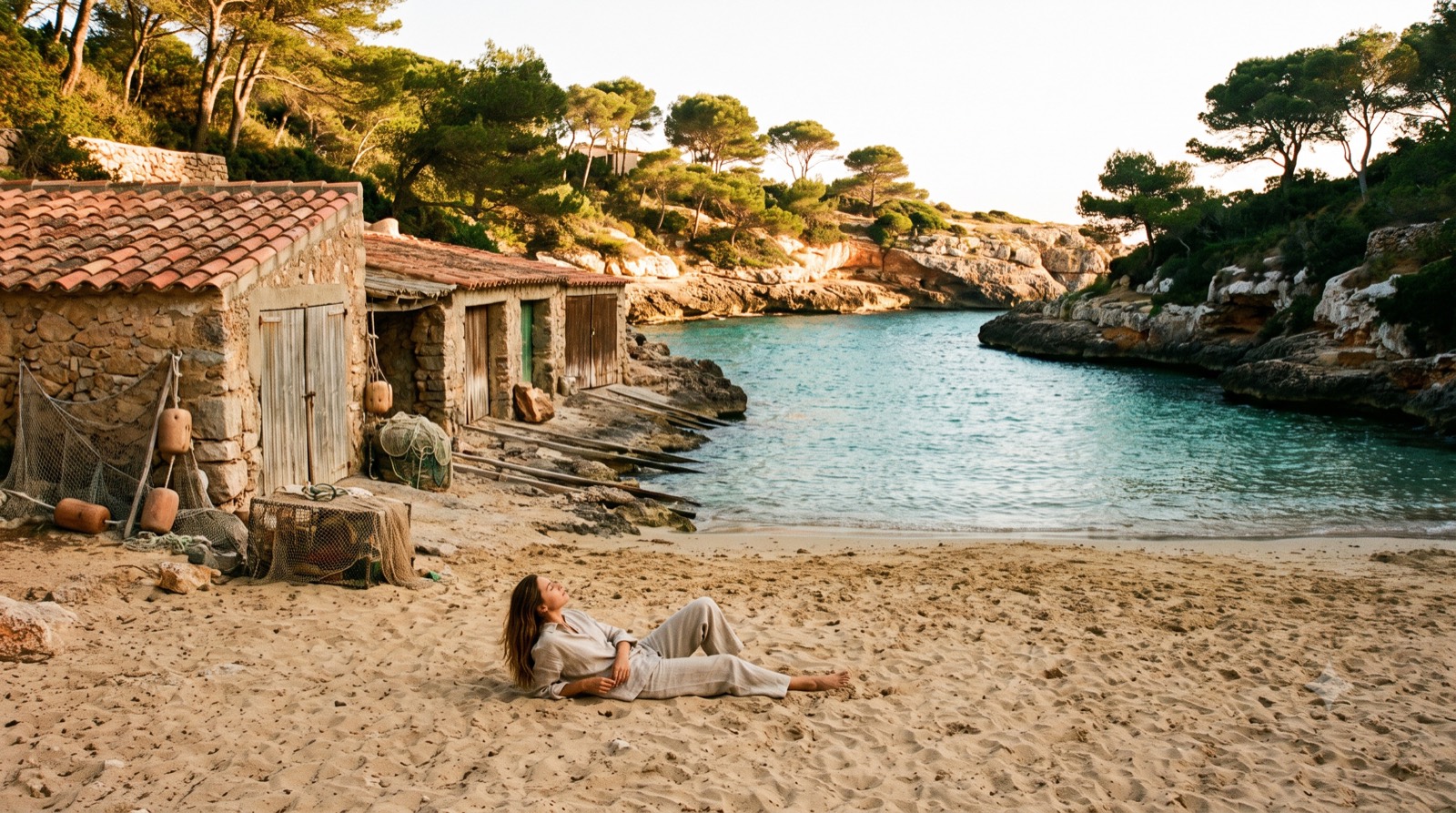
Cala Figuera is arranged around two small arms of sea wedged between low, pine-covered cliffs. On one side lies the main harbour, with its boathouses and its escars — the traditional slipways, cut into the rock or built of timber, where fishermen keep and repair their boats; on the other, a more sheltered inlet of still water. The white houses and old summer cottages lean straight out over the water, stepped up the rock face, in an ensemble of a harmony and a scale that’s hard to find anywhere today.
It’s a place to wander slowly, to lean over the quays, watch the fishermen at work and let yourself fall into its unhurried rhythm. A walk along both quays, pausing at every nook, takes no more than half an hour, yet many people repeat the loop again and again because there’s always something new to see: a boat coming in, nets hung out to dry, the light shifting on the water as the hours pass.
The fishing tradition of Cala Figuera goes back centuries and, unlike so many other harbours on the island, here it has stayed alive. It remains a working fishing port, not a stage set: that’s exactly the detail that sets it apart and gives it the authenticity that wins over anyone who visits and, above all, anyone lucky enough to live nearby. Even today you’ll see nets laid out, boats coming and going, and locals who have known the sea all their lives. That continuity is what has let the village keep its scale and its character, without the large blocks that have disfigured other areas.
No sand, but plenty of charm
Can you swim at Cala Figuera?
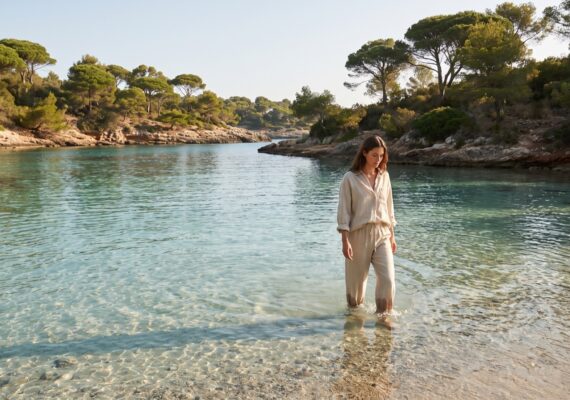
Let’s be honest, because it’s the question we hear most: Cala Figuera has no sandy beach. Swimming is done from the rocks, steps and platforms that line the harbour, in clean, deep water — something some people love and others simply don’t take to. The more sheltered inner inlet has a few spots where you can get into the water more comfortably, with iron ladders fixed into the rock, but there’s no sand.
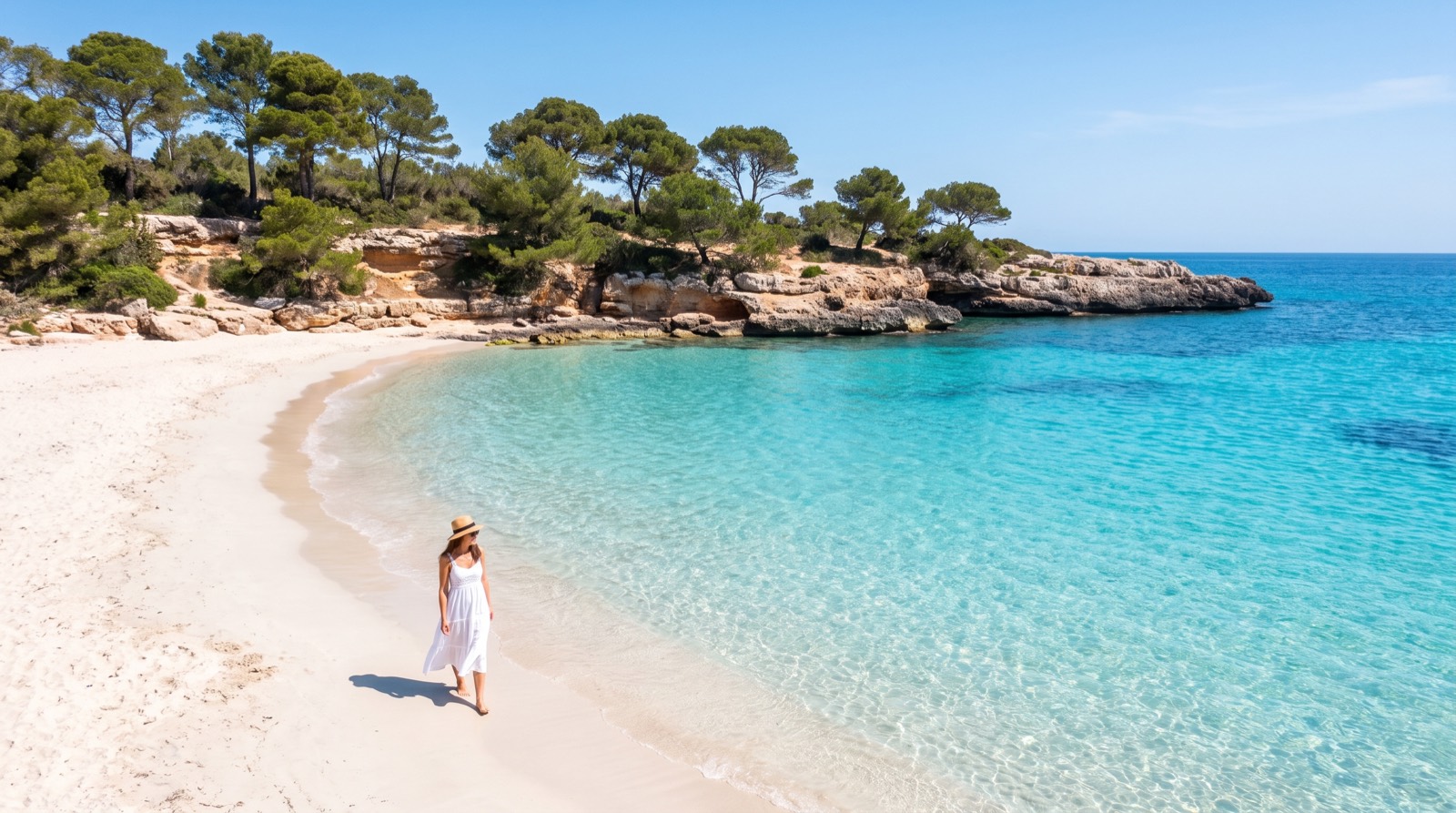
For a classic beach day on the sand, the best bet is to head to the neighbouring coves: Cala Llombards and Cala Santanyí are a few minutes away, Caló des Moro about ten, and the Mondragó nature park a little beyond. The ideal plan: morning on the coves, late afternoon or evening at Cala Figuera, for the food and the sunset atmosphere. Cala Figuera is enjoyed more for its beauty, its mood and its cooking than for lying on the sand.
What to see and do
The quays, the food and the viewpoints
The big thing to do at Cala Figuera is to stroll along its two quays, look out from the viewpoints over the harbour, and enjoy its restaurants and terraces with views straight over the water, many of them specialising in fresh fish and seafood. The food is one of the great draws of the place: dining at the harbour’s edge, with the boats at your feet and the light falling on the white houses, is one of those plans that justifies a visit all on its own. It’s also one of those spots where the catch reaches the plate in a condition that’s hard to match in more touristy areas.
Cala Figuera has been inspiring painters and photographers for decades, and once you see it you understand why. The human scale of the harbour, the cottages stepped up the rock, the colours of the boats, the southern light: it’s an endless visual subject. The golden hour at dusk, with the boats heading back to port and the sky catching fire over the sea, is one of the loveliest moments on the whole southeastern coast.
For anyone wanting to stretch their legs, the paths and viewpoints around the village offer spectacular views of the cliffs and the open sea, especially beautiful at the start and end of the day. From Cala Figuera, coastal footpaths lead as far as the edges of Mondragó and Cala d’Or in lovely walks with the Mediterranean always in view.
Getting there
Access and parking
Cala Figuera is very easy to visit. It’s barely 5 minutes by car from Santanyí, well signposted from the main road, with parking in the village itself — though at the height of summer you’ll need to arrive early or get creative. As it’s a village rather than a hard-to-reach cove, you can get there comfortably in any vehicle. The walk from the car park down to the quays is short and relatively level, far easier than reaching the wild coves nearby.
It combines perfectly with a visit to the village of Santanyí or with a beach day at the neighbouring coves, with Cala Figuera as the late-afternoon-into-evening finale. The classic local strategy: morning at Caló des Moro or Cala Llombards, afternoon at Cala Figuera for the stroll and dinner. As always in the southeast, outside the busiest months it’s enjoyed far more calmly and the atmosphere is completely different.
The surroundings
What's near Cala Figuera
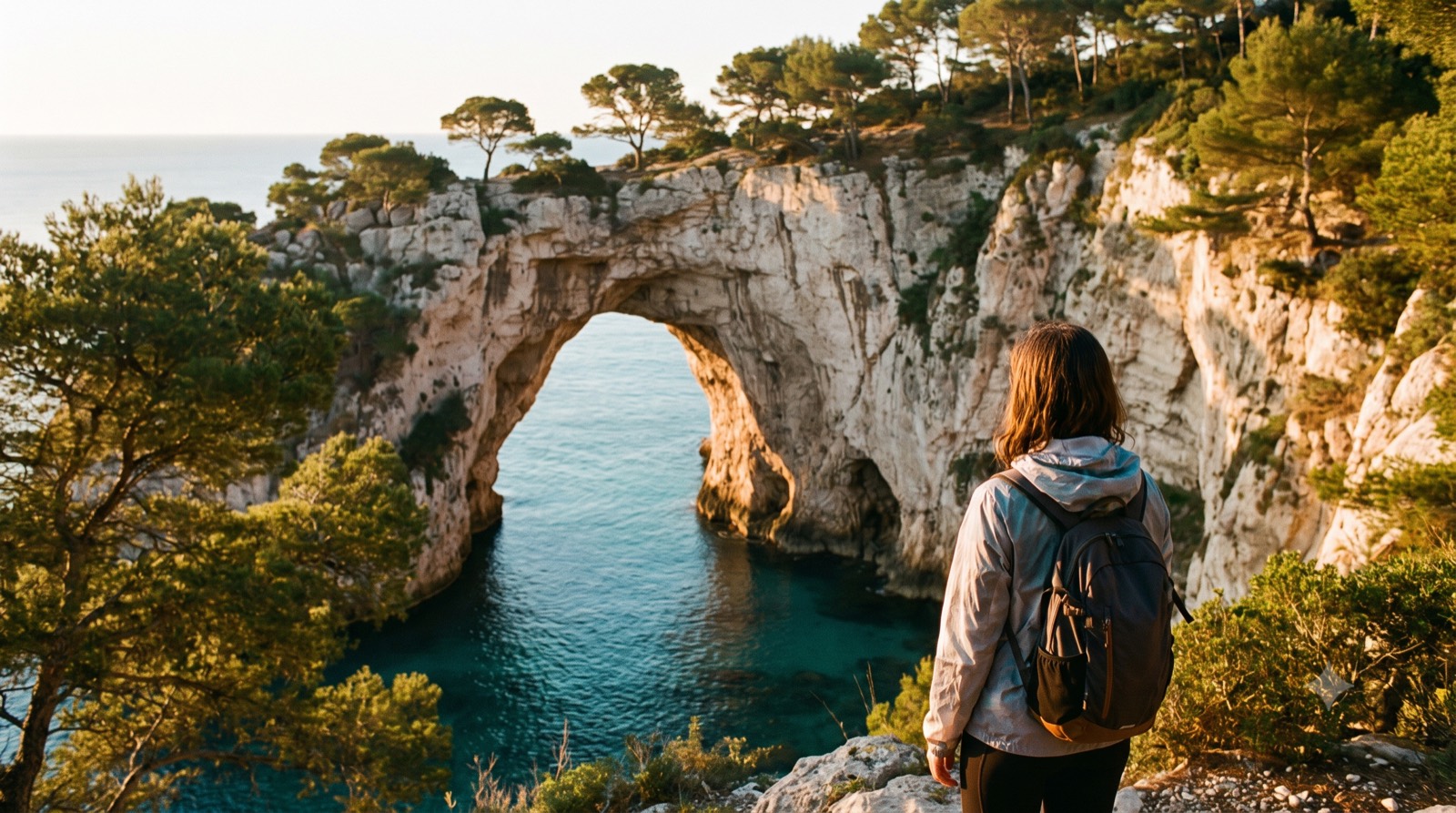
Cala Figuera is a perfect starting point for discovering the best of the southeast. A few minutes away are the wild coves of Santanyí — Cala Llombards, Cala Santanyí with the natural arch of Es Pontàs, the famous Caló des Moro — and the Mondragó nature park. The village of Santanyí, with its Wednesday and Saturday market, its art galleries and all the everyday services, is right next door. Further north lie Portopetro with its quiet harbour and the lively Cala d’Or. It’s one of the areas with the greatest concentration of beautiful spots in all of Mallorca, ideal for having a different cove or harbour on your doorstep every day of the year.
Common questions
Frequently asked questions about Cala Figuera
Does Cala Figuera have a sandy beach?
No, Cala Figuera has no sandy beach. It’s a fishing harbour where swimming is done from the rocks, steps and platforms that line the quays. For a day on the sand, the neighbouring coves (Cala Llombards, Cala Santanyí, Mondragó) are a few minutes away. You visit Cala Figuera for its atmosphere, its food and its maritime beauty, not for the beach.
Can you swim at Cala Figuera?
Yes, but from the rocks and steps of the harbour, in deep, clean water. There’s no sand. The innermost inlet has a few more accessible spots with iron ladders set into the rock. The water is very clean and the setting lovely, but anyone after fine sand should head to the neighbouring coves.
Are there restaurants with harbour views at Cala Figuera?
Yes, Cala Figuera has several terraces and restaurants with views straight over the water, specialising in fresh fish and seafood. It’s one of the best spots in the southeast for a summer dinner with the harbour calm and the boats at your feet. In season it’s worth booking, especially in August.
Is there parking at Cala Figuera?
There’s parking in the village itself, though it’s limited. In July and August it’s best to arrive early or come in the late afternoon and evening, once many day visitors have left. The distance from the car parks to the quays is very short and completely level. Out of season, parking is easy.
What’s the best time to visit Cala Figuera?
At sunset and first thing in the morning, when the light is best and there are fewer people. The golden hour of the late afternoon (from around two hours before sunset) is the most photogenic. Early in the morning you can watch the boats working in the harbour. Midday in summer, with direct sun and bigger crowds, is the least interesting moment.
How long does it take from Santanyí or from Ses Salines?
From the village of Santanyí it’s about 5 minutes by car (around 4 km). From Ses Salines it’s roughly 15-20 minutes. It’s easy to reach and combines perfectly with a visit to the Santanyí market or with a day exploring the coves nearby.
Living nearby
Can you picture living a step from the harbour?
Having a fishing harbour like Cala Figuera a step from your door is one of the great charms of living in the southeast of Mallorca. The Santanyí area and its coastal villages let you live year-round just minutes from this maritime corner and from all the unspoilt coastline around it, with the comfort of a village that’s properly alive and well served. For anyone dreaming of a quiet lifestyle, beside the sea and surrounded by authenticity, it’s one of the best areas on the island. We live and work here, so we know every cove, every corner and every house, and what life is really like in each season of the year.
If you can picture yourself living near Cala Figuera, get in touch: we’d be delighted to help you find your place. We live in the area all twelve months of the year and know it in February as well as in August.