Cala Santanyí brings together the best of two worlds: a beautiful golden-sand beach and, just a step away, one of Mallorca’s natural icons, the Es Pontàs arch. It sits within the municipality of Santanyí, deep in the southeast, and is one of the easiest coves in the area to enjoy — well served and accessible, yet without losing any of its beauty. We’ll tell you what it’s like, how to get there and what not to miss nearby.
Unlike the wilder, more hidden coves around it, Cala Santanyí is comfortable and accessible, which makes it an ideal choice for families and for anyone who wants beautiful water without long walks or tricky descents. And, as a bonus, it hands you one of the most spectacular sights on the whole island.
The beach
What Cala Santanyí is like
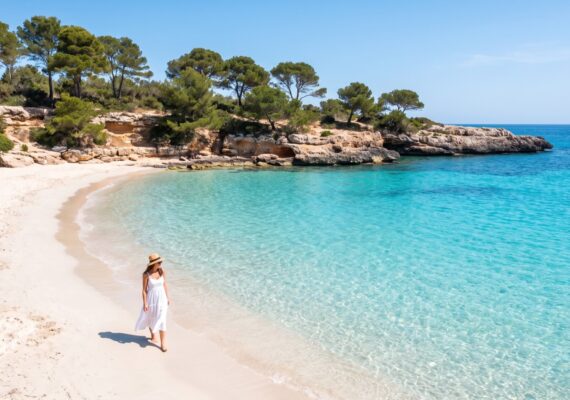
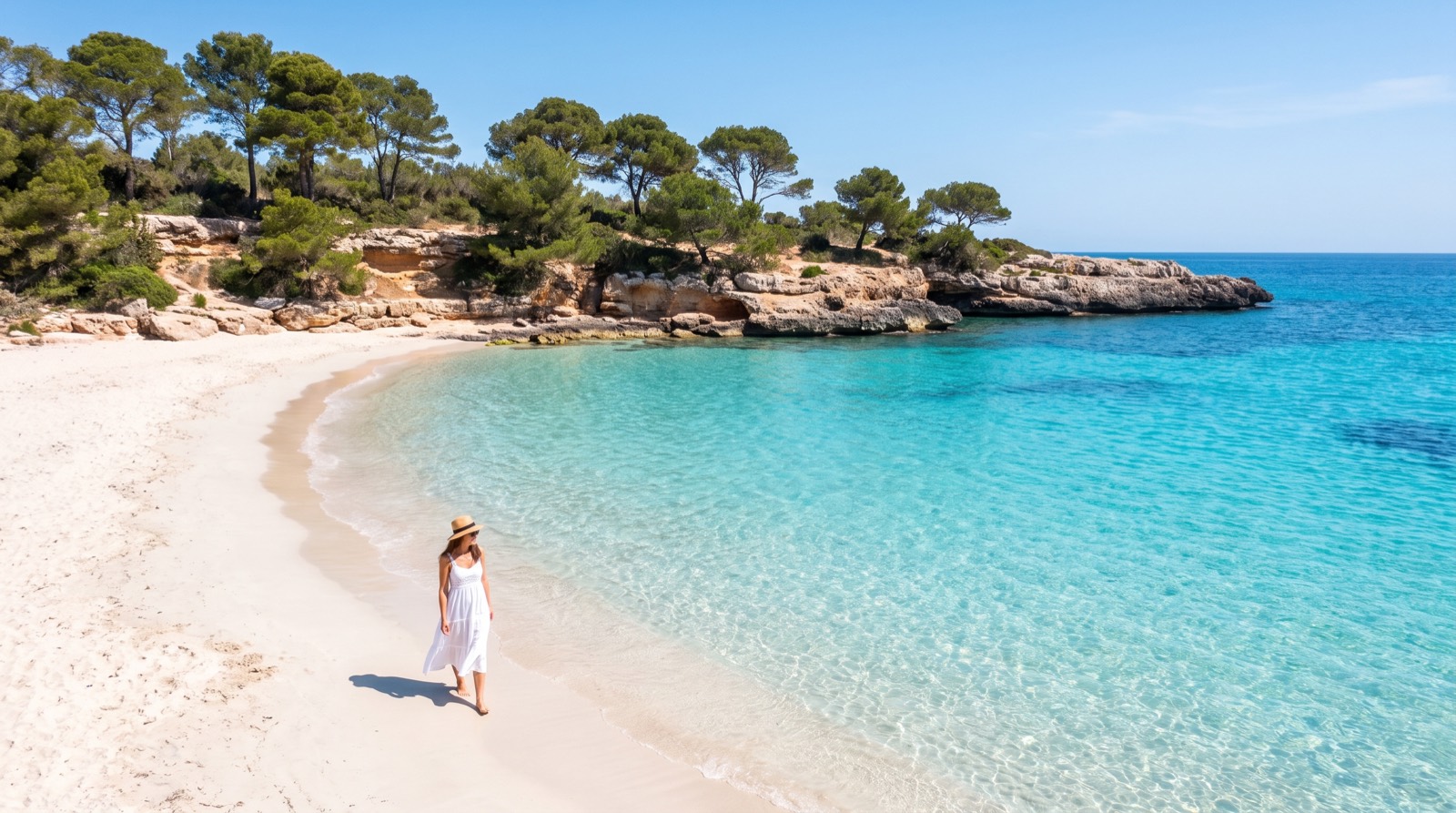
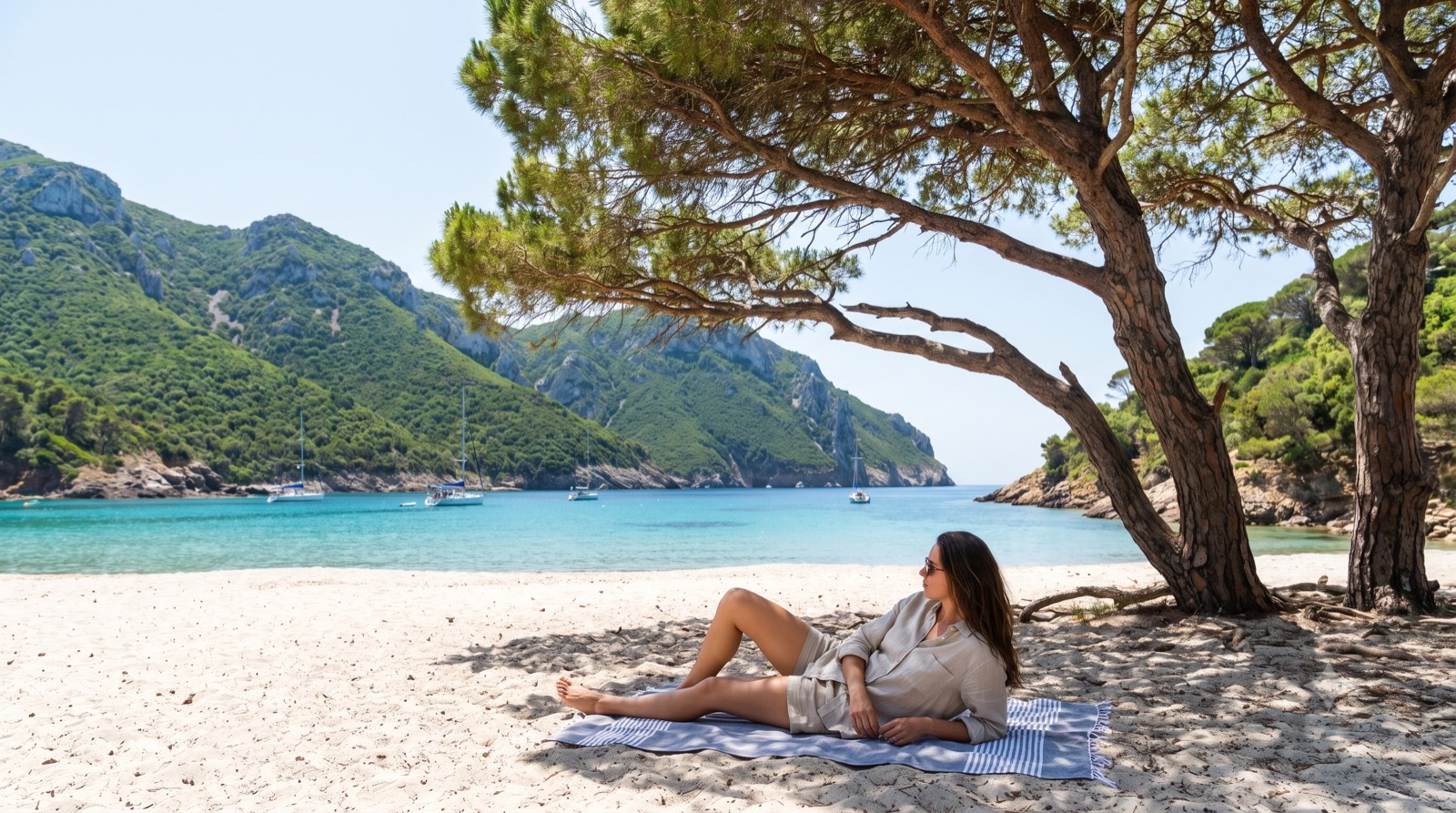
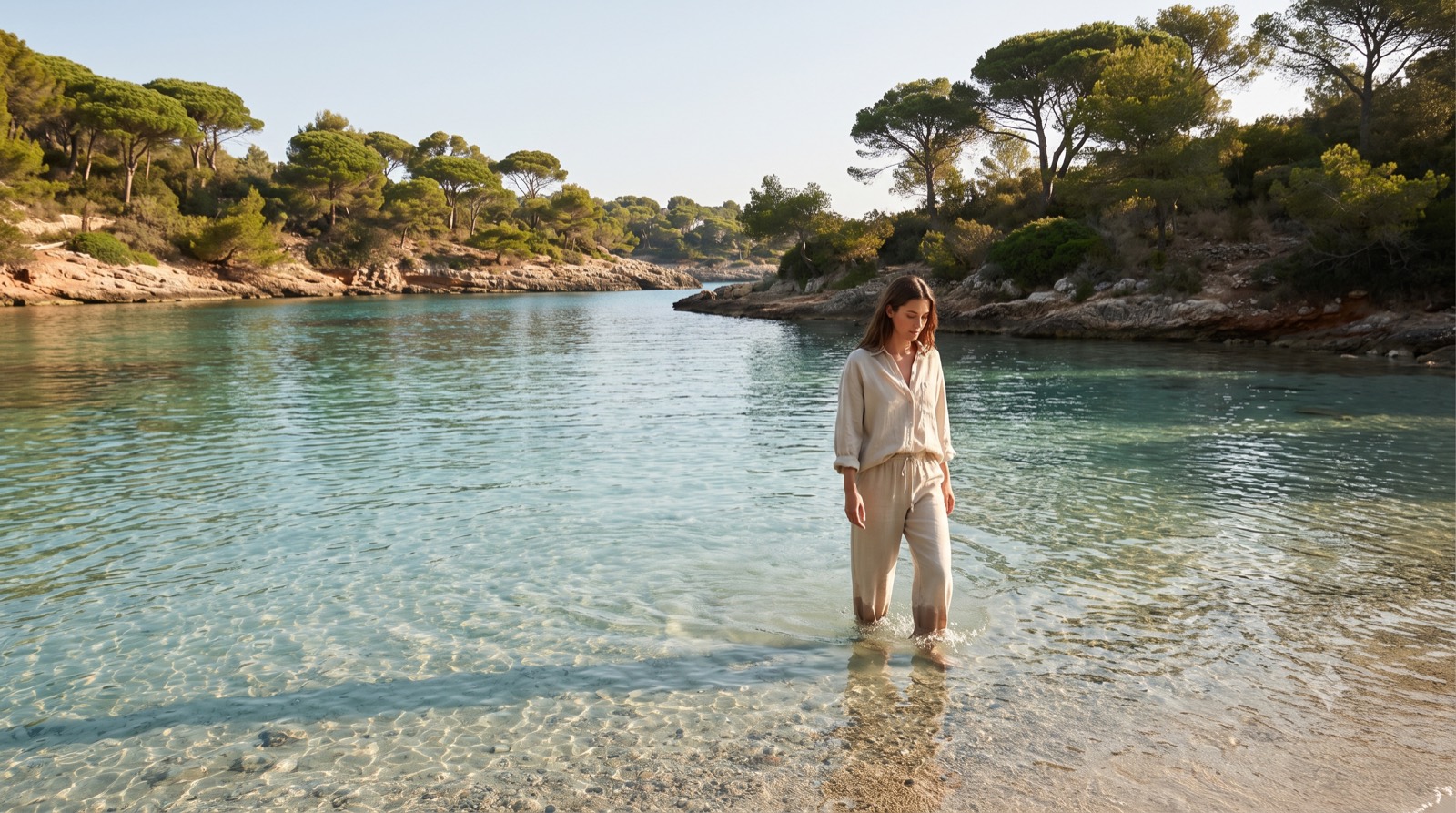
Cala Santanyí is a cove of fine golden sand, medium in size, tucked between pine-clad cliffs with crystal-clear water that shifts from turquoise to deep blue. It’s well sheltered, so the water is usually calm — ideal for swimming and for little ones — though a strong southerly wind can bring in some swell. Its surroundings have a few places to stay and some services close by, a touch more developed than the untouched coves nearby, yet it keeps its charm and its natural frame of rock and pine.
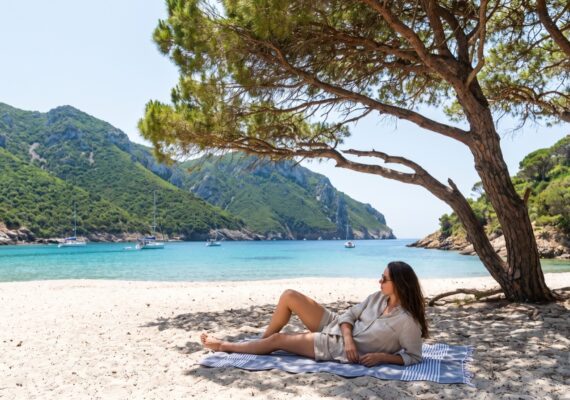
The water, clear and protected, is lovely for swimming and for snorkelling along the rocky sides, where you’ll spot rocky-bottom species, Posidonia meadows and varied marine life. And the pines that cover the cliffs offer a little natural shade, very welcome in the hottest months. It’s one of those coves where you can spend the whole day without missing a thing, mixing a swim, a rest and a stroll.
In short, it’s a beach made for an easy day out: there’s space, good swimming, services in season and everything you need within reach — uncommon among the wilder coves of the area. That blend of natural beauty and accessibility is exactly what sets it apart from its neighbours.
The great symbol
Es Pontàs: the stone arch of Santanyí
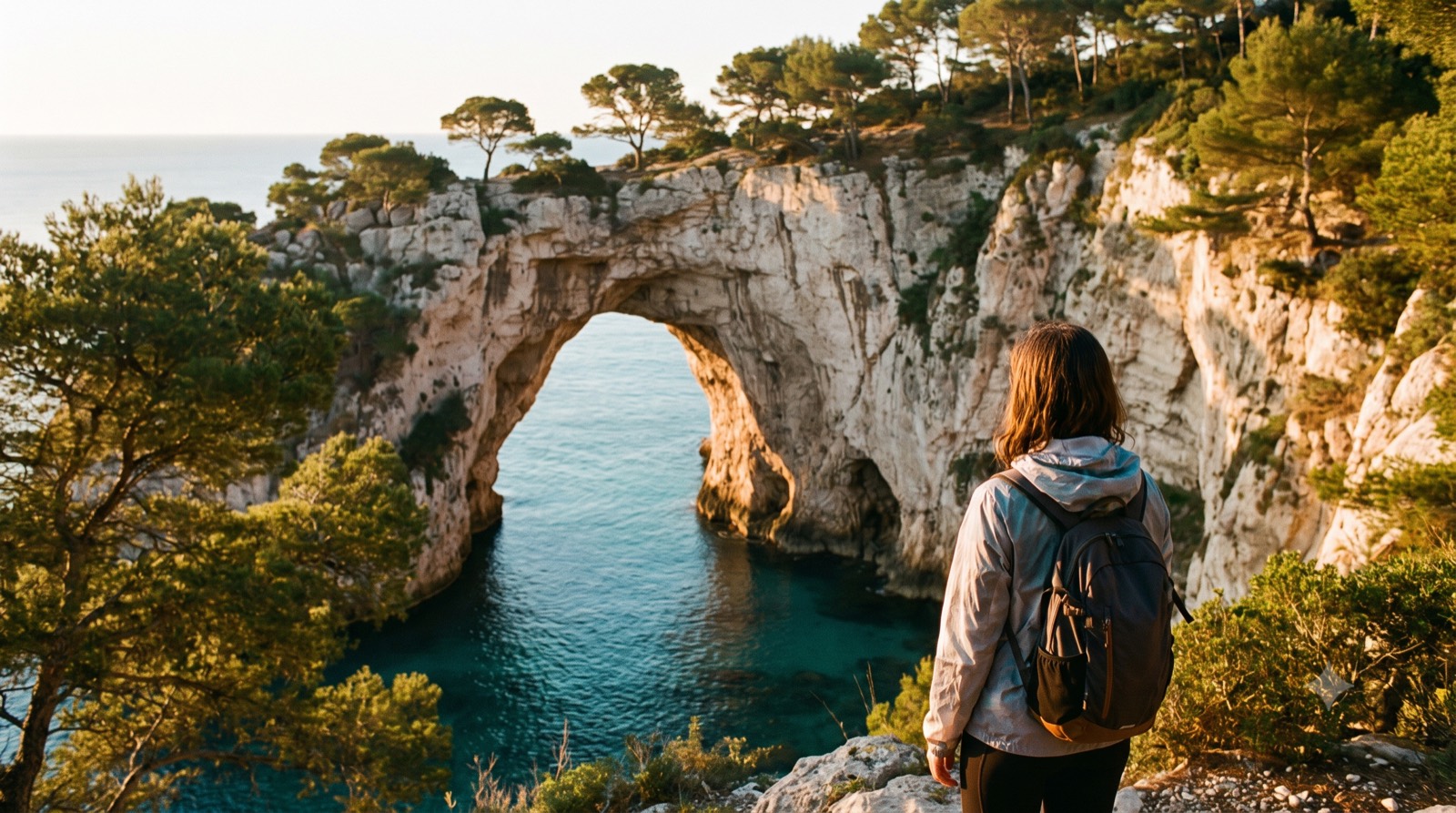
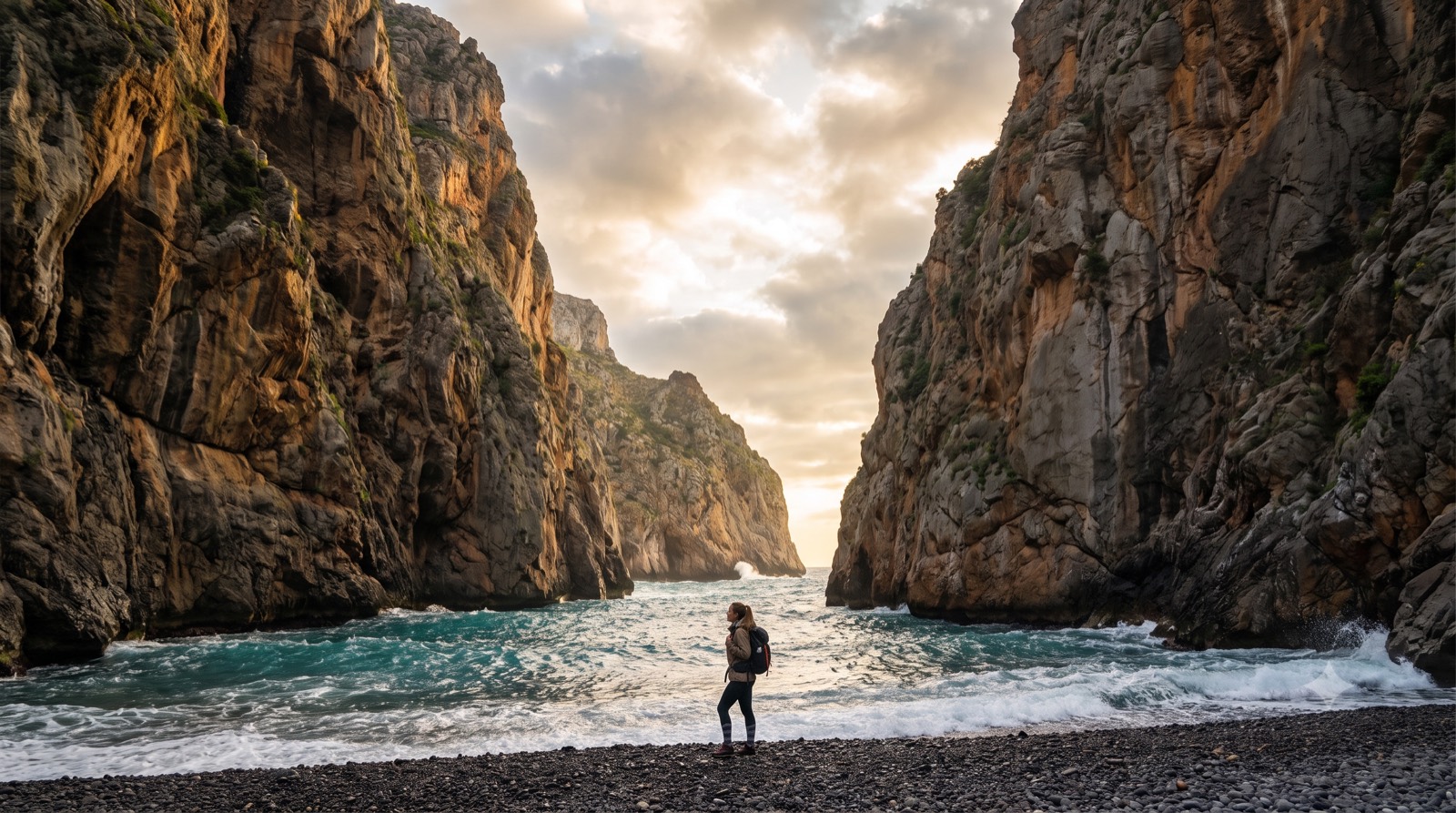
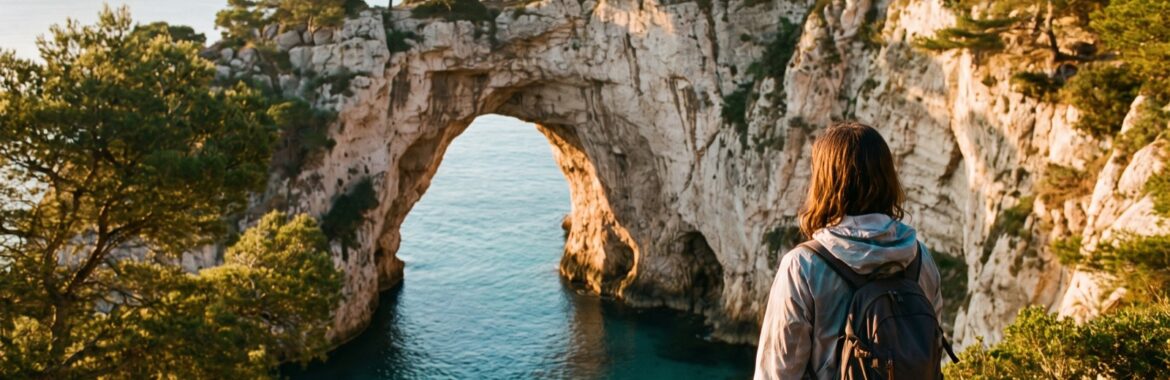
The great symbol of Cala Santanyí stands right beside it: Es Pontàs, a spectacular natural rock arch reaching out into the sea, carved by wind and waves over thousands of years. It’s one of the most photographed images in southeast Mallorca, especially at dawn, when the low light traces the silhouette of the arch against the dark blue of the Mediterranean. You take it in from a viewpoint set up by the road, just minutes from the cove, and the scene is a hard one to forget.
Es Pontàs is also world-famous among climbers: its arch is a legendary deep-water soloing spot (climbing without ropes above the sea), which has given this corner of Santanyí an international profile. The arch has appeared in documentaries and features around the world, and it’s one of those places that, once seen, stays with you. Anyone who lives in the area folds it into their routine: a walk to the viewpoint at sunset or sunrise is one of the simplest — and at the same time loveliest — things this coast has to offer.
The geological marvel isn’t only a visual one: the coastal strip around Es Pontàs is protected and forms part of the high-quality landscape of southeastern Mallorca. Having something like this on your doorstep is one of the many quiet luxuries of living in the municipality of Santanyí.
Getting there easily
Access, parking and services
One of the big advantages of Cala Santanyí over other untouched coves in the southeast is how accessible it is. You reach it easily by car from the village of Santanyí on a surfaced road, with parking available near the beach — far more convenient than at the wilder coves around it. Getting from the car park down to the sand is straightforward and fairly level, much gentler than the descent to Cala Llombards or the path to Caló des Moro.
In high season it usually has services such as a beach bar and lifeguards, which makes it very practical for a family day at the beach. Even so, as everywhere in the area, in peak summer the car park fills up early, so it pays to arrive first thing or late in the day. Out of season it’s far more peaceful: the cove is almost empty and the mood is completely different.
Below the surface
Snorkelling and coastal paths
The rocky sides of Cala Santanyí offer good conditions for snorkelling: clear water, healthy Posidonia oceanica meadows and varied marine life among the cracks in the rocks. It’s beginner-level snorkelling, with no significant currents on calm days, and one of the best moments of the day when the cove is quiet first thing in the morning.
From the cove there are also coastal paths connecting it with the neighbouring coves. To the north, a clifftop trail skirts the rocks towards Cala Llombards (around 20-25 minutes on foot); to the south, the path leads towards Portopetro. With the sea always in view and the pines overhead, these become star outings in spring and autumn.
Plan your visit
How to plan a day at Cala Santanyí
A perfect day at Cala Santanyí might start at the Es Pontàs viewpoint at dawn — just 5 minutes by car from the cove — to catch the shot of the arch in the best light of the day before anyone arrives. Then down to the cove for the first swim of the morning, when the water is calm and the car park is free. Snorkelling along the sides, a rest, and if you want to stretch the day out, a coastal walk towards Cala Llombards or Portopetro in the early afternoon, once the heat eases. Back to the cove for an evening swim, which in August tends to be when the water is at its warmest of the day.
As for food, the seasonal beach bar covers the basics, but to eat well it’s worth heading to the village of Santanyí, a few kilometres away, where there are options for every taste: a producers’ market on Wednesdays and Saturdays, restaurants serving Mallorcan cooking and full services.
When to go
The best time to visit the cove
Cala Santanyí is wonderful throughout the bathing season, from May to October, and especially pleasant in spring and autumn, when there are fewer people and the weather still plays along. In June and September the water sits between 22 and 25 degrees, the days are long and the cove keeps a calm atmosphere, without the pressure of the high-summer months.
And at any time of year it’s worth heading to the Es Pontàs viewpoint, above all at sunrise or sunset. It’s one of those plans that anyone living nearby repeats again and again without tiring of it, because the light and the sea are never the same two days running. In winter the area is almost deserted, and the colours of southern Mallorca take on an intensity and a calm impossible to find in summer.
The surroundings
What's near Cala Santanyí
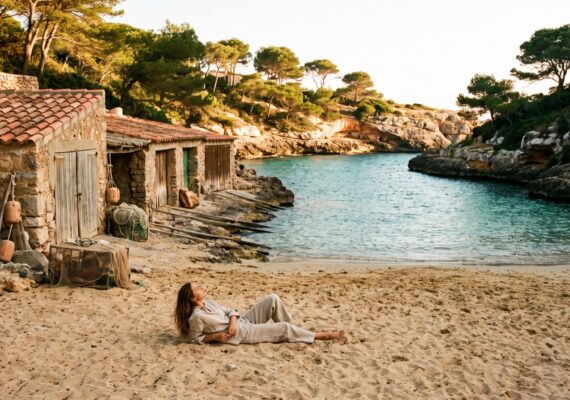
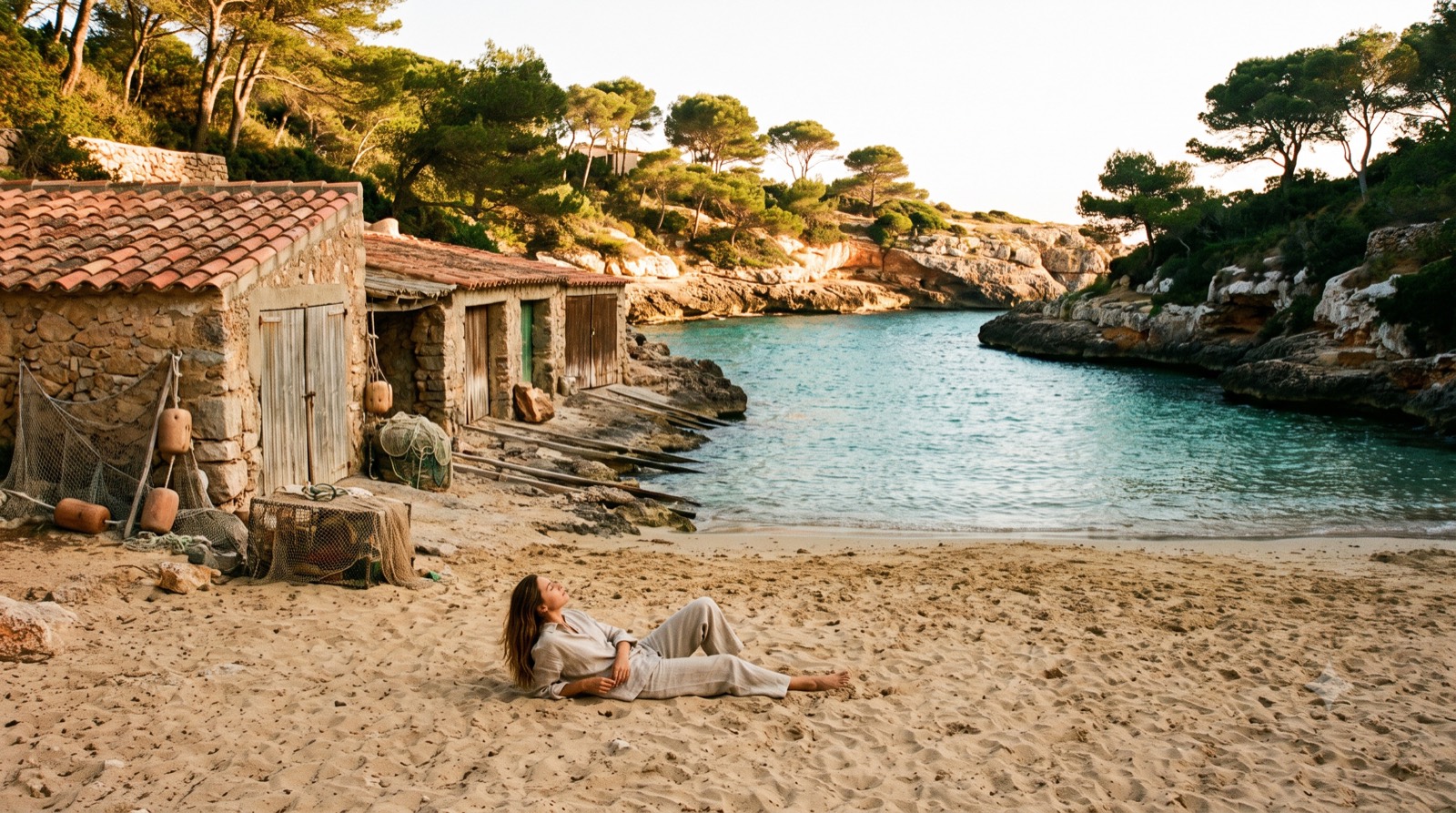
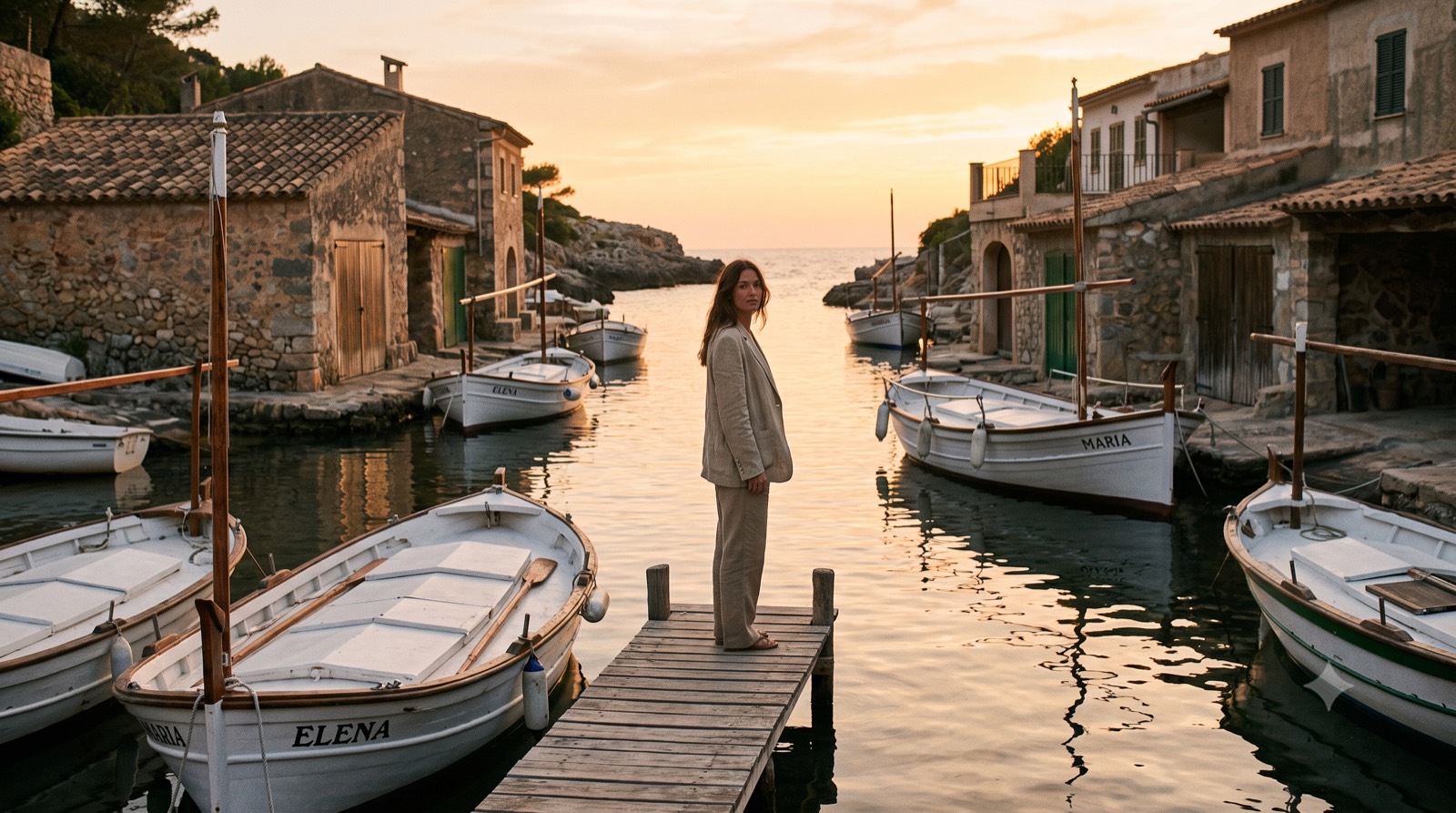
Cala Santanyí is surrounded by some of the loveliest corners of Mallorca. A few minutes away by car lie Cala Llombards — with its fishermen’s huts and clear water — the famous Caló des Moro and Cala s’Almonia, the fishing village of Cala Figuera and the Mondragó nature park, with its protected coves and pine-shaded trails. The village of Santanyí, with its historic centre, its market, its galleries and every service, is just a few kilometres away. Further north lies Cala d’Or and its marina, and to the south, the coves of the Ses Salines municipality.
It’s an ideal area to have a different cove on your doorstep every day, without long drives — which makes it one of the most sought-after parts of the southeast for those looking to live by the sea with a real quality of life.
Common questions
Frequently asked questions about Cala Santanyí and Es Pontàs
Where can you see Es Pontàs and how do you reach the viewpoint?
The Es Pontàs viewpoint is signposted on the Ma-6100 road, between Santanyí and Cala Llombards, just minutes by car from Cala Santanyí. There’s a designated pull-in by the road from which you can see the arch perfectly. You can also reach it on foot from the cove along the coastal path in about 15-20 minutes. The best time to photograph it is at dawn, with the low light falling across the arch.
Is Cala Santanyí suitable for families with children?
Yes, it’s one of the best options in the area for families. Access is easy, the water is usually calm (except with a southerly wind), the seabed is gentle near the shore and there’s shade from the pines. In season it has lifeguards, which adds extra peace of mind. It’s considerably more accessible than the wilder coves nearby.
Is there parking, and do you have to pay?
Yes, there’s parking near the cove, regulated in high season. The price varies by area and time of day, around 2-3 € an hour in season. It’s easier to find a space than at more popular coves such as Caló des Moro, thanks to its larger capacity and accessibility. Out of season, parking is usually free.
Can you snorkel at Cala Santanyí?
Yes. The rocky sides of the cove have good visibility and Posidonia meadows. It’s relaxed snorkelling, with no strong currents on calm days. You can also snorkel out towards the Es Pontàs cliffs by sea, though you’ll need to be careful with the currents in that more exposed area.
When is the best time to go to avoid the crowds?
June and September are the ideal months. In July and August it’s best to arrive before 10:00 or after 17:00. Out of season, the cove is left almost to the locals and the experience is completely different: calm, with far more light and stillness.
How long is it from the village of Santanyí?
About 5-7 minutes by car (around 4 km). From Ses Salines it’s roughly 15 minutes. It’s one of the most accessible coves of the unspoilt southeast, with a surfaced road and parking just metres from the sand.
Living nearby
Can you picture living a step from the arch?
Having a beach like Cala Santanyí and a wonder like Es Pontàs on your doorstep is one of the great charms of living in southeast Mallorca. The area of Santanyí and its coastal hamlets lets you live all year round just minutes from a string of coves for every taste — from the wildest to the most comfortable, like this one — with the convenience of a village that’s properly alive and well served. For anyone who dreams of living by the sea, surrounded by beauty and nature, it’s one of the best areas on the island. We live and work here, so we know every cove, every access and every house, and what the area is genuinely like at each time of year.
If you can picture yourself living near Cala Santanyí, write to us: we’d be delighted to help you find your place. We live in the area all year round, and there’s no better way to understand a stretch of coast than to walk it in February as well as in August.