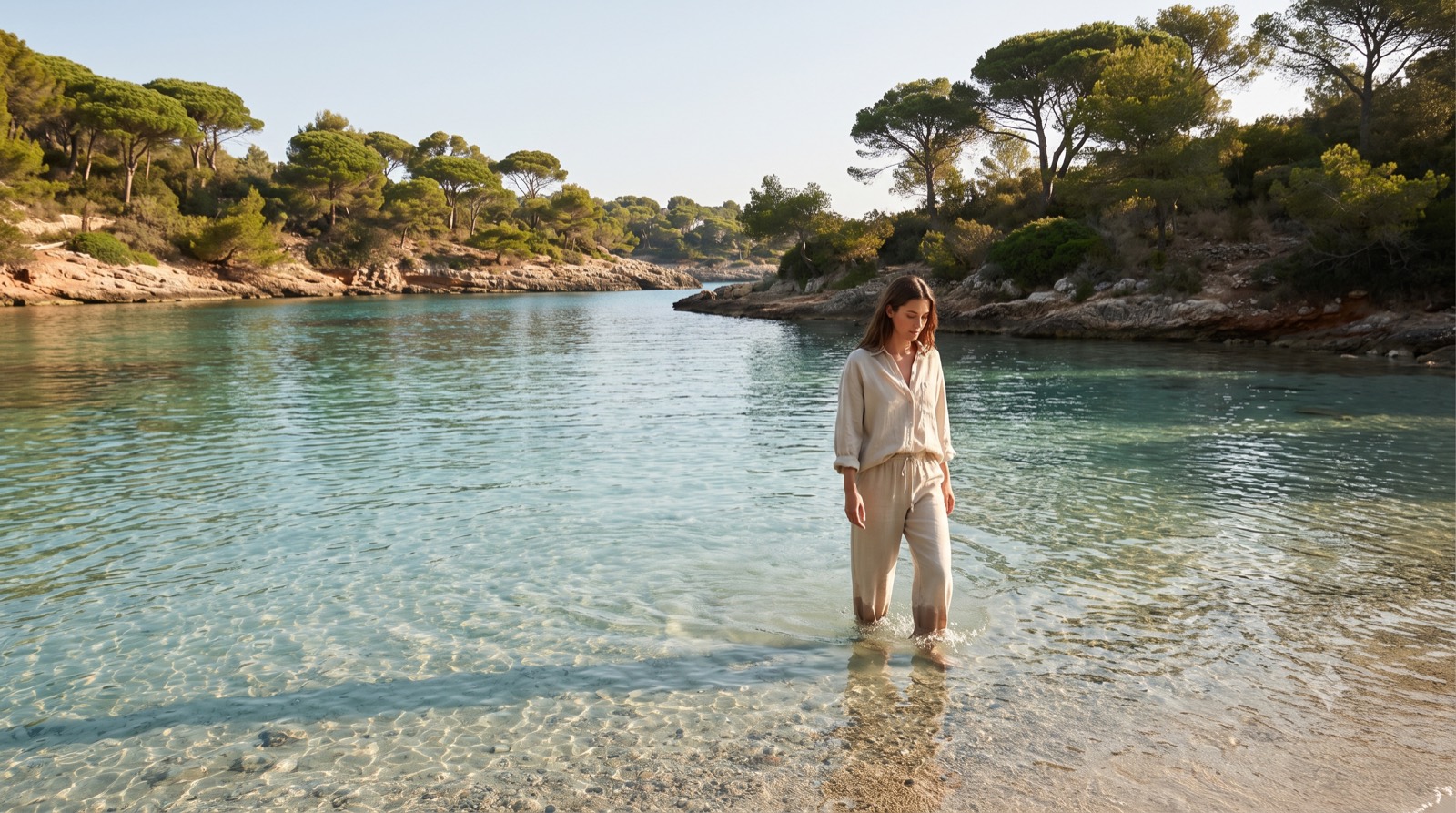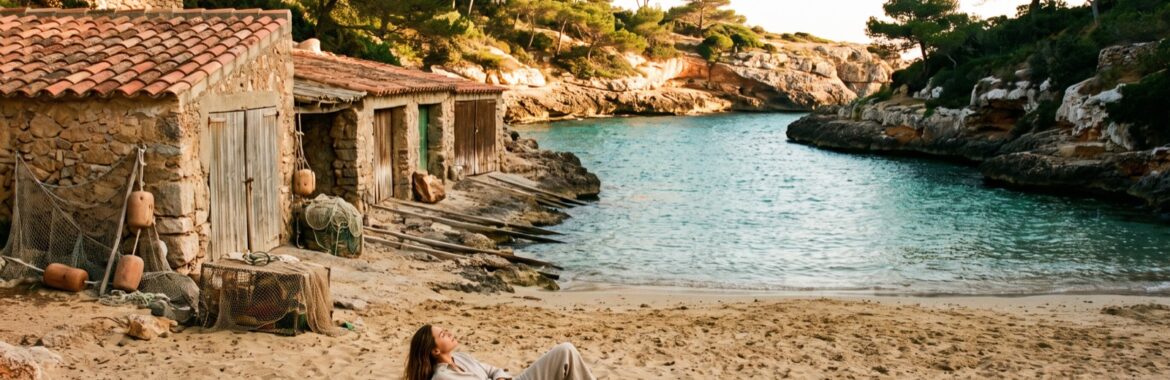
Cala Llombards is one of those coves that gives you everything that’s good about southeast Mallorca without the difficulty of the others. Fine golden sand, turquoise water, pines, low cliffs and the classic fishermen’s huts carved into the rock, in the municipality of Santanyí. It’s unspoilt and beautiful and, at the same time, relatively easy to reach — which is exactly why it’s a firm favourite among those of us who live in the area. Here’s what it’s like, how to get there, and how to make the most of it.
While other coves in the southeast turn up constantly in the photos and fill to bursting, Cala Llombards keeps a calmer, more local feel. There are no big hotels or developments at the water’s edge: it’s nature, sea and little else, which is precisely what people come to this part of the island for.
The cove
What Cala Llombards is like
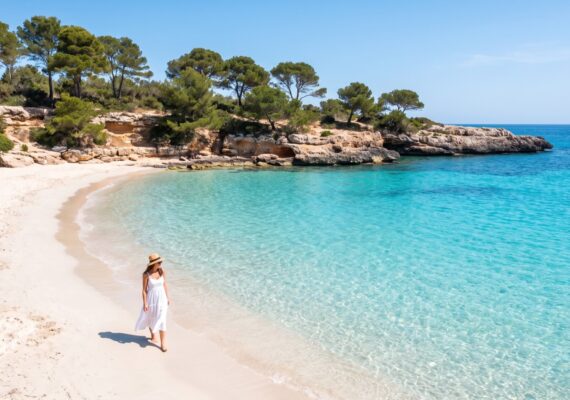
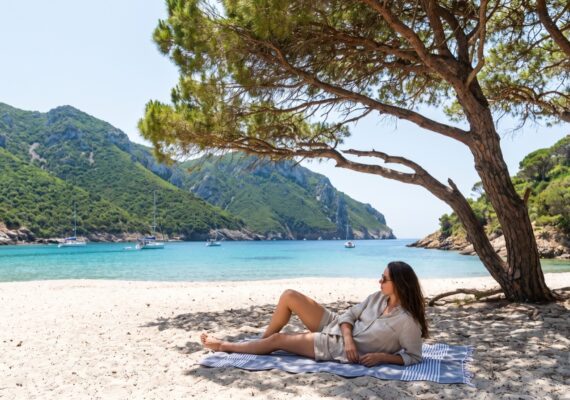
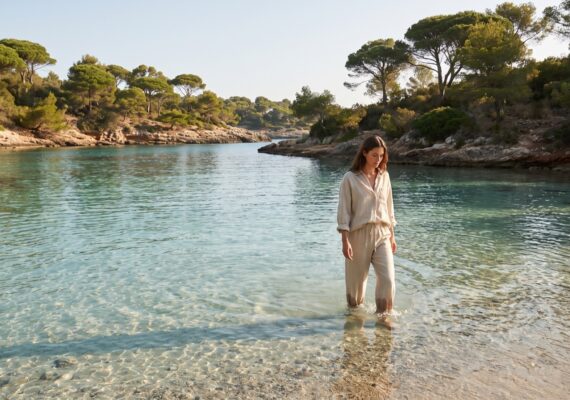
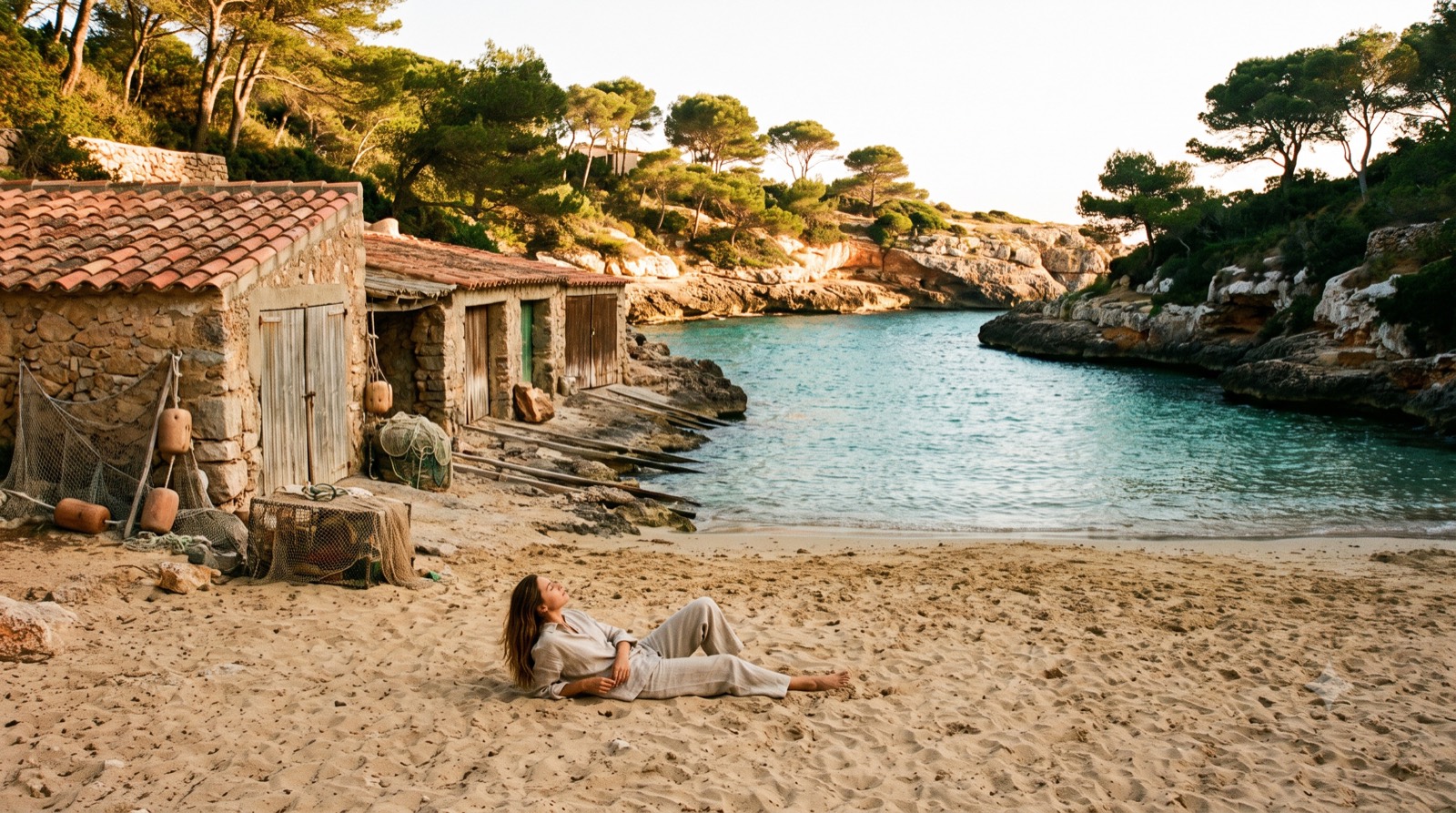
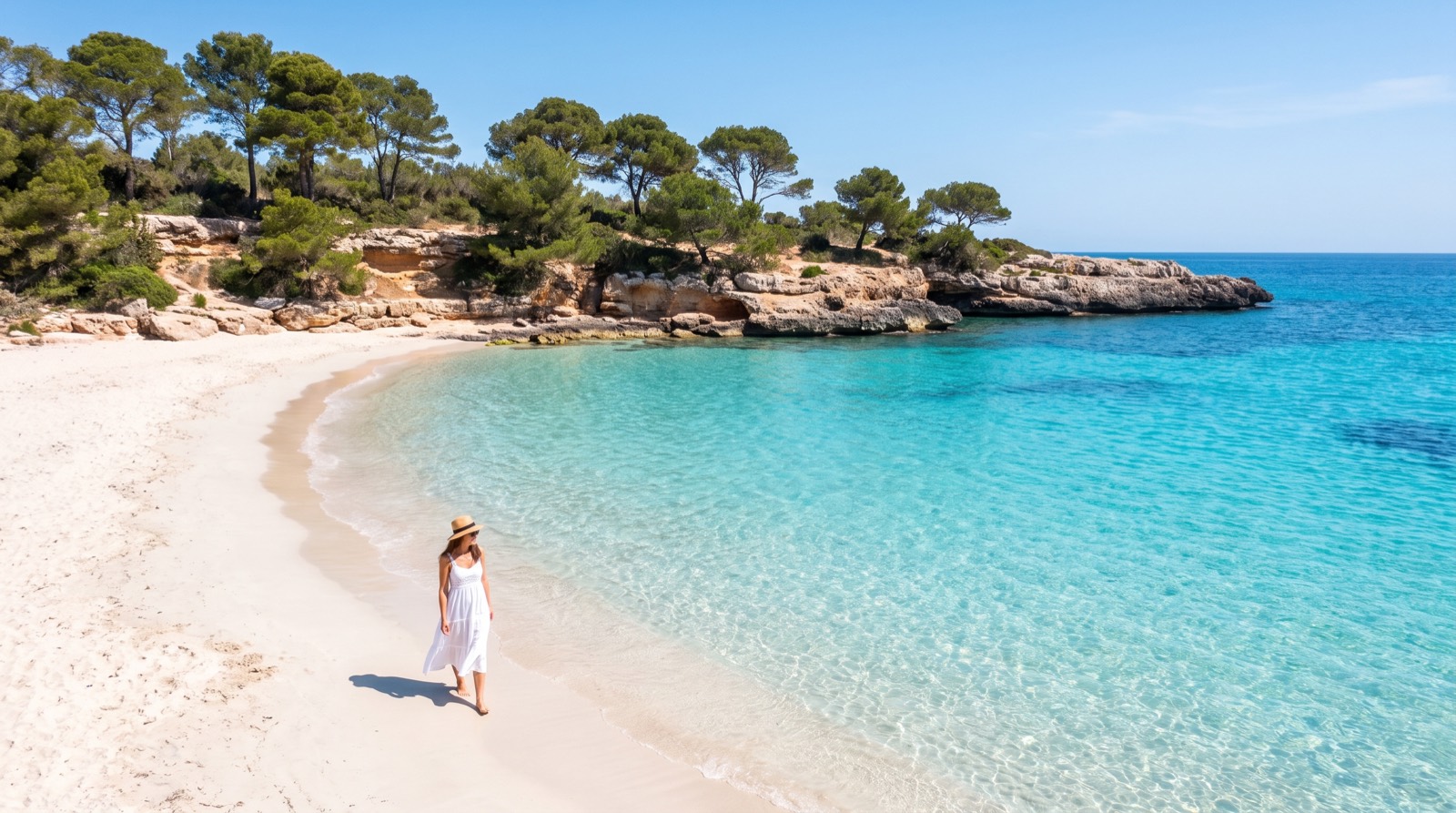
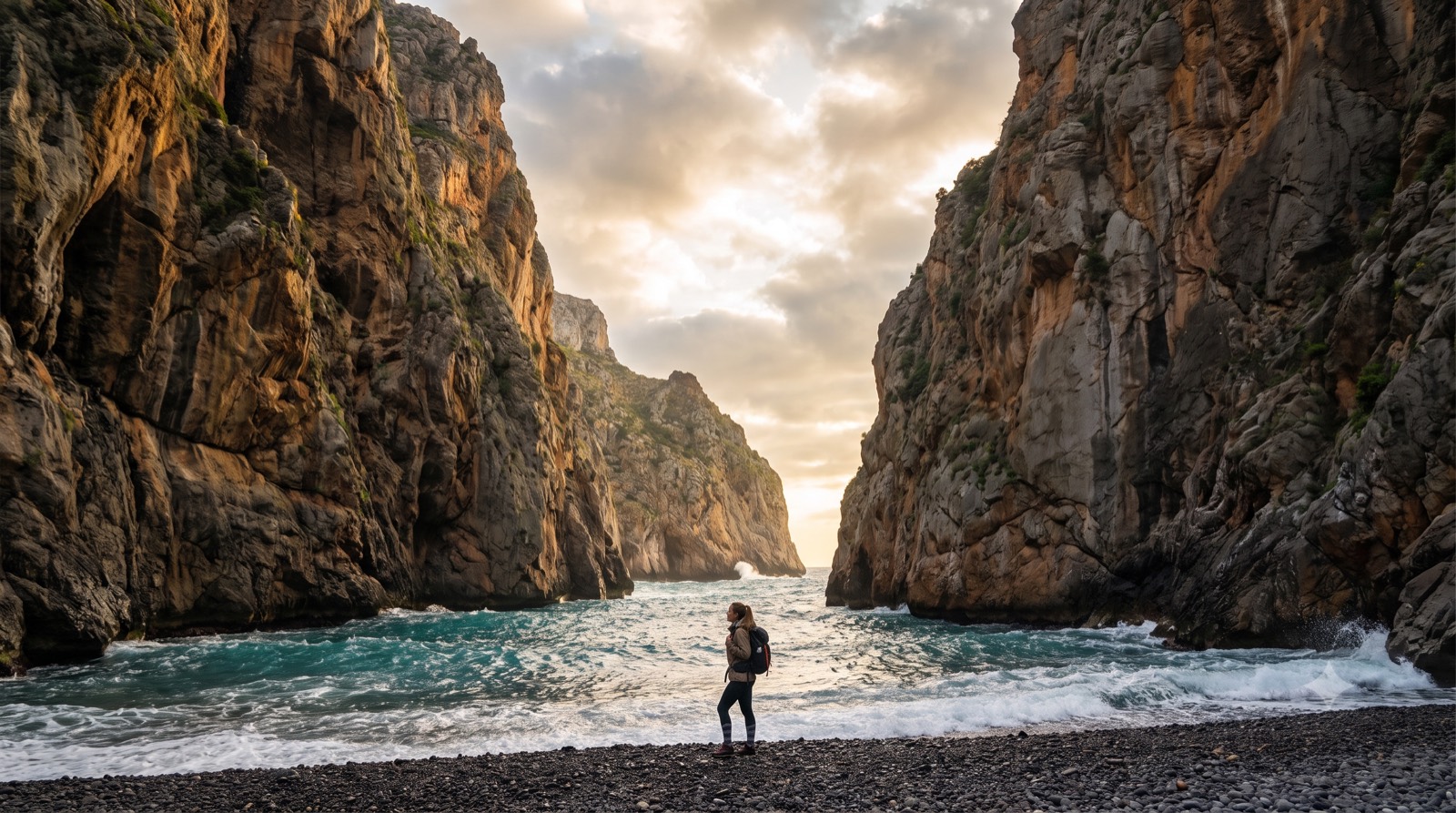
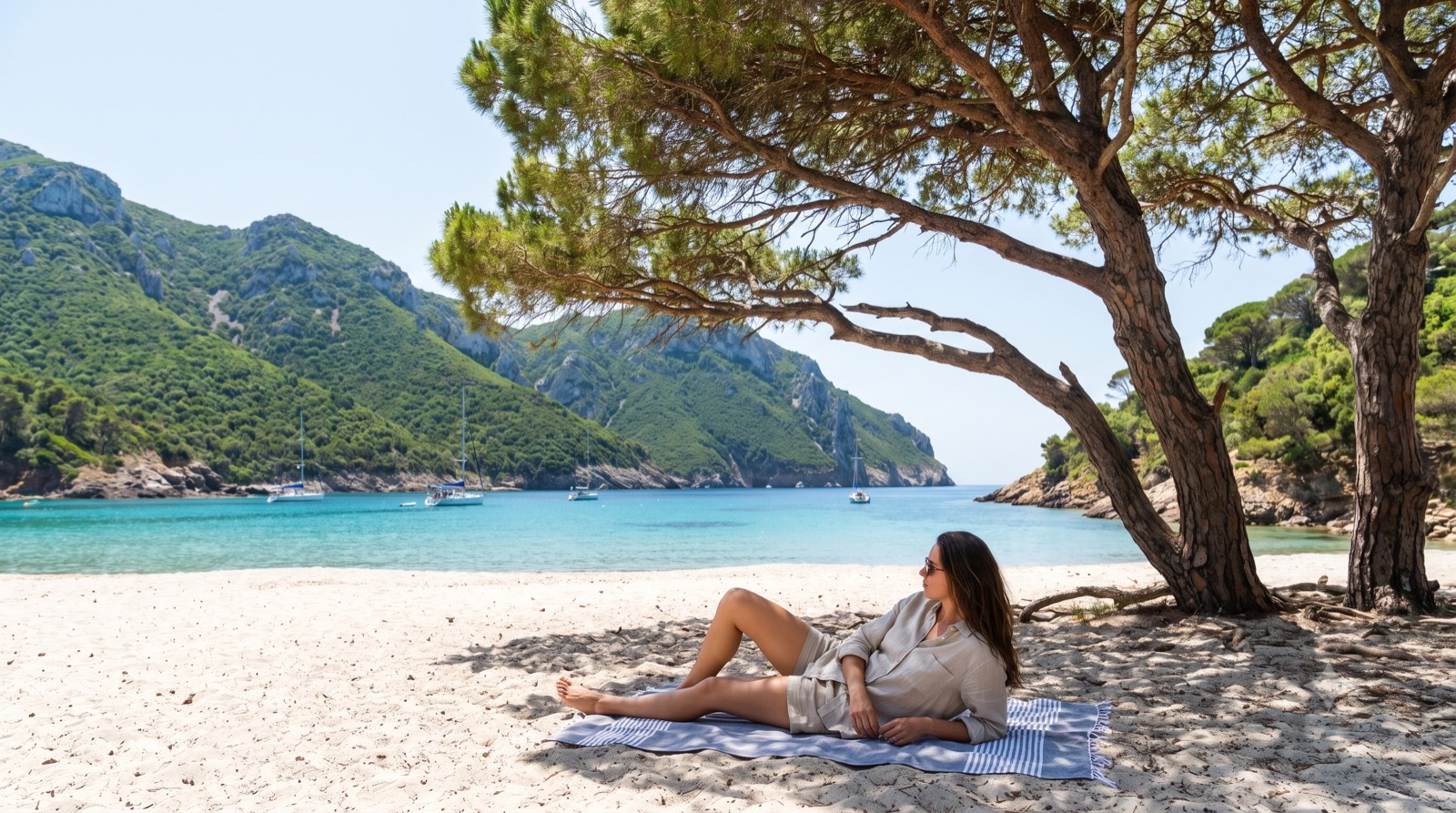
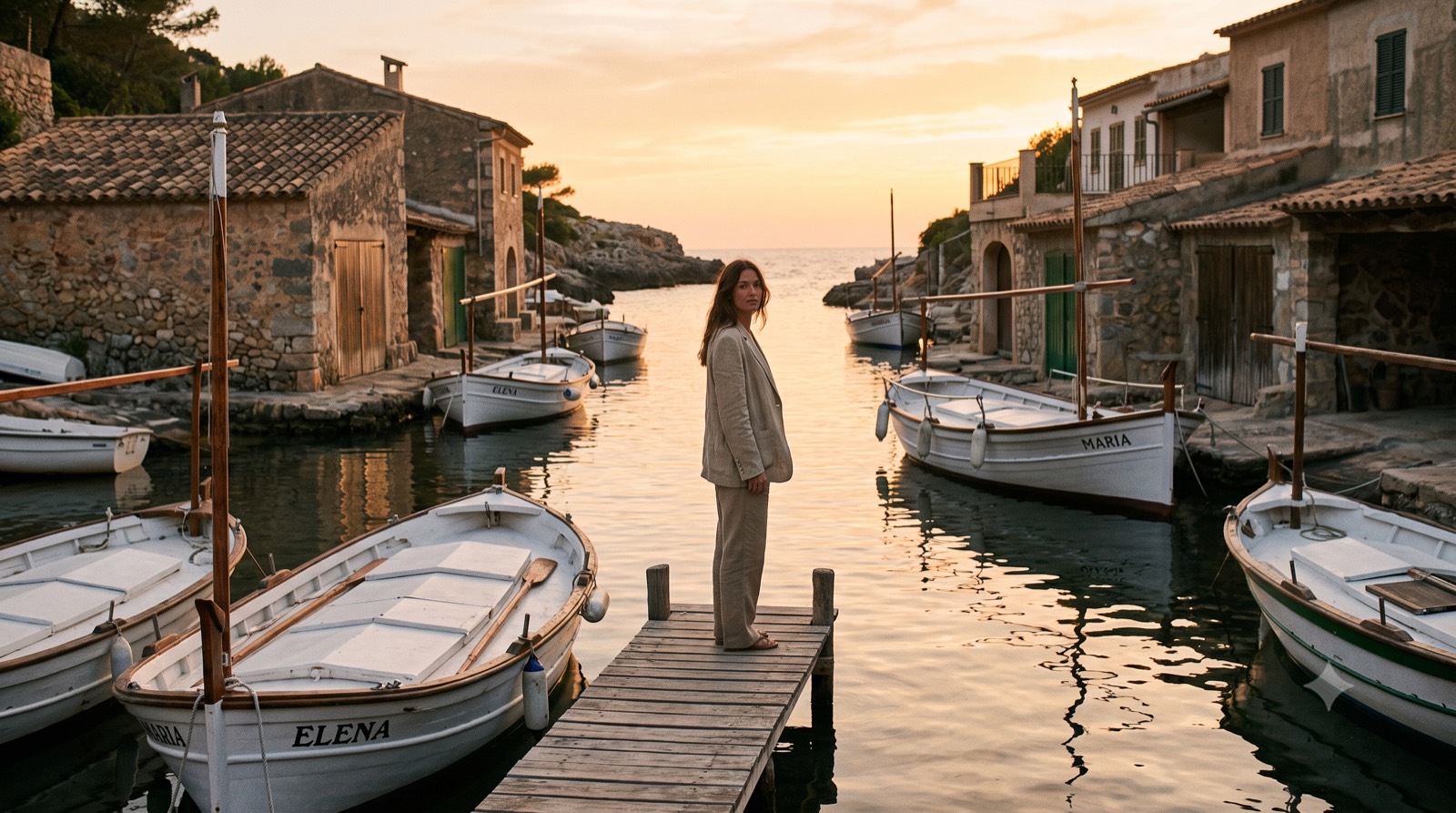
Cala Llombards is a medium-sized cove, tucked between two rocky headlands that shelter it from the prevailing swell, with a beach of fine golden sand and water that shifts from turquoise to deep blue with the depth. The sand is pale and clean, fine-grained, and the seabed slopes gently near the shore with no sudden steps or rocks — comfortable for swimming and reassuring for little ones. It’s ringed by pines that come almost down to the shore and offer some natural shade, very welcome in the hottest months. Along one side stand the traditional fishermen’s huts and boat shelters carved into the stone, which give it a special, very Mallorcan charm.
Sheltered between the cliffs, it usually has calm water, ideal for swimming and for children, though a southerly wind can bring in some swell. It’s a beach that appeals to families and to anyone after a natural spot without giving up comfort entirely.
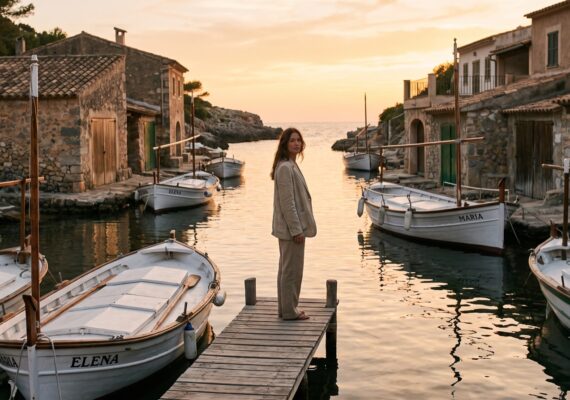
Those fishermen’s huts lined up beside the water aren’t just decoration: they’re part of the cove’s traditional life and give it that authentic air of the Mallorca of old, the one that existed before mass tourism. Many have been in the same village families for generations. Sitting and watching them, with the boats rocking gently and the clear water behind, is one of those scenes that explain why so many people fall for the southeast.
Getting there without surprises
Access and parking
One of the great advantages of Cala Llombards over other unspoilt coves in Santanyí is that it’s easier to reach. You drive in from the small hamlet of es Llombards, following the signs towards the cove along a narrow but paved road. There are parking areas at the top of the descent, from where you walk down to the sand along a dirt path and a short flight of steps that takes a few minutes. The descent isn’t long, but it does have a gradient and steps, so it isn’t suitable for pushchairs or for anyone with reduced mobility.
As everywhere along the southeast coast, in high summer the car park fills up early, so it pays to arrive early or come after 5pm, when it starts to empty. Parking is regulated in high season with pay machines (around €2-3 per hour). Out of season, by contrast, the cove is left almost to the locals and the experience is completely different: quiet, intimate, with no rush at all.
Beneath the surface
Snorkelling and the natural setting
The clear water and rocky sides make Cala Llombards a fine spot for snorkelling: among the rocks you’ll see varied marine life — sea bream, comber, sea urchins, octopus hiding in crevices — and extensive meadows of Posidonia oceanica, the underwater plant that is the main indicator of water quality in the Mediterranean. It’s worth respecting it by stepping only on sandy patches and never anchoring over it. In this cove it’s in very good condition, which says a lot about the health of its waters.
The setting of pines and cliffs also invites you to explore on foot. Coastal paths lead out from the cove to neighbouring ones on beautiful walks with the sea always in view. Heading south, a coast path reaches the vicinity of Caló des Moro in about 20-25 minutes on foot; heading north, the path skirts the cliffs towards Cala Santanyí. These walks are especially rewarding in spring and autumn, and in the low light of sunrise or sunset.
The perfect day
Facilities and how to plan your visit
Cala Llombards keeps its natural character, with limited facilities: there’s usually a small beach bar in high season serving drinks and snacks, but you can’t count on it outside June to September. There are no sunloungers to hire or showers on the sand itself. That’s exactly what people who come here are looking for.
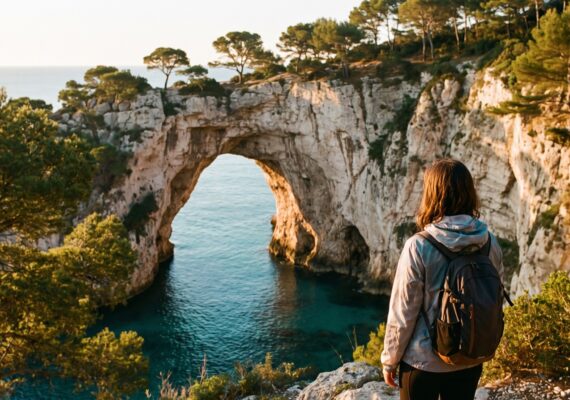
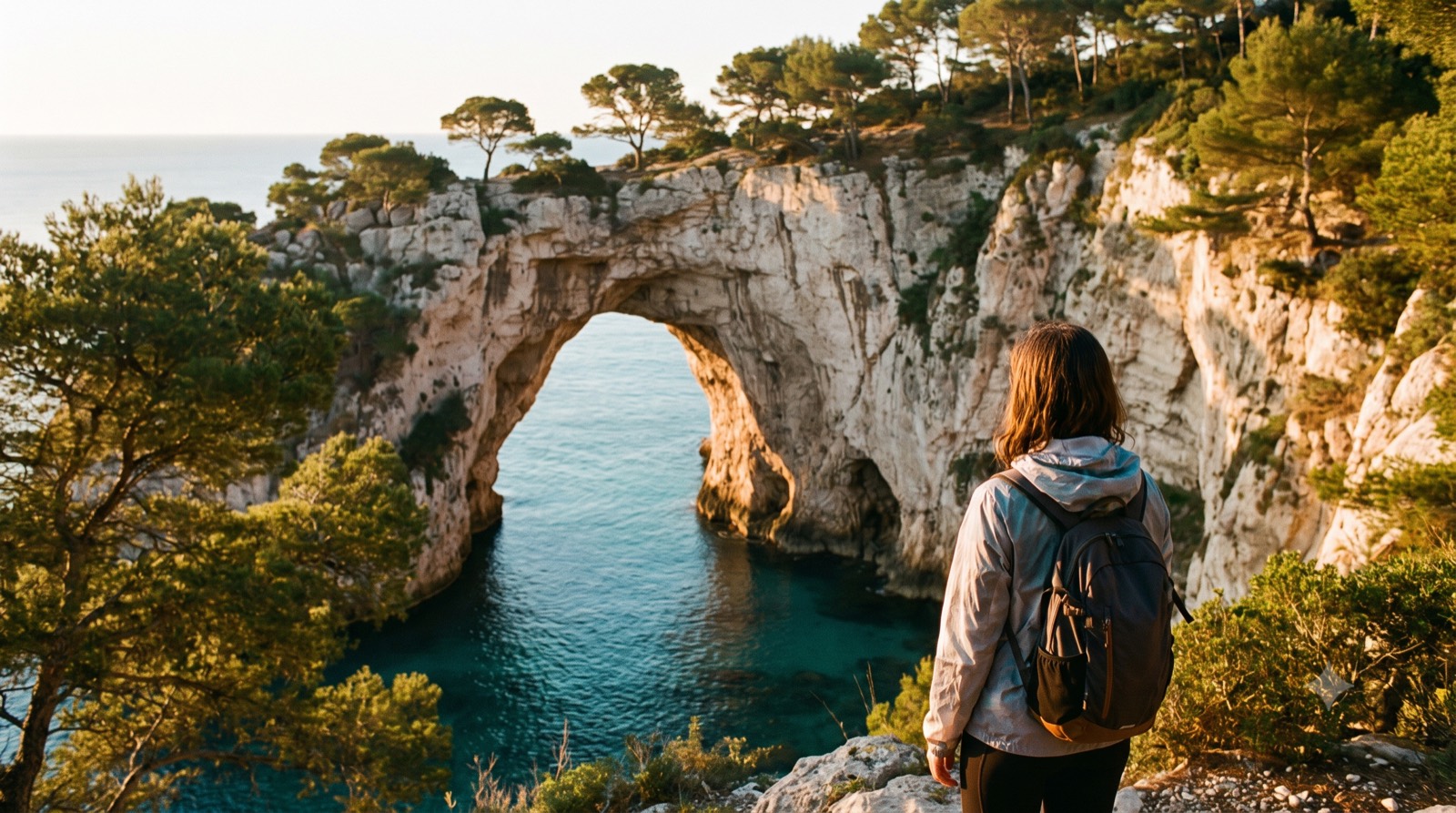
A well-planned day at Cala Llombards might start by arriving early, when the cove is calm and the sunlight is still soft. A long swim, snorkelling along the rocky sides. Then a short drive to the Es Pontàs viewpoint — the imposing natural stone arch barely 5 minutes away by car or around 25 by bike — and back to the cove in mid-afternoon, when most visitors have already left and the water is at its warmest. If you’re going with children, the cooler hours — early morning and from 5pm onwards — are perfect for swimming and playing at the shore.
When to visit
The best time of year for Cala Llombards
The best time is spring and autumn, when the weather plays along and there are no crowds. In June and September the water is warm — between 22 and 25 degrees — temperatures are perfect for spending the day outdoors, and the cove keeps a calm feel. July and August are spectacular for the light and the colour of the water, but they call for an early start and accepting that there’ll be more people than usual.
May deserves a special mention too: the water is below 20 degrees but the setting is at its best — green pines, wildflowers on the cliffs, almost no one — and for those who enjoy swimming in cooler water it’s one of the best times of the year.
And those of us who live nearby know that even in the depths of winter Cala Llombards is worth a visit, with the cove empty and the low southeastern light giving it a different, magical air. A Sunday walk in December, with the fishermen’s boats, the silence and the sea a deep, intense blue, is one of those things that make you understand why people live here.
The surroundings
What's near Cala Llombards
Cala Llombards sits right in the heart of Santanyí’s unspoilt coast, surrounded by some of the prettiest corners of Mallorca. A few minutes away by car are the famous Caló des Moro and Cala s’Almonia — the most photogenic coves in the southeast, best visited first thing in the morning before the groups arrive — the lovely Cala Santanyí with the natural arch of Es Pontàs, the fishing village of Cala Figuera and the Mondragó nature park, with its protected coves and paths through the pines. The town of Santanyí, with its Wednesday and Saturday market, its art galleries and all the everyday services, is about 6-7 km away.
It’s an ideal area for discovering a different cove every day without ever taking a long road, and one of the main reasons the southeast is so prized by anyone looking to live by the sea. Having all of this 10 minutes away by car is a privilege that those of us who live here don’t take for granted.
Common questions
Frequently asked questions about Cala Llombards
Do you have to pay to park at Cala Llombards?
In high season (June to September) the parking near the cove is regulated with pay machines, with rates of around €2-3 per hour. It’s worth carrying coins or checking whether a card machine is available. Arriving before 10am in July and August greatly improves your chances of finding a spot nearby. In low season, parking is free.
Is Cala Llombards suitable for young children?
Yes, it’s one of the best coves in the area for families. The descent has steps but isn’t long. The water is calm when there’s no southerly wind, and the seabed at the shore has no big rocks or sudden steps, allowing a comfortable swim for little ones. The shade of the pines also helps through the hottest hours.
Is there a beach bar or restaurant at the cove?
In high season there’s usually a beach bar with drinks and basic snacks, but you can’t count on it outside June to September or late in the day. There’s no restaurant at the cove itself; the nearest ones are in the hamlet of es Llombards or in the town of Santanyí, 6-7 km away.
Can you snorkel at Cala Llombards?
Yes, and with good visibility. The rocky sides have Posidonia meadows and it’s common to see sea bream, octopus and urchins among the crevices. It’s snorkelling suitable for all levels, with no significant currents on calm days. Best to go early, when the water is clearest. Take care not to step on the Posidonia, which is protected.
When is the best time to go to avoid the crowds?
June and September are the ideal months: warm water (22-25 °C), good weather and a calm atmosphere. In July and August it pays to arrive before 10am. From October to May the cove is left almost exclusively to the locals: empty, spectacular and with a beautiful light very different from summer’s.
How long does it take from Santanyí or from Ses Salines?
From the town of Santanyí, the cove is about 6-7 km and some 8-10 minutes by car. From Ses Salines it’s roughly 15-20 minutes. It’s one of the best-connected coves in the area’s unspoilt southeast, with no need for dirt tracks or complicated detours.
Living nearby
Can you picture yourself living by this cove?
Having coves like this on your doorstep is one of the great luxuries of living in southeast Mallorca. The areas of Santanyí, es Llombards and their surroundings let you live all year round just minutes from a string of unspoilt coves that fill every photo in summer but are left almost to the neighbours out of season. For anyone who dreams of living surrounded by nature and turquoise water, without giving up a village with real life and services, it’s one of the best areas on the island. We live and work here, so we know every cove, every access point and every house, and what the area is really like at each time of year.
If you can picture yourself living near coves like Cala Llombards, get in touch: we’d be delighted to help you find your place. We live in the area all twelve months of the year and will tell you honestly what it’s like in every season.