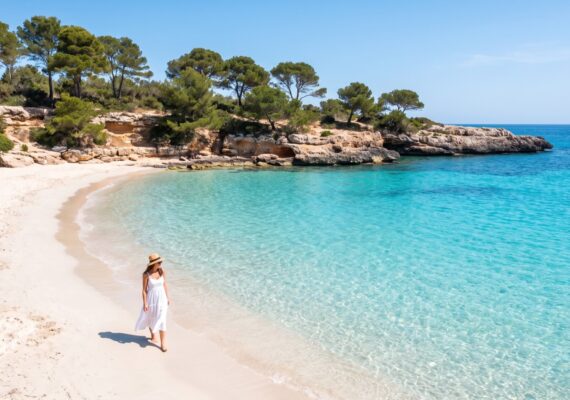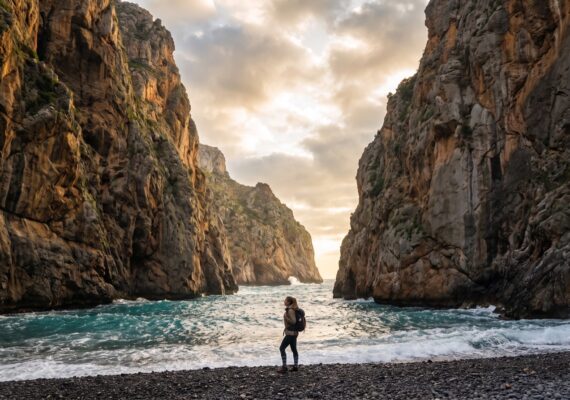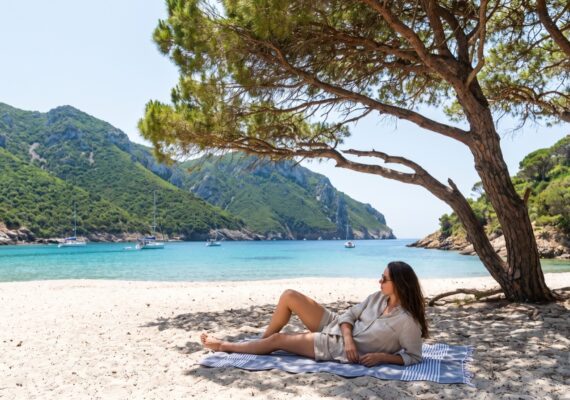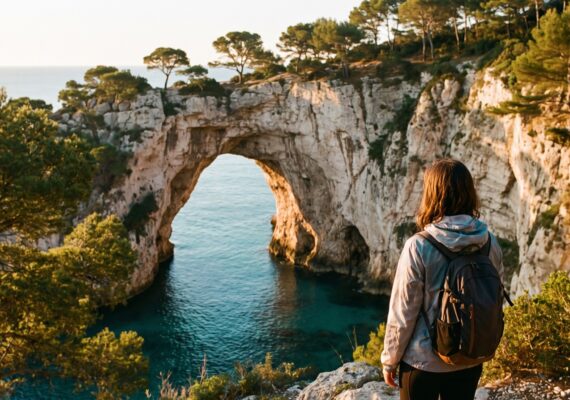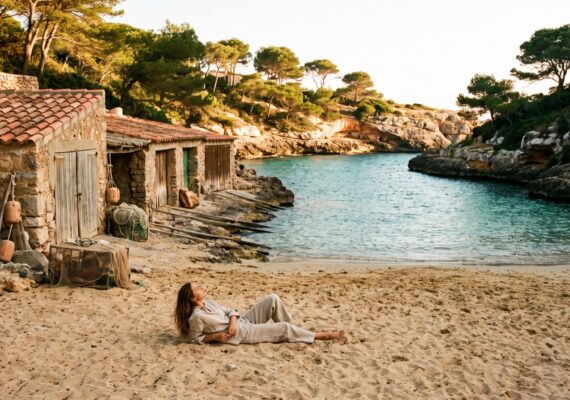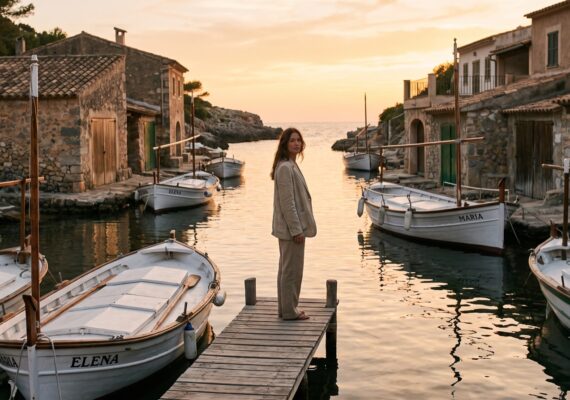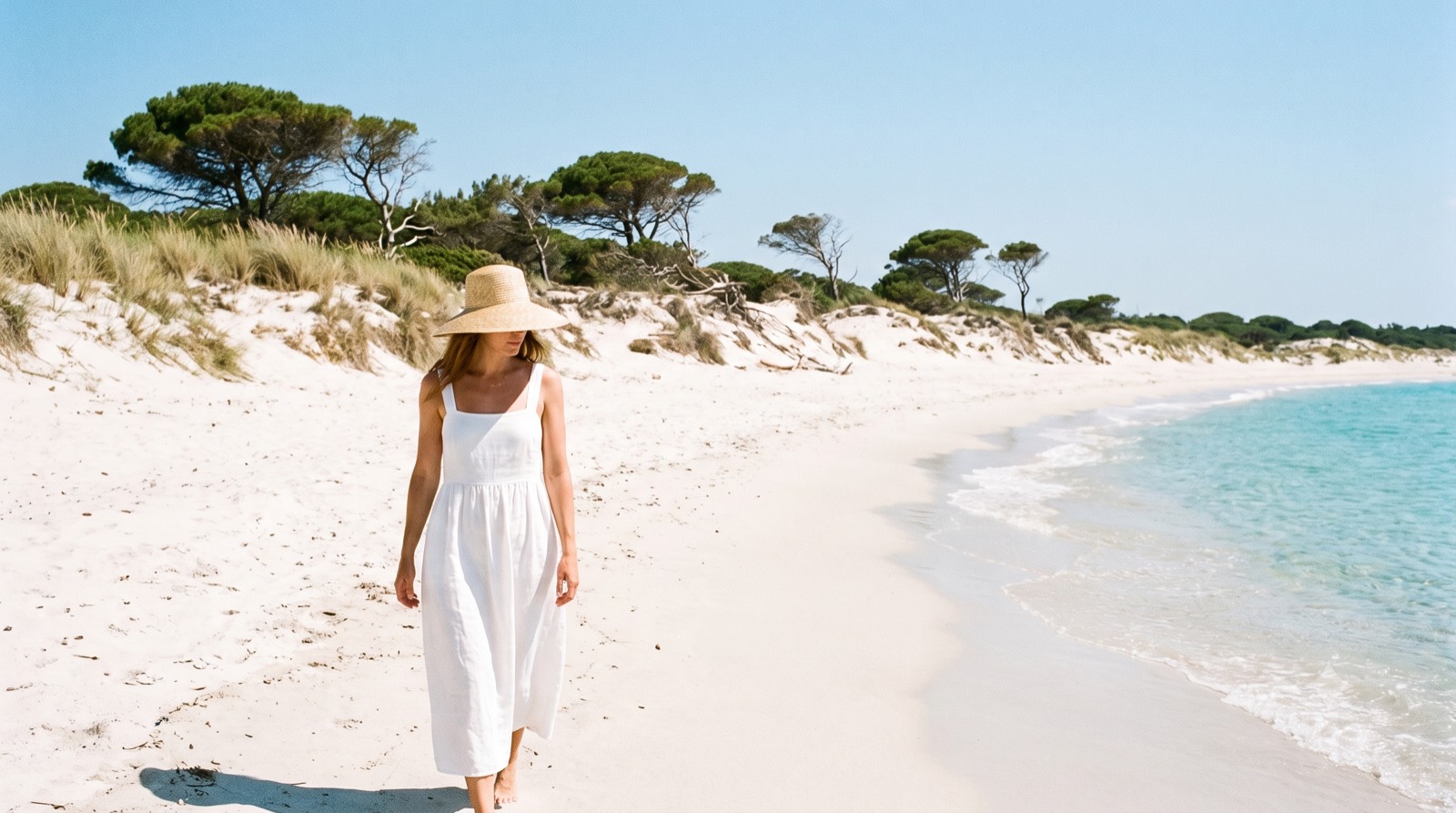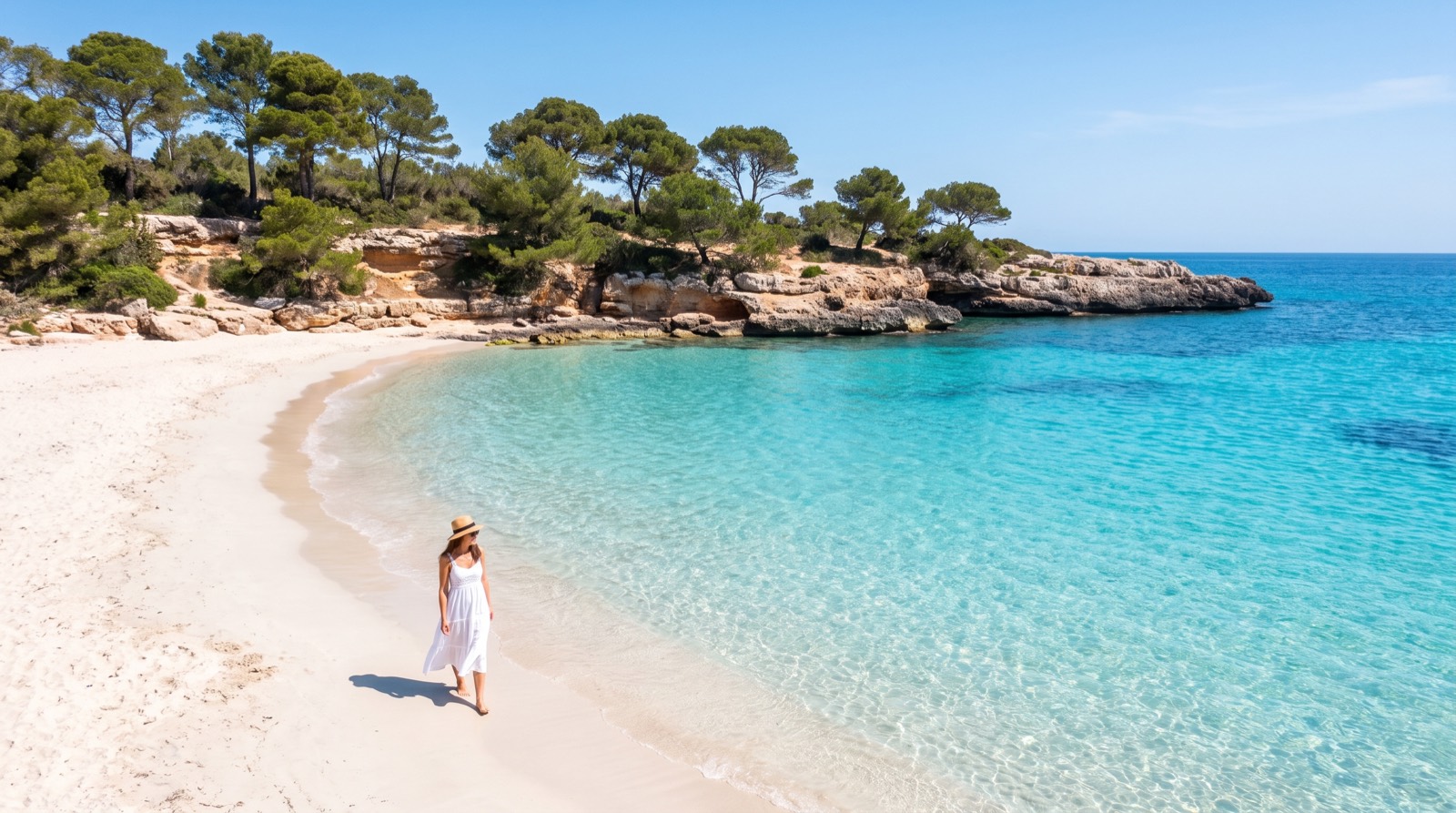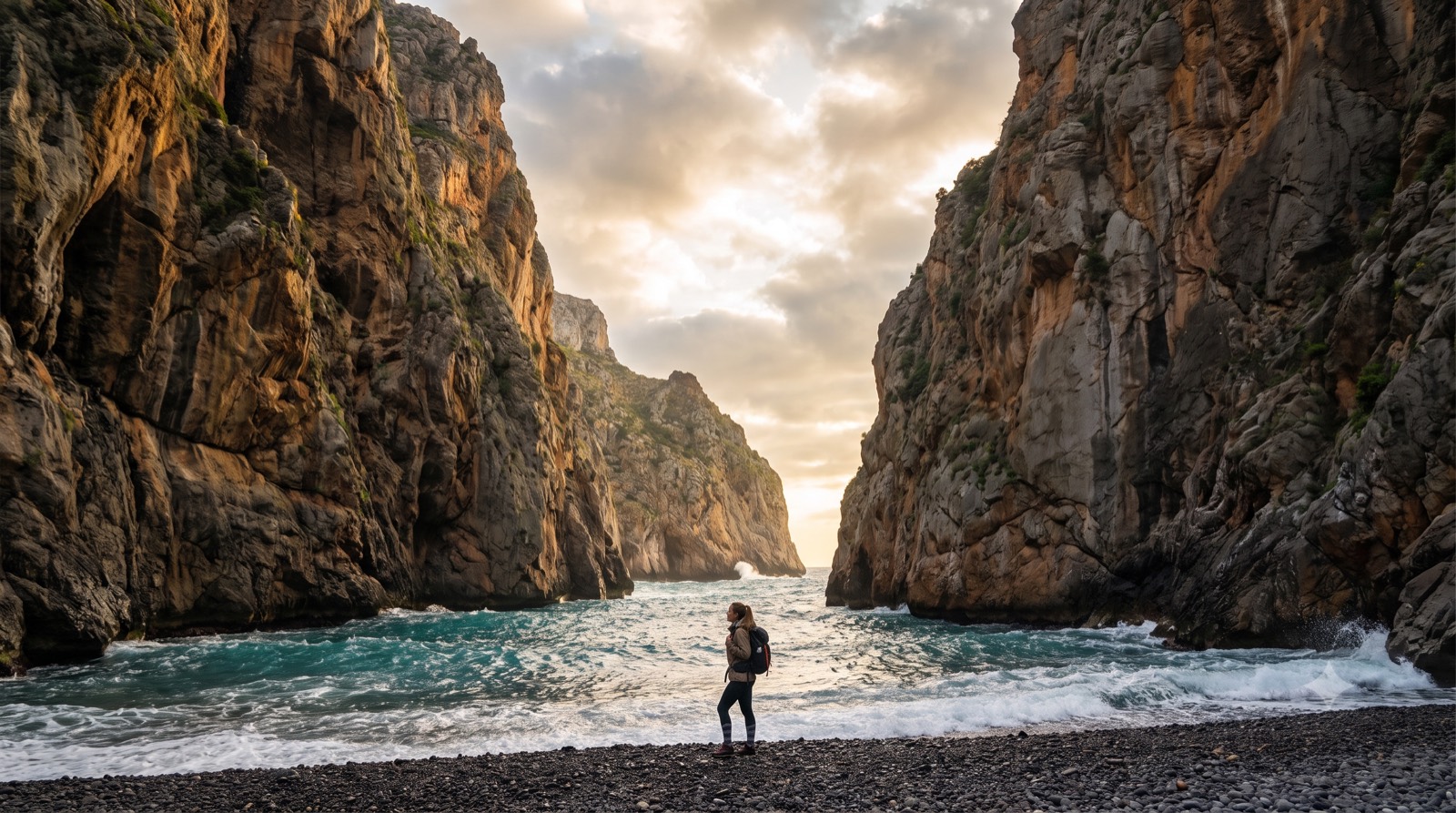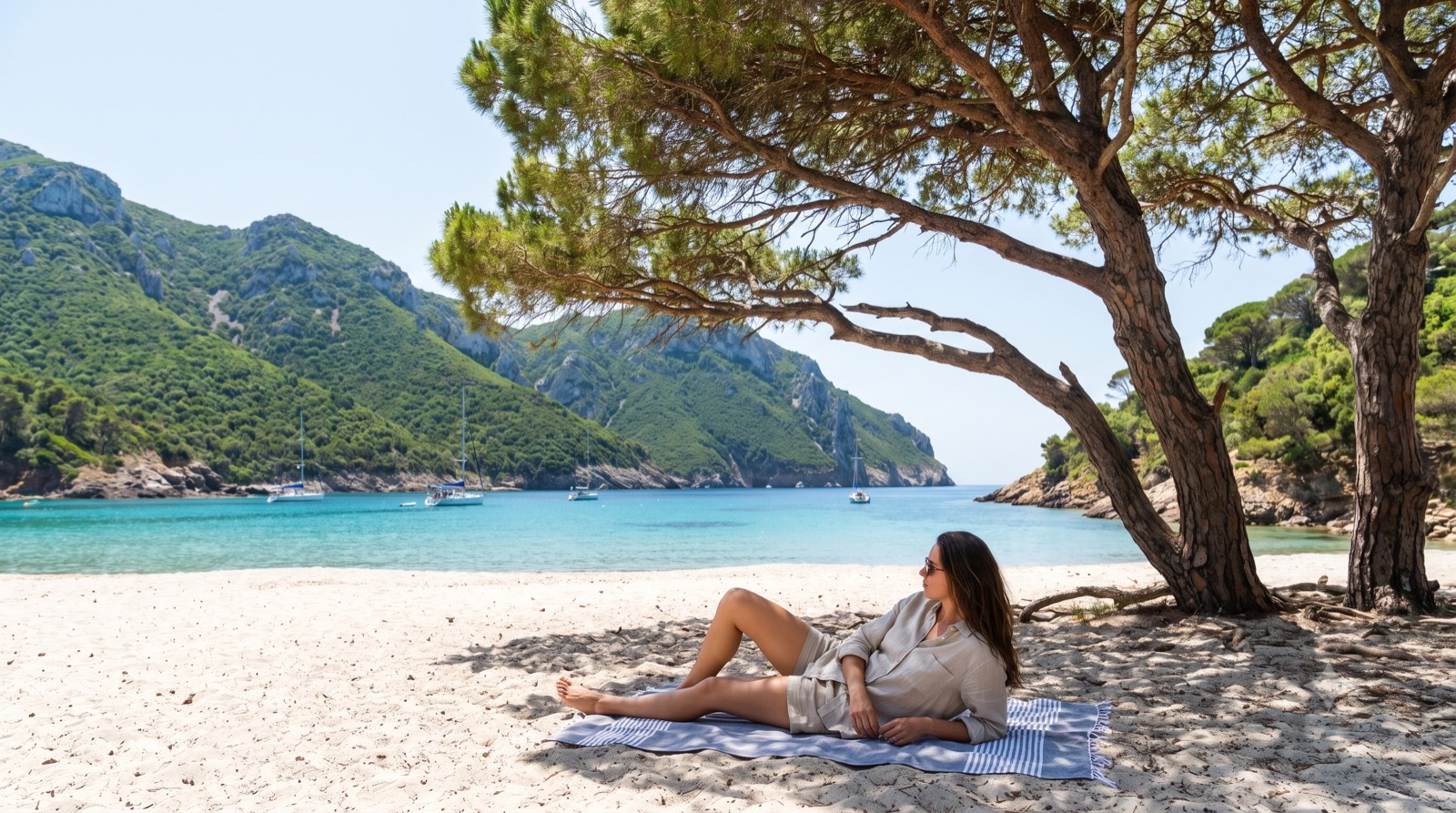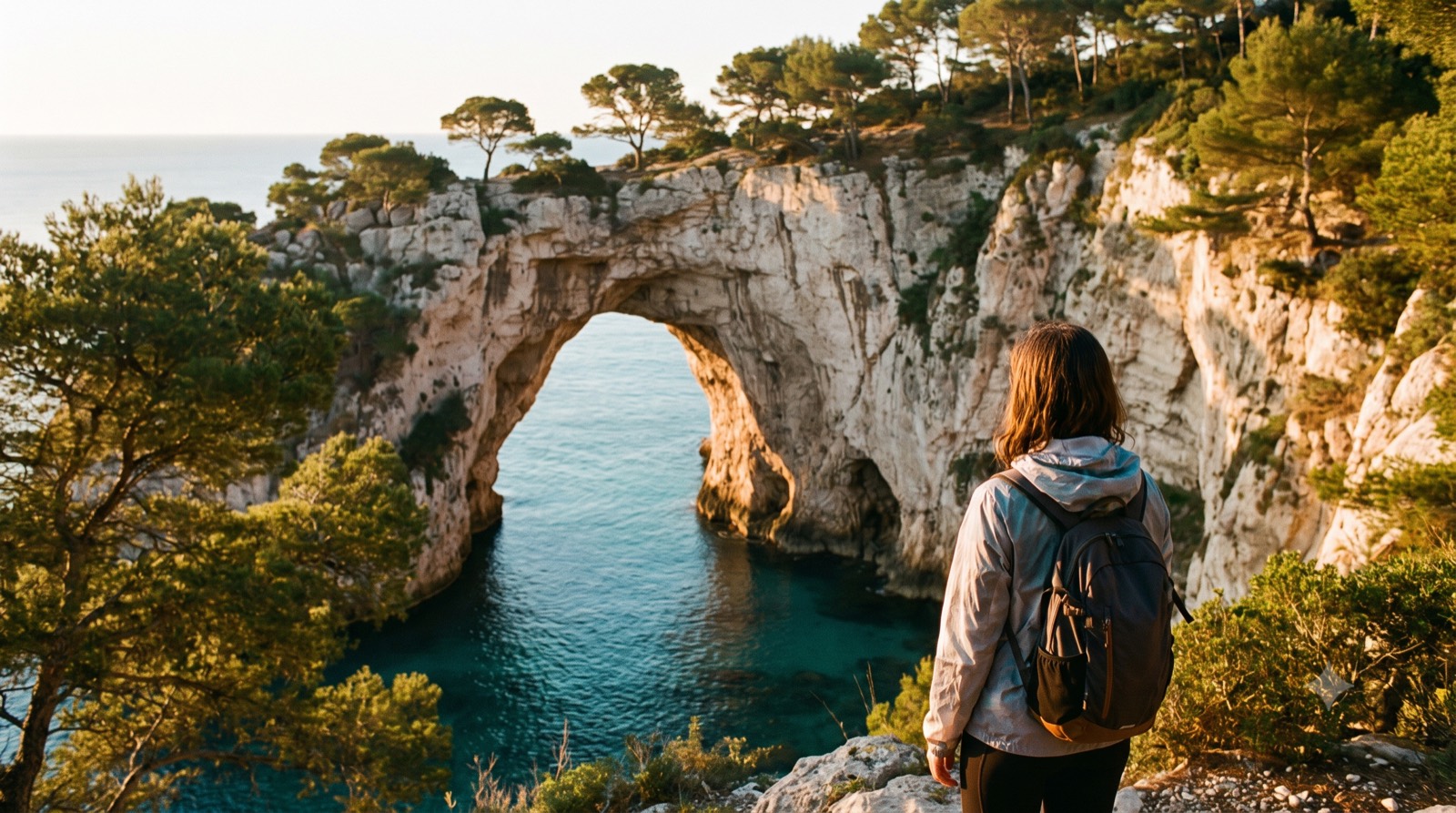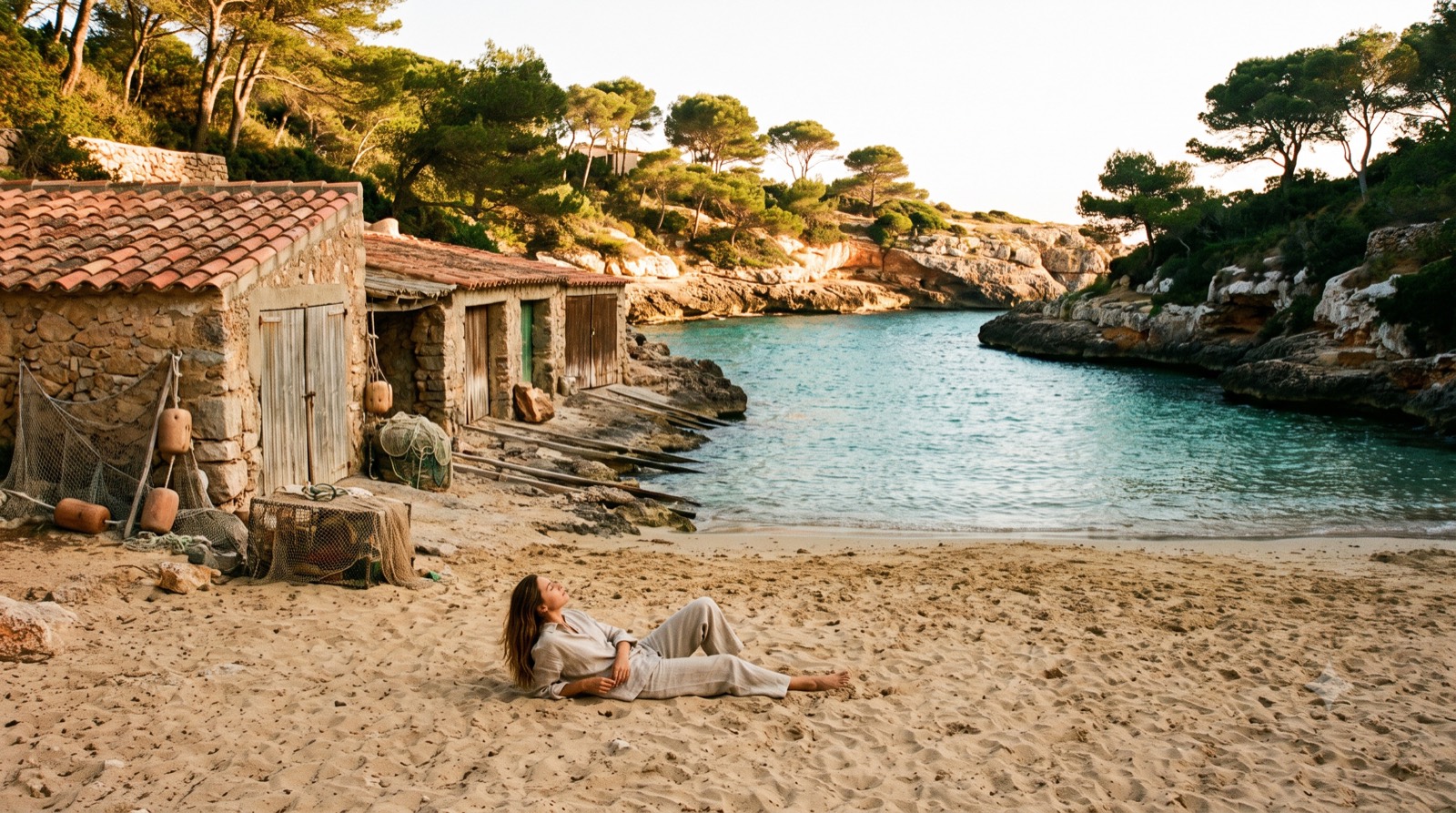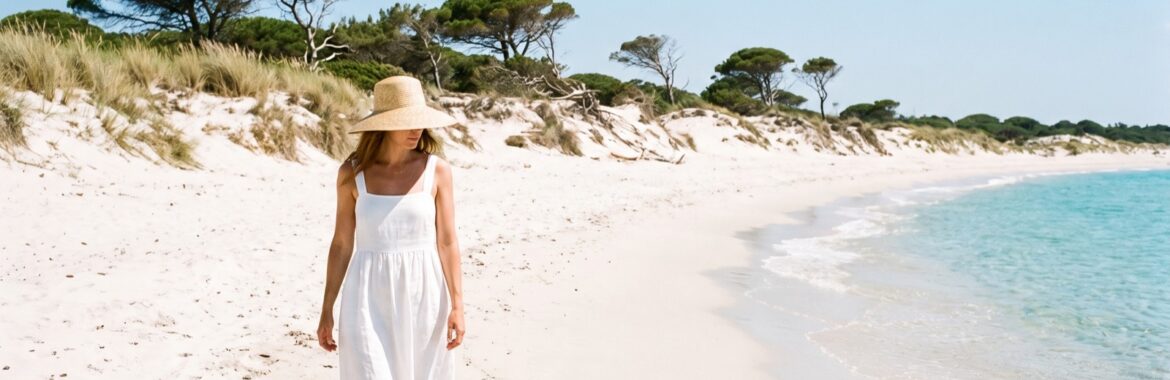
Es Trenc is Mallorca’s great wild beach, and it’s right on our doorstep. More than two kilometres of fine white sand, turquoise water with a Caribbean air and not a single building in sight: a protected stretch of sand in the heart of the southeast, between Campos, Ses Salines and the Colònia de Sant Jordi. We know it twelve months of the year, so this is our full guide, with no postcard gloss: what it’s really like, how to get there and park, what services you’ll find, the rules worth respecting, the best time to go and everything you need to enjoy it properly.
What makes Es Trenc unique is precisely what it lacks: concrete. While almost the entire Mallorcan coast was built up, this stretch stayed wild, backed by dunes, pine groves and the salt flats of the Salobrar. The result is one of the few great unspoilt beaches left in the Mediterranean, and the image many people hold of the most authentic Mallorca.
The beach
What Es Trenc is like
Es Trenc is a long, open stretch of sand — more than two kilometres — of very fine white sand, with a seabed that slopes gently into the water, which gives those characteristic turquoise tones. The water is clear and, on calm days, spectacular. Because it faces south, this is a beach that shines above all in settled weather; when the wind blows from the south it kicks up a swell, and it’s worth heading to another coast of the island.
It’s a broad beach, so even in summer you’ll find a spot if you walk a little, although the more comfortable, serviced areas fill up early. At its western end there’s a signposted zone where naturism is permitted and common, true to the free, barely-developed character of Es Trenc; the rest of the sand is mixed and family-friendly.
Nature
Dunes, salt flats and flamingos
Behind the sand, Es Trenc forms part of a protected area alongside es Salobrar de Campos, a large wetland of salt pans where the famous flor de sal d’Es Trenc is still harvested by hand and where, at dusk, you’ll often see flamingos and other birds. The dunes, the pine groves and the Posidonia meadows that keep the water alive are protected: that’s why it matters so much to stick to the marked access paths and never walk on the dunes.
That Es Trenc remains wild is no accident: it’s the result of years of protection against attempts to develop it. Today the whole of Es Trenc and es Salobrar de Campos is designated a protected natural area, which safeguards its landscape for the future. So anyone living nearby enjoys the reassurance of knowing this postcard isn’t going to change: it will stay sand, dunes and sea, as it always has been.
Getting there
Access and parking
Es Trenc has several access points. From Campos, you reach it via the Ses Covetes area, at the western end of the beach. From the Colònia de Sant Jordi, you come in from the eastern side, on foot along the coast. And halfway along the road between Campos and the Colònia is the main car park of Es Trenc, the most direct way down to the sand.
In season, access is regulated. The main car park is paid — around €7 a day, roughly open from 9:00 to 21:00 — and from there a short walk (or a shuttle, depending on the time of year) takes you to the sand. At Ses Covetes there’s another, slightly cheaper car park (around €5 a day in high season), and some local restaurants offer private parking (between €10 and €20, often refundable if you eat there). Spaces run out before midday, so if you want to park close, it’s worth arriving before 9:00. Tariffs change each season: check them before you go.
On the sand
What services there are (and what there aren't)
It’s worth being clear so there are no surprises: Es Trenc is a natural beach, and its services are minimal. In season there are lifeguards in the busiest areas, a couple of beach bars and portable toilets, and little more. Walking about ten minutes to the right from the main car park brings you to the area of the chiringuito del Mig (the middle beach bar).
There’s no promenade, no sunloungers along the sand, no shops and no large facilities. That absence is exactly what keeps it wild and special, but it means you have to come prepared: water, shade and whatever you need for the day. And some cash, because both the car park and the beach bars appreciate it.
When to go
The best season and time of day
The bathing season runs from May to October, but those of us who live nearby are clear about our favourites: June and September, with fine weather, warm water and none of the crowds of high summer. In July and August the beach is spectacular but you have to organise yourself well — get up early for the parking and avoid the middle of the day — while spring and autumn bring quiet days with beautiful light.
And a local secret: Es Trenc is also wonderful in winter. A mild, calm day with the beach almost empty makes for one of the finest walks on the island. As for the time of day, early morning or from five in the afternoon onwards is far more enjoyable, with better light and no stress over space or parking.
Respect the setting
Rules, protection and naturism
Es Trenc is a protected natural area, and looking after it is everyone’s responsibility. The dunes are fragile and hold the sand in place: cross them only by the marked paths and never tread on them. The Posidonia you see at the shoreline or on the seabed isn’t dirt but a plant protected by law that keeps the water clean; it gathers above all in front of the main car park, so if you’re after a clearer patch of sand to wade in, walk a little to one side or the other.
Don’t take away sand or plants, take all your rubbish with you and respect the signs. The naturist zone is signposted at the western end of the beach. And, as on most Mallorcan beaches, during the bathing season dogs are usually not allowed on the sand: always check the current signage.
Nearby
What's close by
Es Trenc isn’t on its own. Right alongside it, on the same stretch of coast, are Es Carbó, Ses Roquetes and Platja des Dolç, just as unspoilt and even quieter. The Colònia de Sant Jordi, the area’s seaside village, is a stone’s throw away, with its harbour, its restaurants and the boats to the Cabrera National Park. And the villages of Ses Salines and Campos, a few minutes off, offer all the life and services of the southeast, with their produce-led cooking.
That concentration of wild beach, authentic villages, salt flats and good food is what makes this corner of the southeast one of the most special on Mallorca: you can go from a swim at Es Trenc to eating fish in the Colònia or watching flamingos on the salt flats, all in the same afternoon.
The perfect plan
How to organise your day at Es Trenc
If you want to make the most of the day like a local, the formula is simple. Arrive early (before 9:00 in summer) to park close and claim a spot with the beach still calm. Spend the morning swimming and strolling along the sand, drifting a little away from the central access for more space. At midday, head up to eat in the Colònia de Sant Jordi — fresh fish by the harbour — or in Ses Salines, with its emblematic village cooking. And save the sunset for the Salobrar salt flats, on the lookout for flamingos, or for the nearby Cap de Ses Salines, one of the most star-filled skies on the island. A ten-out-of-ten day, unhurried and very much of this place.
Common questions
Frequently asked questions about Es Trenc
Where do you park at Es Trenc and how much does it cost?
There’s a main car park (paid, around €7 a day, roughly open 9:00–21:00), another at Ses Covetes that’s a little cheaper (around €5 in high season) and the odd private restaurant car park (€10–20, sometimes refundable if you eat there). Spaces run out before midday, so arrive before 9:00 if you want to park close. Tariffs are updated each season.
What’s the best time to go?
June and September are ideal: fine weather and fewer people. Spring and autumn are very quiet, and in high summer it’s best to get up early and avoid the middle of the day. Even in winter it’s a lovely place for a walk.
What services are there on the beach?
As it’s a natural beach, services are minimal: lifeguards in the busiest areas in season, a couple of beach bars and portable toilets. There’s no promenade, no sunloungers along the sand and no shops. Bring water, shade and whatever you need.
Is Es Trenc a naturist beach?
There’s a signposted zone at the western end where naturism is permitted and common. The rest of the sand is mixed and family-friendly.
Can you go with a dog?
As on most Mallorcan beaches, during the bathing season dogs are usually not allowed on the sand. Always check the current signage.
Why is there seaweed at the shoreline?
It isn’t seaweed: it’s Posidonia, a marine plant protected by law and a sign that the water is clean. It gathers above all in front of the main car park; if you’re after a clearer patch of sand to wade in, walk a little to one side.
Living here
Living near Es Trenc
Having Es Trenc as your home beach is one of the great draws of living in the southeast of Mallorca. The villages of the area — Ses Salines, Campos, the Colònia de Sant Jordi — let you live all year round just minutes from this beach, with the calm of the farming interior or the seafaring feel of the coast, whichever you prefer. For anyone dreaming of having one of the island’s finest beaches a quarter of an hour from their door, this is one of the best parts of Mallorca. We live and work here, so we know every village, every cove and every house.
If you can picture yourself with this stretch of coast as your everyday, or simply want us to tell you what life near Es Trenc is really like in February rather than August, get in touch. We live in the area all twelve months of the year and would be glad to help you find your place.