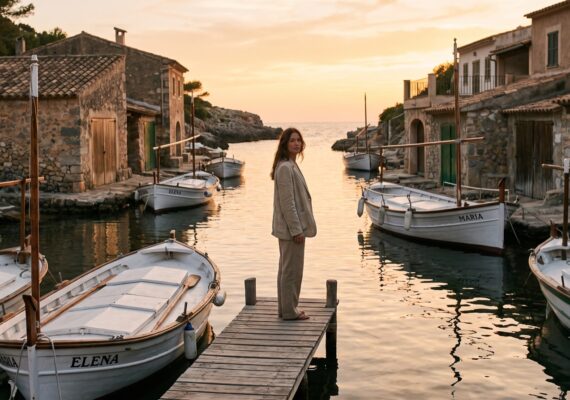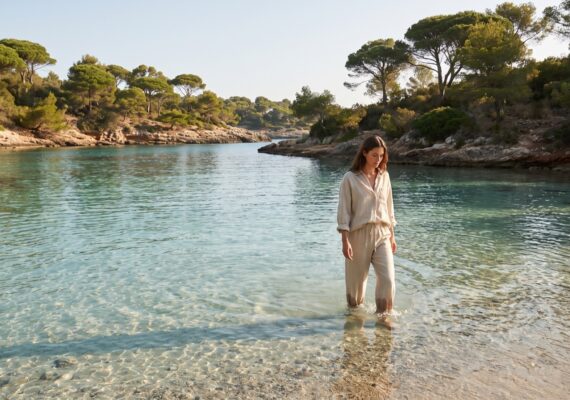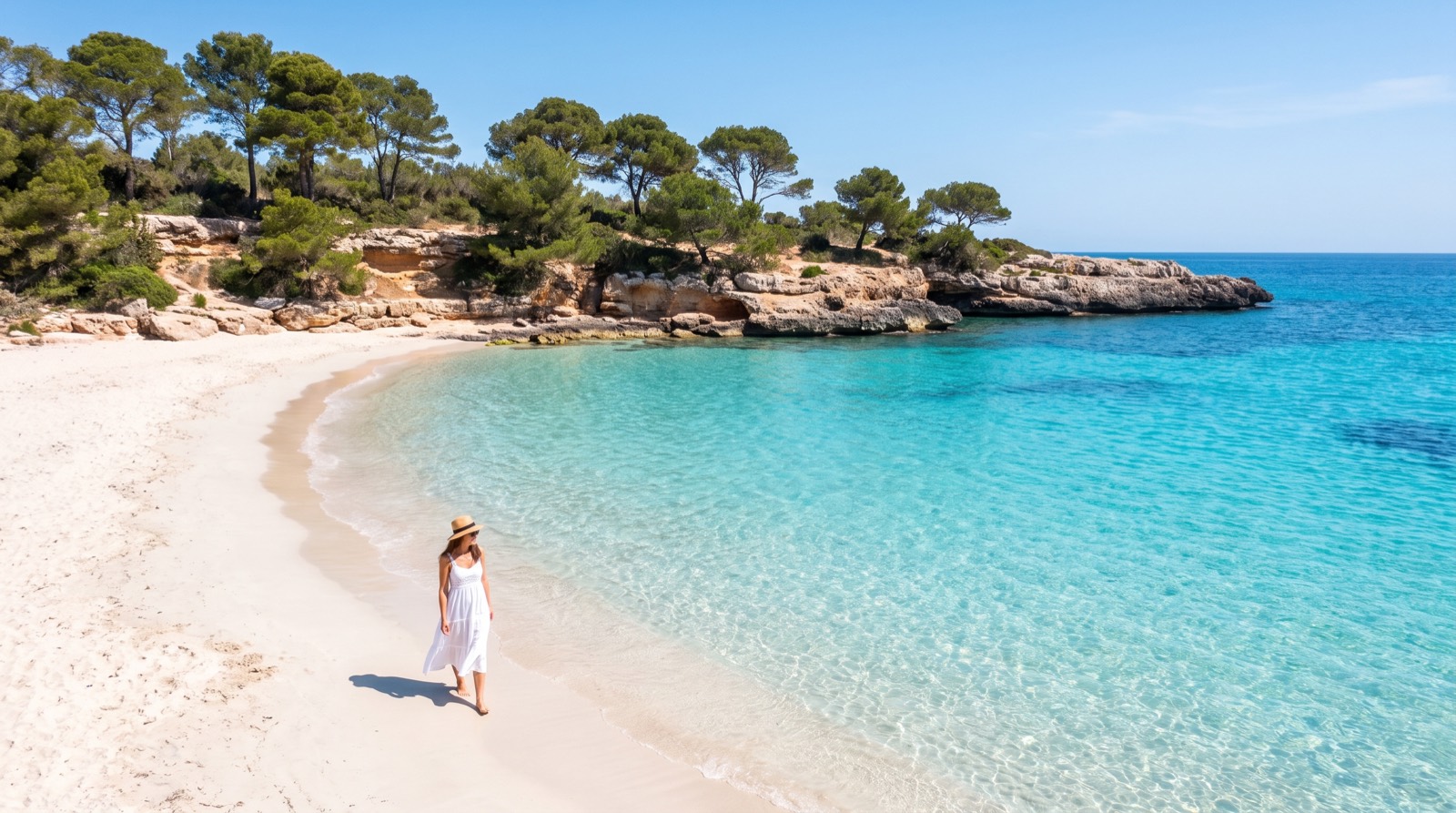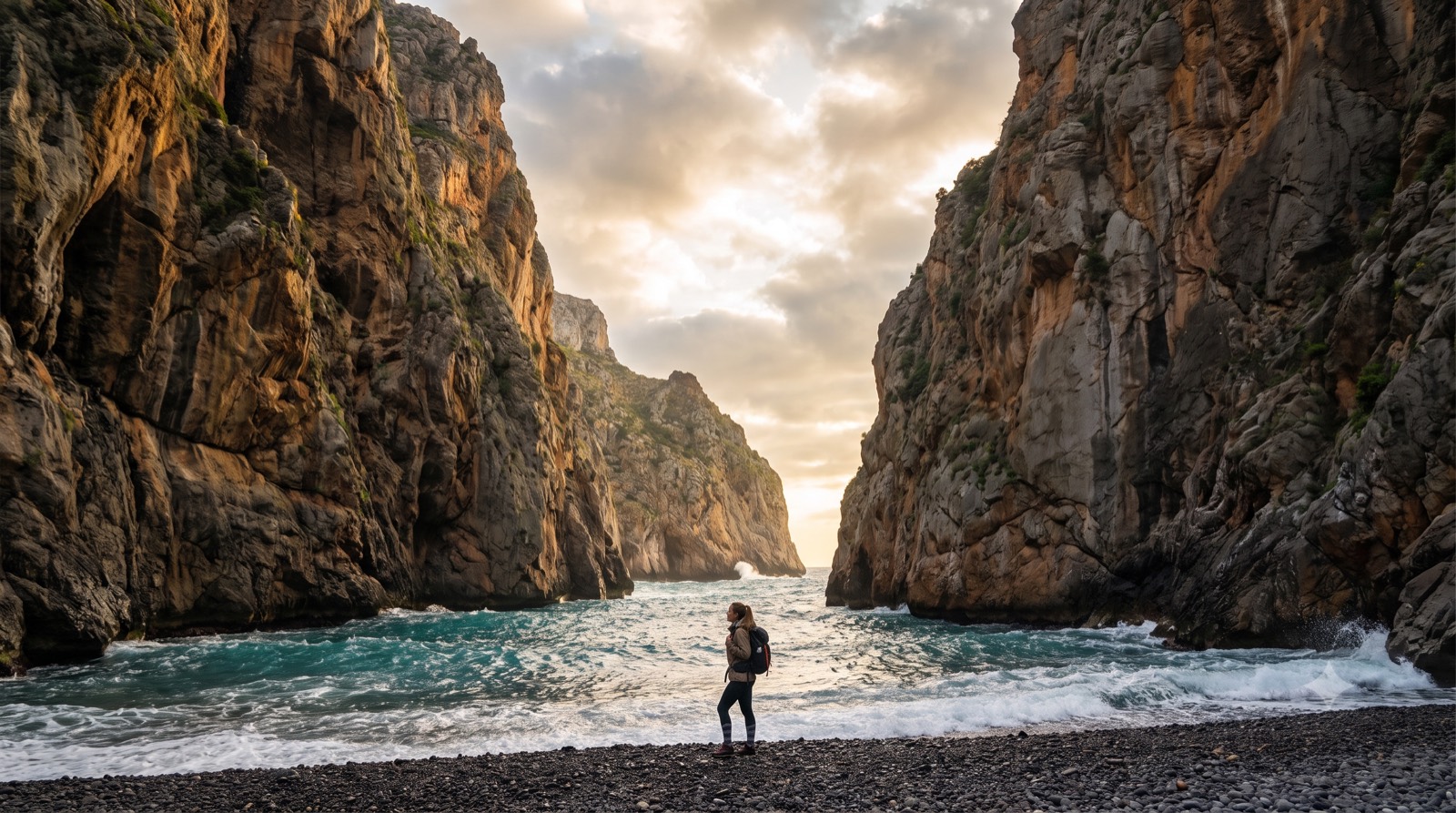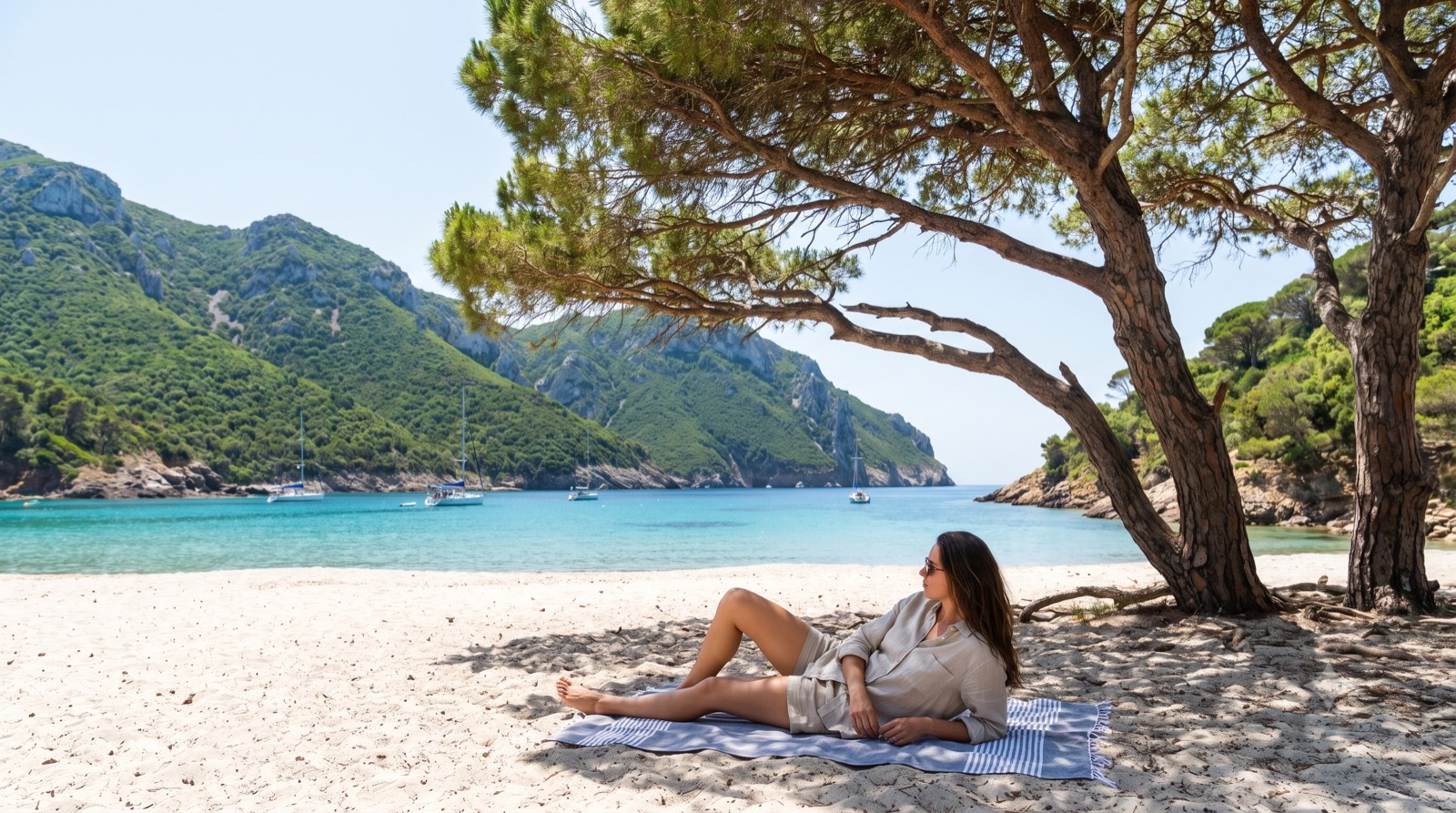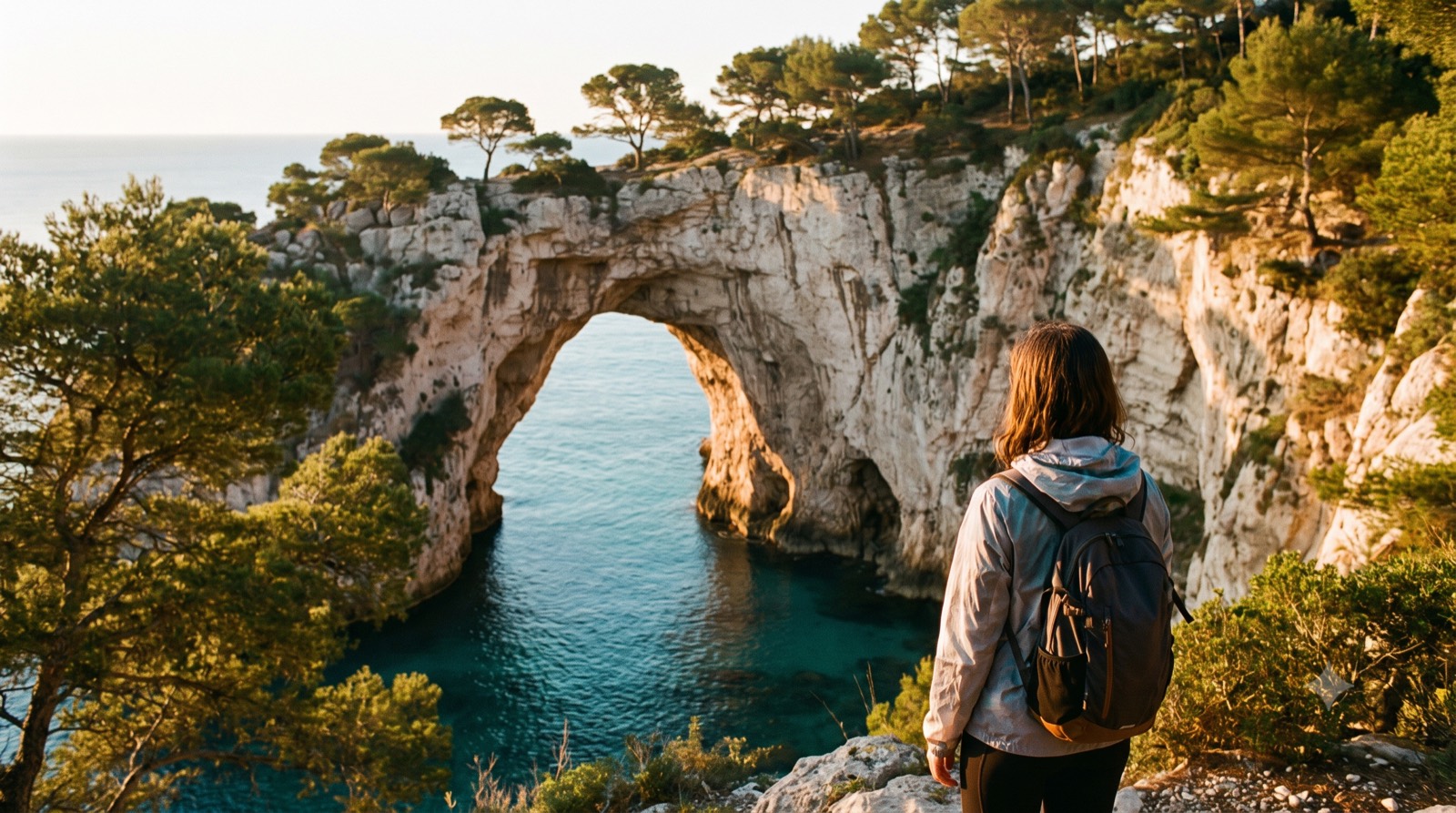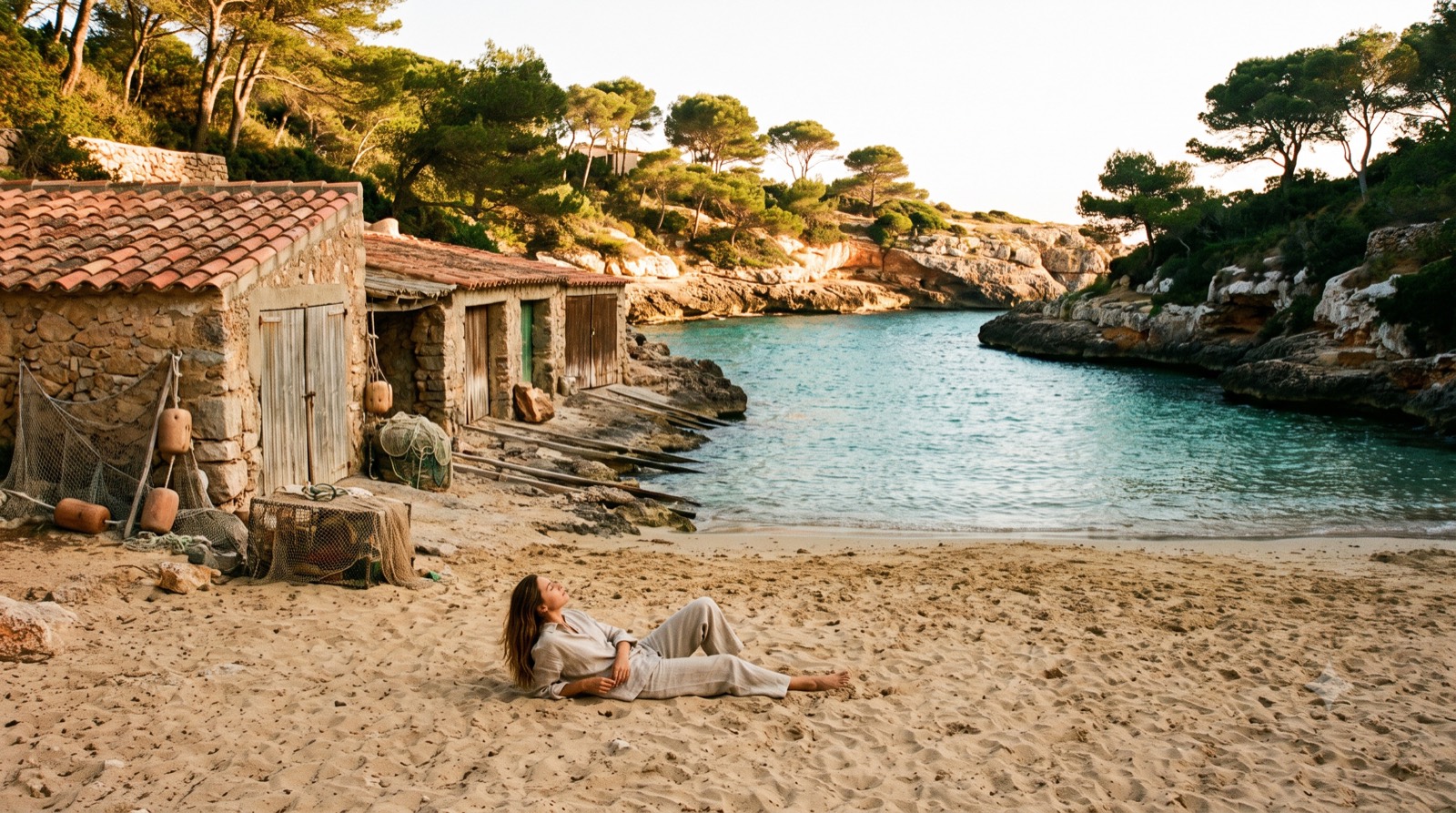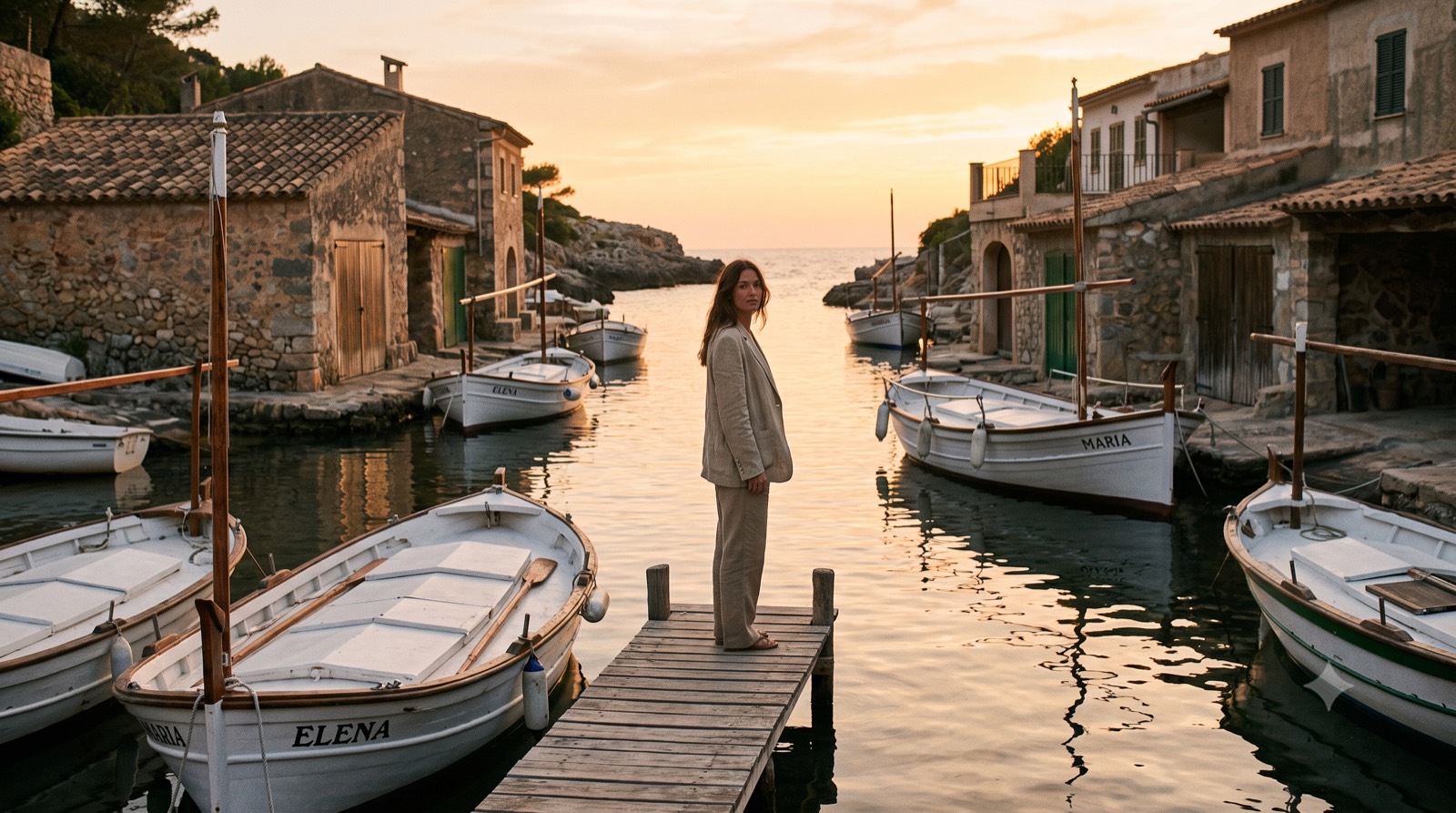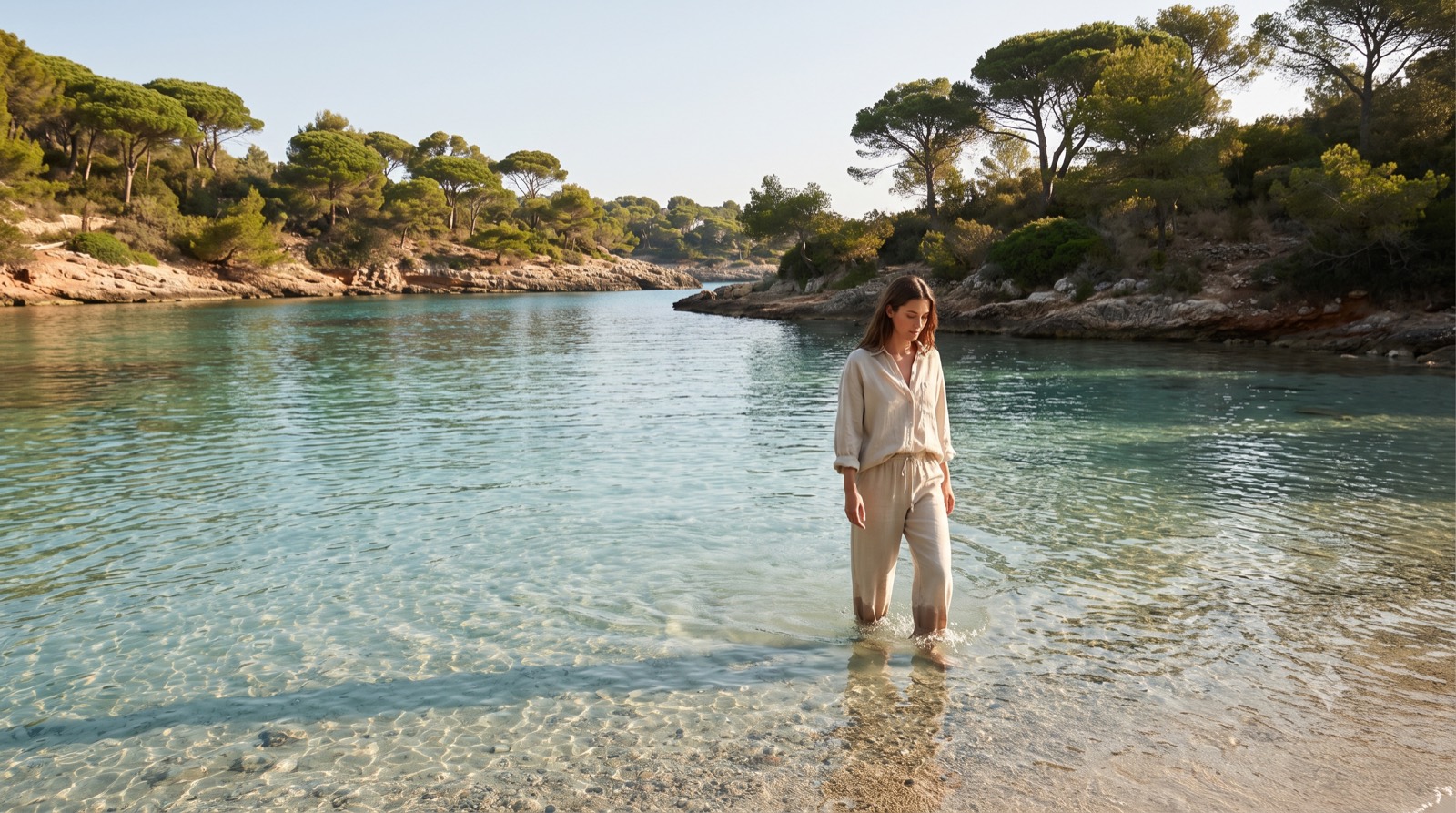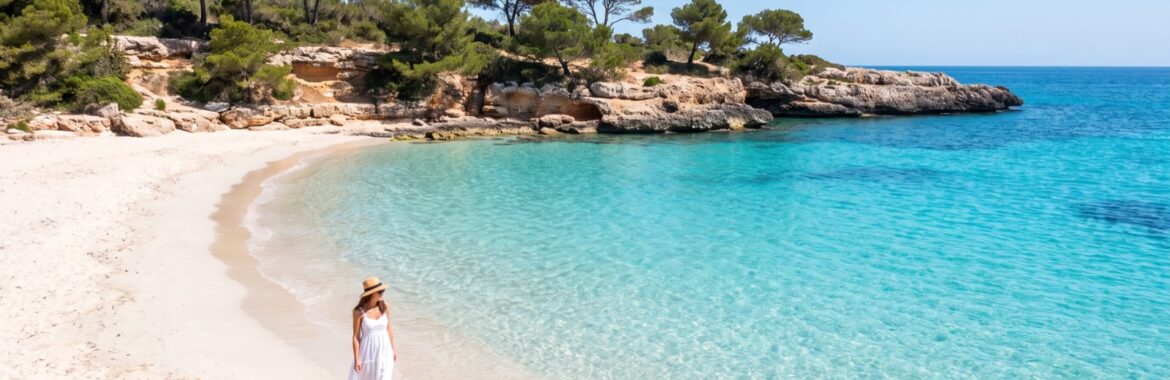
Mallorca has some of the finest beaches and coves in the Mediterranean, and they could hardly be more different from one another. There are kilometre-long stretches of white sand and turquoise water, tiny coves hidden between cliffs, mountain beaches at the end of a ravine, and unspoilt corners you can only reach on foot. This is our honest guide, zone by zone, written by people who live on the island all year round and know every cove in August and in February alike.
The first thing to understand is that two worlds coexist in Mallorca: the big beaches with every service going, perfect for a family day out, and the wild coves without a single beach bar, where the reward is nature in its purest form. We’ll tell you about both, so you can choose according to what you’re after. If you’re weighing up where on the island to settle, our guide to the most beautiful villages in Mallorca to live in is a good companion to this one.
What makes the difference
Before you go: five tips from people who live here
- Go early or go late. In summer, the small coves fill up by mid-morning and the parking runs out fast. First thing or after five o’clock, you’ll enjoy them far more.
- Out of season they’re a luxury. From October to May you’ll have many coves almost to yourself, with a light and a calm that simply don’t exist in August.
- Wild isn’t the same as comfortable. The most spectacular coves often have no facilities and no shade, and some are reached on foot along rough paths. Bring water, proper shoes and, sometimes, water shoes.
- Respect the surroundings. Many are protected (Posidonia seagrass, dunes, nature parks): leave no trace and look after the nature that makes them special.
- The wind rules. If it’s blowing on one side of the island, cross to the other: there’s almost always a sheltered coast. That’s one of the real advantages of living here.
Our patch
The southeast: wild coves and Es Trenc
This is our patch, and for many the part of the island with the best coves of all. Here you’ll find Es Trenc, Mallorca’s great unspoilt beach: more than two kilometres of fine white sand and turquoise water with a Caribbean air to it, barely a building in sight, set between Campos, Ses Salines and the Colònia de Sant Jordi. Alongside it, Es Carbó, Ses Roquetes and the Platja des Dolç complete a stretch of low, wild coast that’s hard to beat.
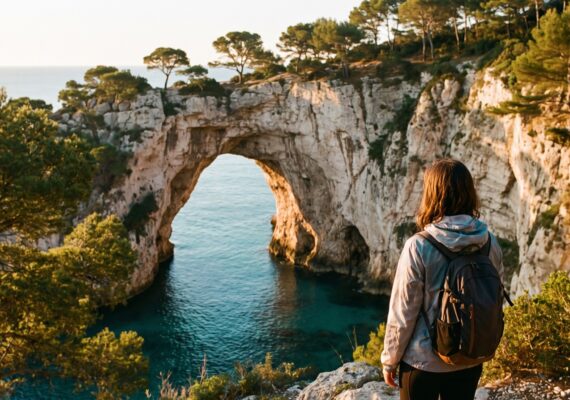
Further east, in the municipality of Santanyí, sits the most photographed jewel of all: the Caló des Moro and its neighbour Cala s’Almonia, little coves of crystal-clear water wedged between rocks, small and without facilities, reached on foot. Nearby, Cala Llombards and Cala Santanyí — with the spectacular natural arch of Es Pontàs — offer sand and a little more comfort, and the Mondragó nature park protects a couple of picture-perfect coves among the pines, which we cover in our Cala Mondragó guide. Not far off lies the lovely fishing village of Cala Figuera, more harbour than beach, but one of the prettiest corners of the southeast.
For the more adventurous, the far south keeps a secret: Cala Màrmols, a remote cove of crystalline water near the Cap de Ses Salines, reached only after a long walk along the coast, which rewards the effort with one of the most untouched swims in all of Mallorca. It’s the perfect example of what the southeast offers: nature left intact for those willing to seek it out. This is also the area where we live and work, so we know every access, every car park and every season of the year.
Wild coves
The east coast: dunes and untouched coves
The east coast, from the municipality of Artà across to Capdepera and Manacor, hides some of the wildest beaches left in Mallorca. Cala Mesquida and Cala Agulla, near Capdepera, are broad sandy beaches ringed by dunes and pine woods; Cala Torta and Cala Mitjana, in Artà, are wilder and more solitary still.
Towards Manacor, the coves of Manacor — Cala Varques, Cala Magraner, Cala Sequer — are paradise for anyone after a wild cove with not a single service, in exchange for a walk to reach them. And on the more touristy stretch of the area, Canyamel, Cala Millor and Sa Coma offer large family beaches with every comfort.
It’s one of the most contrasting areas on the island: in a few kilometres you go from a sandy beach with a lifeguard, sunbeds and a beach bar to a hidden cove reached only by those who know the way. For anyone living nearby, that variety is a luxury: one day you pick comfort, the next adventure, without leaving the district.
The north of the island
The north: Formentor and the bay of Alcúdia
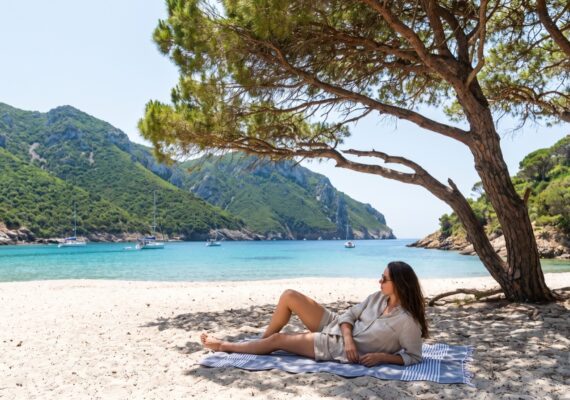
The north combines spectacular beaches with great family-friendly stretches of sand. The star is the beach of Formentor, in Pollença: fine sand beneath a pine grove, with mountain views and calm water, in one of the loveliest settings on the island. Nearby, the tucked-away Cala Sant Vicenç, hemmed in between cliffs.
The bay of Alcúdia and neighbouring Playa de Muro form one of Mallorca’s largest beaches: kilometres of fine sand and shallow water, ideal for families, with every service and the s’Albufera nature park right alongside. Further north, hidden and reachable only on foot or by boat, the wild beach of Coll Baix rewards those who fancy the walk.
These big northern beaches are also among the most comfortable and safest on the island for children: fine sand, a gentle and very gradual entry into the water, lifeguards in season, sunbeds, toilets and restaurants right on the sand. For families who live in Mallorca or come to spend long stretches here, the bay of Alcúdia and Playa de Muro are a safe bet for much of the year, with room to spare even when summer is at its busiest.
The Tramuntana
Mountain beaches: Sa Calobra and beyond
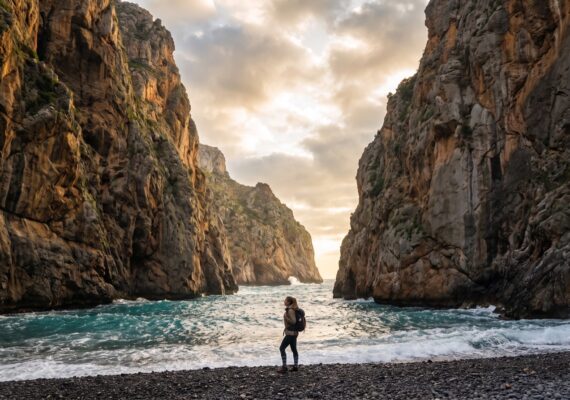
On the northwest coast, the beaches are something else entirely: small, of pebbles or sand, wedged between mountains that drop straight to the sea. The most famous is Sa Calobra and the mouth of the Torrent de Pareis, a rock amphitheatre reached by a dizzying road or by boat, one of the most impressive landscapes in the whole Mediterranean.
More accessible and much loved are Cala Tuent, peaceful and with views of the Puig Major; Cala Deià, at the foot of a ravine below the village of the artists; and the bay of Port de Sóller, one of the few easy sandy beaches in the Tramuntana, which you can reach on the century-old tram. These are beaches for combining a swim with mountains and walking.
The Tramuntana coast also hides small treasures for those who live nearby: the Port des Canonge and the cove at Banyalbufar, among terraces that step down towards the sea, or the rocky coves of Estellencs, are quiet, very local corners far from the crowds. And though it isn’t a beach as such, the viewpoint at Sa Foradada, that pierced rocky peninsula between Valldemossa and Deià, gives one of the most spectacular sunsets and swims on the island to anyone game enough to walk down.
Near Palma
The southwest and the bay of Palma
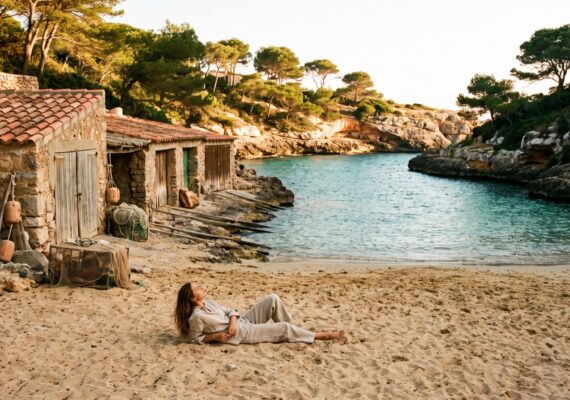
The Calvià area and the bay of Palma are home to more touristy but very pretty coves. Portals Vells, Cala Comtessa and the beaches of Illetes offer clear water close to the capital. And a little further south, in Llucmajor, the narrow and spectacular Cala Pi, a long inlet between cliffs with fishermen’s boathouses, is one of the most photogenic in the area.
These are perfect beaches for anyone living near Palma who wants the sea a few minutes away, with every service and good access all year round. At the far west, Sant Elm, in Andratx, offers a quiet beach with privileged views over the island of Sa Dragonera, a particularly lovely end to the coast.
A world apart
The wild islands: Cabrera and Sa Dragonera
Mallorca also has two protected islands that are a world apart and deserve a full day. The Cabrera National Park, an archipelago to the south of the island, is one of the best-preserved marine areas in the Mediterranean, with water of an incredible clarity and a famous blue cave; you visit it by boat from the Colònia de Sant Jordi. And Sa Dragonera, opposite Sant Elm, is an uninhabited nature park, a refuge for birds and lizards, reached by a short crossing. Neither has sandy beaches as such, but their natural value and their rocky coves make them two of the best sea experiences on the island.
The secret
Beaches for every time of year
One of the great advantages of living in Mallorca is that the sea isn’t just a summer thing. The swimming season is long — from May to October the water plays along — and outside it, the beaches turn into places for walking, running or simply switching off. The small coves of the southeast or the mountain beaches of the Tramuntana, impossible to enjoy in the thick of August because of the crowds, are lived in calm in spring and autumn, with the best light of the year.
Anyone who lives here soon learns that the best beach days aren’t always the hottest, but the ones in September, October or a mild winter’s day with the sea calm and the cove all to yourself.
The round-up
So which is the best beach in Mallorca?
There’s no single answer, and that’s the beauty of the island: the best beach depends on the day, the wind and what you’re after. Here’s a quick round-up to point you in the right direction:
- Wild, turquoise stretches of sand: Es Trenc, Es Carbó, Playa de Muro.
- Small picture-perfect coves: Caló des Moro, Cala s’Almonia, Cala Mondragó.
- Mountain beaches: Sa Calobra, Cala Tuent, Cala Deià.
- For families, with services: Playa de Muro, bay of Alcúdia, Formentor, Cala Agulla.
- Wild coves with no facilities: coves of Manacor, Cala Torta, Coll Baix.
- Near Palma: Illetes, Portals Vells, Cala Pi.
Living in Mallorca means, above all, being able to choose. Having dozens of beaches and coves less than half an hour from home, and discovering, out of season, those corners that fill every photo in summer but are yours alone in February. We live in the southeast all year round and know every cove, every access and every season. That, perhaps, is the best reason to live in Mallorca: not coming to visit its beaches, but having them as part of everyday life.
If you’re thinking of living near the sea in Mallorca and would like us to tell you honestly what each area is really like — where to park, when to go, and which home matches the sea you dream of — get in touch: we’d be delighted to help you find your place.