

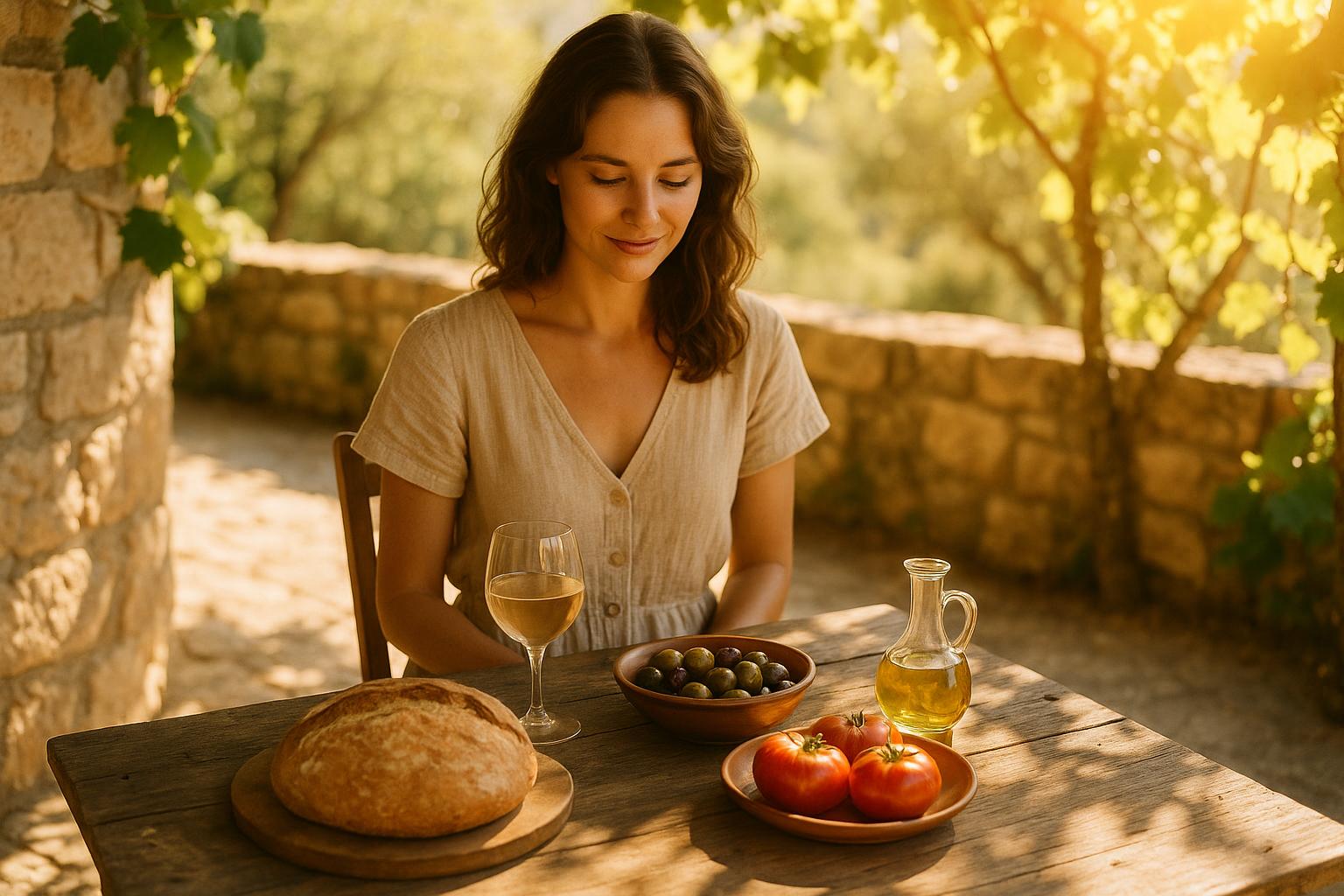
Eating well in Mallorca is easy. Eating from here is another thing entirely: it is a way of life. And it is probably what turns you from newcomer into neighbour faster than anything else. Because the Mallorcan pantry is not discovered on a restaurant menu, but at the Thursday market stall, at the village bakery, and in the conversation with the person who sells you the tomatoes and tells you, without being asked, which ones are at their best today.
We have lived and worked in the southeast since 2010 — Ses Salines, Santanyí, Campos, the Colònia de Sant Jordi, Felanitx — and this guide is not a list of fashionable spots. It is what people really eat here, where it comes from, when it is good and how you buy it. The area where we work is, moreover, one of the island’s pantries: this is where the market gardens, the salt and the wine are.
The pantry
Sobrasada, black pork and oil: the three pillars
If Mallorca had to defend itself with a single product, it would be sobrasada. A raw, cured sausage of minced pork, paprika and salt that is spread rather than sliced, and which here is not an appetiser but a staple: it keeps, it feeds, it solves the problem of dinner. It carries a Protected Geographical Indication (IGP Sobrasada de Mallorca), with two recognised categories: plain sobrasada de Mallorca, and Sobrasada de Mallorca de Cerdo Negro, made exclusively from the meat of the Mallorcan black pig (porc negre).
And that black pig deserves a paragraph of its own, because it explains half the island. It is a native Balearic breed, raised free-range, that feeds on what this land gives: figs and carob, supplemented with cereals and pulses. The result is a dark meat, richly marbled, with a fat profile closer to olive oil than to an industrial pig. Taste a porc negre sobrasada next to an ordinary one and you understand at once why this is not up for negotiation here.
The second pillar is oil. The DO Oli de Mallorca has existed since 2002 and covers extra virgin olive oils from varieties such as the mallorquina, the arbequina and the picual. The olive trees of the Tramuntana — those twisted trunks that look like sculptures — are part of the UNESCO World Heritage landscape, but the oil is made all over the island. A good oli de Mallorca on pa amb oli, with a rubbed ramallet tomato, is the afternoon snack, the quick supper and the acid test of any household.
Our home
Flor de sal: the product that gives the village its name
Here we speak for our own patch, and with good reason. Ses Salines is named after its salt pans, worked since Punic and Roman times — they are among the oldest in the Mediterranean — and still producing today. From them comes flor de sal: the fine, fragile crust that crystallises on the surface of the pans and is gathered by hand, with gentle sweeps of the paddle, when the sun and the wind agree.
It is not a cooking salt: it is a finishing salt. You add it raw, at the end, over meat fresh off the fire, over a tomato, over a fried egg. It crunches. And that texture is literally the landscape of the southeast turned into a product: sea water, sun and wind from right here. If you live in the area, you have it ten minutes from home; if you come from elsewhere, it is the finest souvenir there is, because you cannot fake the place where it was made.
Garden and sea
Campos, the fish market and what the land gives
Campos is farming Mallorca at its finest, and you taste it across the whole area. From here come vegetables, milk and country produce that fill the market stalls in summer: tomatoes, peppers, artichokes, broad beans. The ramallet tomato — the one hung in strings that keeps for months — is a household institution: it is the one you rub on bread, all year round.
And then there is the sea, which here is no backdrop. The Colònia de Sant Jordi has a harbour and it has boats, and the fish landed at the market sets the week’s menu: picarel, wrasse in its season, squid, octopus, prawn. Living near a fish market changes the way you cook, because you stop deciding what you want to eat and start eating whatever came in that day. It is a small change that people who move here always mention.
Rounding out the pantry are the almond (the same one that fills the fields with white blossom in February and ends up in turrón and in the ensaimada), carob — which here is not a health fad but a traditional food, for the black pig too — the country cheeses and the fruit of the season. None of this travels well: which is exactly why it tastes different here.
The wine
Binissalem, Pla i Llevant and grapes found nowhere else
Mallorca has been making wine for centuries, but the interesting thing for anyone who lives here is that the island has backed its own grapes rather than imitating anyone. There are two denominations of origin: the DO Binissalem, recognised in 1990 and the island’s first, in the centre-north; and the DO Pla i Llevant, recognised in 2001, covering the centre and the southeast — in other words, ours: Felanitx is one of its strongholds. There is also the IGP Vi de la Terra Mallorca, under which many producers across the island work.
What makes this wine special are the native varieties, which you will not find on just any list on the mainland. In reds: manto negro, elegant and soft-tannined, the backbone of the island’s ageing reds; callet, more delicate, spiced, pale in colour and very recognisable in texture; and gorgollassa, rescued from near extinction. In whites: prensal blanc — also called moll — versatile, fresh, with citrus and green apple; and giró ros.
For daily life, this translates into something very concrete: you can meet the person who makes your wine. The bodegas here are small, a short drive away, and many open for visits and tastings. Drinking local here is not a pose; it is simply that the winery is on the other side of the field.
The cooking
What people really eat, and when
Mallorcan cooking is country cooking: it was born of making the most of things, not of showing off. And that is precisely why it is so good. These are the dishes you will genuinely find in a home or in a celler:
- Tumbet. Potato, aubergine and pepper fried separately, with tomato on top. It sounds simple and it is a masterpiece. Summer, when the garden is in charge.
- Frit mallorquí. Potato, vegetables and offal sautéed together. Hearty, honest, the dish of the fiestas and of the matança.
- Arròs brut. A soupy rice, “dirty” from the spices and the game meat. A winter dish, of long tables and Sundays.
- Sopes mallorquines. Which are not soup: thinly sliced dry bread that drinks up a vegetable broth until it is almost dry. It is the very definition of waste-nothing cooking, and pure winter.
- Coca de trampó. A thin dough with diced tomato, pepper and onion. The summer snack, eaten with your hands.
- Ensaimada. The spiral of lard (saïm) you take home when you travel, and which here is eaten for breakfast without ceremony.
- Panades, rubiols and crespells. The Easter baking. They appear in the bakeries around Holy Week and then vanish. If you live here, they are one of those markers that tell you where you are in the year, better than the calendar.
That last idea is the key to everything: here you eat by the season, not by the whim. And once you get used to it, there is no going back. We go into it in our guide to the climate of Mallorca month by month, because the calendar of the produce and the calendar of the weather are one and the same.
The calendar
The year in the pantry: what is good and when
To live here is to learn a new calendar: one set not by your phone but by the market. In broad strokes, this is how the year is ordered on the southeast table:
- Winter. The cooking goes to the country: arròs brut, frit, sopes mallorquines. It is the time of the traditional matances and, therefore, of the new sobrasada hung up to cure. Citrus and leafy greens in the garden.
- Late January and February. The almond blossoms and the fields turn white. It is the spectacle of the year, and also the start of the almond you will eat later.
- Spring. Broad beans, peas, artichokes: the garden waking up and the cooking lightening. And around Holy Week the panades, rubiols and crespells appear in the bakeries. They last as long as they last.
- Summer. The reign of the tomato, the pepper and the aubergine — that is, of tumbet and coca de trampó. Melon, watermelon and, at the end, figs. And the salt pans in full flor de sal season.
- Autumn. The grape harvest first and the olive after: the new oil is one of the best things that happens to this island. Quince, carob, mushrooms. For many people here, the finest time of year at the table too.
After a couple of years, you stop looking at the calendar and start knowing which month it is from what is on the market stall. That, more or less, is the moment you become one of us.
The places
Where the people who live here eat
In the southeast there are houses that are genuine institutions, the kind that need no introduction and that you return to for years. Casa Manolo, in Ses Salines, is an emblem of the village. And in the area you will also find Cassai, Triple and Estarellas: places with pedigree and judgement, where you eat properly and where the produce of this land is treated as it deserves.
But we do not want to sell you only restaurants, because that is not where life is. It is in the village celler, in the village bakery — the one that at eight in the morning smells of fresh ensaimada — and at the market stall where they keep the good things back for you because they know you. None of that appears in any guide, and it is exactly what makes staying here make sense.
Common questions
Frequently asked questions about the food of Mallorca
What is sobrasada and why does it matter so much in Mallorca?
It is a raw, cured pork sausage of paprika and salt, with a spreadable texture. It is protected by the IGP Sobrasada de Mallorca, which recognises two categories: sobrasada de Mallorca and the black-pork one, made only from the meat of the Mallorcan porc negre, a native breed raised free-range on figs and carob. It is the island’s most identity-defining product.
What wines are made in Mallorca, and where?
There are two denominations of origin: DO Binissalem (recognised in 1990, the island’s first) and DO Pla i Llevant (2001), which covers the centre and the southeast, with Felanitx as one of its strongholds. There is also the IGP Vi de la Terra Mallorca. What sets them apart are the native varieties: manto negro, callet and gorgollassa in reds; prensal blanc (moll) and giró ros in whites.
Which days is there a market in the southeast of Mallorca?
Santanyí has a market on Wednesdays and Saturdays, Ses Salines on Thursdays, and Campos on Thursdays and Saturdays. All of them in the morning. The Saturday market in Santanyí is the largest in the area and a fixture for many people who live here.
What is flor de sal and how does it differ from ordinary salt?
It is the fine crust of crystals that forms on the surface of the salt pans and is gathered by hand. It is used not for cooking but to finish a dish raw, because it adds texture and a crisp bite. In the south of the island it is produced in salt pans worked since Punic and Roman times.
Do you eat well in Mallorca outside the high season?
Better, in fact. In winter the cooking turns to the country — arròs brut, frit, sopes mallorquines — and the places are full of locals, without queues and at a calmer pace. That is when the Mallorcan table is really enjoyed.
What is pa amb oli?
Bread (ideally the brown Mallorcan loaf) with a rubbed ramallet tomato, good olive oil and salt, topped with whatever there is: sobrasada, cheese, ham. It is the afternoon snack, the quick supper and the unofficial national dish. Simple and perfect when the ingredients are from here.
Let’s talk
The table is the best way to understand this island
You can explain the southeast of Mallorca with figures, but you understand it far better with a market on a Thursday morning and a porc negre sobrasada on bread. Everything we have told you here — the salt, the garden, the wine, the fish market — happens within twenty minutes of the villages where we have worked since 2010.
If you are thinking of living here, it is a huge part of what you stand to gain, and one of the parts the brochures tell you least about. We show you the area, the villages and also where to buy good bread. Discover our guide to the most beautiful villages to live in Mallorca, and how the island lives through its climate month by month.