

Mallorca doesn’t have one climate — it has four. Anyone who only knows the island in August goes home with a single image — sun, heat and crowded beaches — that barely tells a quarter of the story. Living here all twelve months means discovering that the same village transforms completely with the seasons, and that the island is really several climates in one: the mild, sun-soaked south and east, the cooler and greener Serra de Tramuntana, and the wide bays of the north. We have known Mallorca inside out since 2010, so this is our honest, month-by-month guide to its climate, written by people who wake up here every day rather than by someone who visits for a fortnight in summer.
The idea is simple: there are four Mallorcas across the year. The calm, luminous winter (December to February), the almond-blossom spring of green fields (March to May), the intense and sociable summer (June to September) and the mild, golden and occasionally stormy autumn (October to November). Knowing them properly is the difference between choosing where and how to live with confidence and being caught out.
December to February
Winter: Mallorca at its calmest
The Mallorcan winter is the side of the island almost no one imagines. There is no snow and none of the northern-European cold: average temperatures across these months sit, depending on the area and the year, at around 10–13 °C, with daytime highs that usually reach 15–16 °C and cool nights that on the coast rarely fall below a few degrees. Inland and up in the Tramuntana it runs a little cooler; along the southern and eastern coast it stays at its mildest. January is the quietest month of the year and, in its own way, one of the brightest: short days but clean sunshine, calm seas and towns that belong to their residents again.
This is the Mallorca of wood-burning stoves and unhurried lunches, of walks along an empty shoreline and of parking wherever you like in a market town on a Saturday morning. It rains a little more than in summer, but these are relatively dry months next to autumn, and blue days that invite lunch in the sun are common. For anyone looking to live here rather than only to spend the summer, the winter is one of the island’s strongest arguments.
March to May
Spring: the countryside comes alive
Spring is, for many of us who live here, the finest season of the year. Averages climb steadily from the 13–14 °C of March to close to 19 °C in May, with highs that by late spring often reach 23–24 °C. The land, green after the autumn and winter rains, fills with poppies, orange blossom and working market gardens; the sun gains strength month by month — from around 200 hours in March to almost 300 in May — and the days stretch out.
It is the season for the outdoors: cycling the quiet inland lanes, the first terraces of the year, and a sea that is still fresh but already tempting for the bold. All of it happens without the crowds of summer, so the coast, the towns and the restaurants can be enjoyed in peace, under a light that photographers adore. If we had to show someone the island for the first time, we would bring them in April.
June to September
Summer: intense, with its nuances
Summer is the Mallorca everyone pictures, and here we owe you some honesty. July and August are the peak: averages around 25–27 °C, highs that touch or pass 30–31 °C, and warm nights when, on the coast, the thermometer barely drops. Sun is all but guaranteed — July runs close to 340 hours, the brightest month of the year — and rain is rare. It is also when the island fills up: traffic, busy beaches and tables you need to book. Spectacular, yes, but it rewards a little planning.
The good news is that summer has its nuances. June is a glorious month: full warmth and light, a sea that has already turned mild, and still without August’s full house. And September is, for many locals, the best month of the year to live the coast: it is still summer, the sea is at its warmest, the evenings draw out and much of the crowd has already gone. Those who live here learn to move by the hours — early and late in the day — and to leave the midday heat to shade and a siesta.
October to November
Autumn: the island’s best-kept secret
If spring is the favourite season for many, autumn is the secret almost no one shares. October is often a gift of a month: averages still around 18–20 °C, a sea kept warm by the summer, golden light and a calm that seems impossible in August. You still eat outside, you still go to the beach, and the towns find their rhythm again. November steps down a level — averages of around 14–16 °C — but keeps handing out plenty of gentle days before winter.
That said, autumn has its other face, and it pays to know it if you are going to live here with your eyes open: it is the wettest time of the year. October and November concentrate much of the annual rainfall, sometimes as intense spells and episodes of torrential rain very typical of the Mediterranean. They are short-lived and do not spoil the season, but they explain why the countryside turns green again and why houses across the island are designed with water in mind: good drainage, cisterns and terraces that drain well.
The sea
Water temperature, month by month
The sea around Mallorca keeps its own calendar, always a step behind the air: it is slow to warm in spring and slow to cool in autumn, which is exactly what makes it so rewarding. In winter (December to February) the water sits, very roughly, at around 14–16 °C: cold for swimming, but perfect for a walk along the shore. In spring it rises little by little and does not turn genuinely comfortable until late May or June.
Summer is its moment: between June and September the water hovers, approximately, around 24–27 °C, with August as the warmest month. And here is the key for anyone living here: in autumn the sea cools slowly, so much of October is still perfectly swimmable. That is why the real swimming season stretches well beyond what the summer calendar suggests. (Sea figures are approximate reference values, not official averages; they vary each year with wind and currents.)
Light and sky
The sun, the daylight and the stars
Beyond temperature, what really defines daily life in Mallorca is the light. The island is one of the sunniest corners of the Mediterranean: the summer months comfortably pass 300 hours of sunshine, and even the depth of winter holds around 150–170 hours a month, meaning many clear days even in January. All told, Mallorca gathers roughly 2,700–2,800 hours of sun a year, one of the reasons so many people decide to stay.
And there is a luxury you only appreciate once you live here: the night sky. The Cap de Ses Salines, at the southern tip of the island, is one of the areas with the least light pollution in Mallorca, a natural balcony for the starry nights of summer. Living here means having that rare combination — generous sun by day and, a few minutes away, one of the darkest, cleanest skies on the island once night falls.
In short
When each plan is at its best
If we had to sum up the year in one piece of advice per season, it would be this. Winter (Dec–Feb): the calm, the soft sun, the walks and, at the end, the almond blossom; the best time to get to know the towns with no one around. Spring (Mar–May): the green, flowering countryside, the best moment for cycling and sport, and the coast without the pressure. Summer (Jun–Sep): beach and social life in full swing, with June and, above all, September as the smartest bets. Autumn (Oct–Nov): the best-kept secret — a mild, golden October — with only the rain spells to keep an eye on.
There is no bad time to live in Mallorca; there are four different and wonderful ways to enjoy it. The key, as with almost everything here, is to stop thinking like someone on holiday and start thinking like someone who stays.
Common questions
Frequently asked questions about Mallorca’s climate
What is the best time of year to live in Mallorca?
It depends on what you are after, but for many of us who live here, spring (March to May) and a mild October are hard to beat: fine weather, nature at its best and real calm. Summer is spectacular but busy, and winter has a stillness and a light that win people over. There is no genuinely bad season.
Is it cold in winter in Mallorca?
Not in the northern-European sense. Averages from December to February sit around 10–13 °C depending on the area, with typical daytime highs of 15–16 °C and plenty of sunshine. It cools down in the evening and a well-oriented home with heating makes all the difference, but there is no snow or extreme cold on the coast.
When can you swim in Mallorca?
The comfortable swimming season runs roughly from June to October. The sea reaches its warmest in August and, because it cools slowly, much of October is still swimmable. The bold get in from May, and those who live here know that October’s water is one of the island’s great secrets.
When do the almond trees blossom in Mallorca?
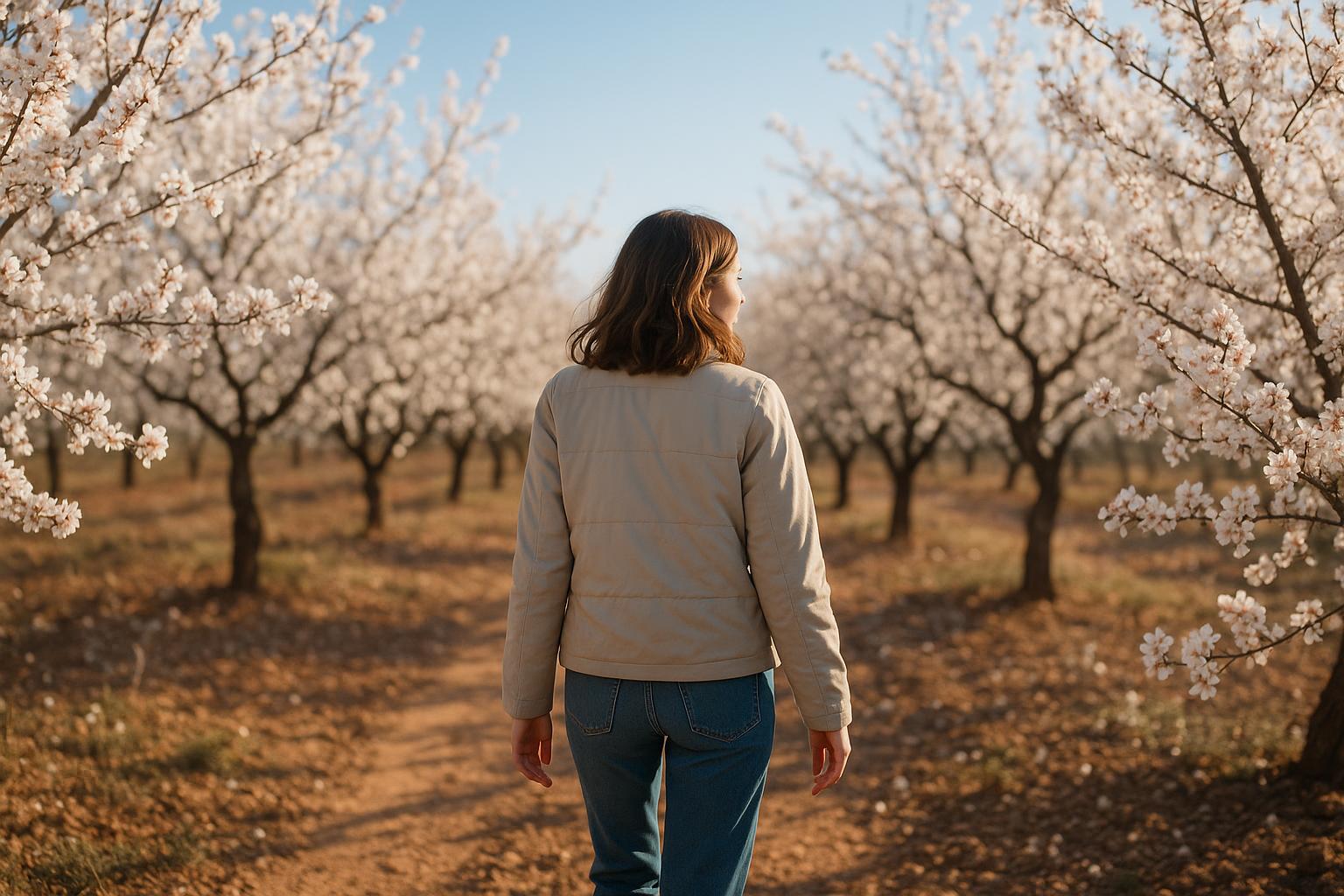
Usually between late January and February, with the odd tree lingering into early March. There is no fixed date: it depends on each winter’s temperatures, and the sheltered areas flower before the open fields. The bloom is brief, only a few weeks.
When does it rain most in Mallorca?
Autumn is by far the wettest time, above all October and November, sometimes as intense Mediterranean spells. Summer, by contrast, is very dry, with July the driest month. It is a climate that concentrates the rain into a few episodes and leaves many clear days across the rest of the year.
How many hours of sunshine does Mallorca get a year?
The island gathers roughly 2,700–2,800 hours of sun a year, among the highest figures in Europe. In summer it comfortably passes 300 hours a month, and even in the depth of winter it holds around 150–170 hours, meaning plenty of clear days all year round.
Living here
Living the island’s climate all twelve months
The climate is probably the quiet reason so many people who come to Mallorca end up staying. It is not only the postcard summer: it is being able to live outdoors almost all year, to string together the almond blossom, the terraces of spring, the September sea and golden October, and to discover that even winter has a light of its own. Four Mallorcas in one, a quarter of an hour from the sea.
If you would like to keep discovering what life here is really like, take a look at our guide to the most beautiful villages to live in Mallorca, or plan your days by the sea with our guide to the best beaches and coves of Mallorca. We live and work here, so we know every town, every cove and every season of the year.