
The short version: for centuries, the armies of the ancient Mediterranean sought out the same specialists: the slingers of the Balearic Islands. Diodorus of Sicily, Strabo, Polybius and Livy say the islands took their name from the throw, that boys could not eat until they had hit their bread with a sling, and that Carthage carried these men to Sicily, Spain and Italy. In 123 BC, Rome came for the islands themselves. This is their story, told from the classical texts and the island’s official sources, with the places in Mallorca where you can still see it.
Islands named for a throw
Diodorus of Sicily explains the name in his Library of History (Book 5, chapter 17): the Greeks called Mallorca and Menorca the Gymnesiae, because the islanders went without clothing in summer, while the islanders and the Romans called them the Baliarides, from the Greek ballein, to throw, because in hurling stones with slings they were the most skillful of all men. Polybius, in his Histories (Book 3, chapter 33), gives the same origin. The summary of Livy’s lost Book 60, the Periocha 60, adds a second tradition: Balius, a companion of Hercules left behind on the islands.
In American terms, they were sharpshooters: specialists hired for one skill, aim.
Bread on a stake
Diodorus (Book 5, chapter 18) describes the training: a mother set up a piece of bread on a stake, and the boy was not allowed to eat until he had hit it. Strabo (Book 3, chapter 5) tells the same story.
Each fighter, according to Diodorus, carried three slings: one around the head, one around the waist and one in the hand. Their stones flew as if from a catapult, crushing shields and helmets, and in most cases they never missed. Strabo adds that the slings were made of rush, hair or sinew, in different lengths for different ranges.
The world they came from: the talayots
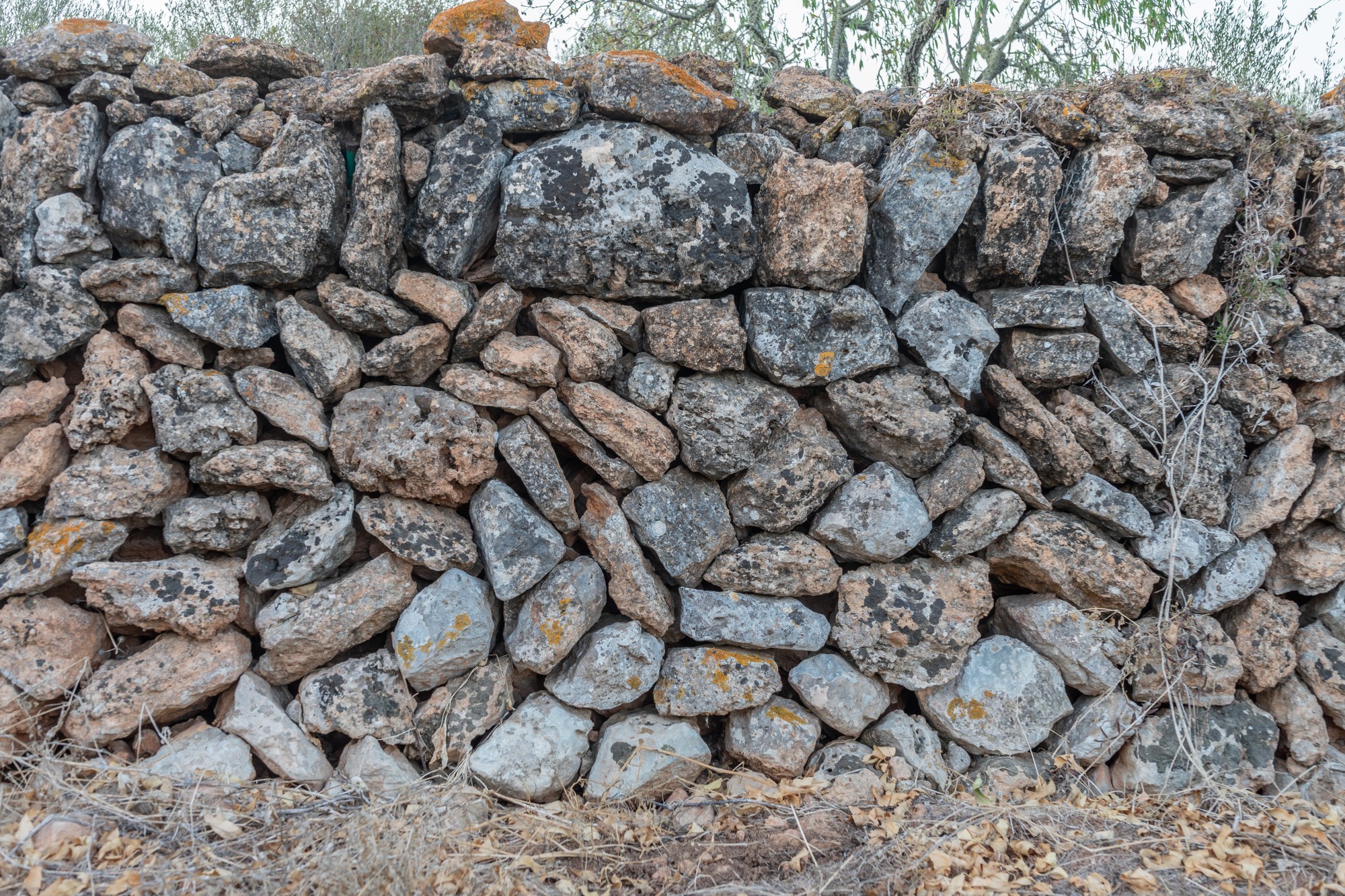
The slingers came from the islands’ stone villages. The Balearic Government’s archaeological route of Mallorca dates the Talayotic period to 1300 to 123 BC and defines the talayot as a stone construction built without mortar, with a central chamber, an entrance corridor and usually a column holding up the roof.
The Museu Arqueològic de Son Fornés, in Montuïri, notes on its official site that 480 talayots are recorded in Mallorca and only about 2 percent have been excavated. From the middle of the sixth century BC, it explains, the talayots were destroyed and a new society emerged in which weapons, fortified villages and the slinger, the foner, became more and more important.
Hired by Carthage
Diodorus (Book 13, chapter 80) tells how, in 406 BC, Carthage sent citizens with large sums of money to Iberia and to the Baliarides to recruit as many mercenaries as they could. Polybius (Book 1, chapter 67) lists men from the Balearic islands among Carthage’s mercenaries at the end of the First Punic War.
The islanders, Diodorus adds, used no gold or silver coin; when they served Carthage they did not bring their pay home but spent it all, in his words, on women and wine. The Son Fornés museum tells the archaeological side: the slingers’ service as mercenaries brought imported goods such as wine to the island, along with objects of prestige such as jewelry.
With Hannibal in Italy
Their best-known campaign is the Second Punic War. Livy, in Book 21 (chapters 21 and 22), counts 870 Balearic slingers among the troops Hannibal sent to Africa and 500 Balearians left in Spain with his brother Hasdrubal.
In Italy, Livy puts them in front. At the Trebia, Hannibal placed the Balearians and the light troops ahead of his line; the battle began with them, and the Roman cavalry was overwhelmed, in Livy’s image, by a cloud of missiles (Book 21, chapter 55). At Lake Trasimene he led them around behind the hills (Book 22, chapter 4); at Cannae he sent them ahead across the river at first light (Book 22, chapter 46). Polybius has Hannibal throw his slingers forward at the Trebia and at Cannae too (Book 3, chapters 72 and 113). Even Rome’s ally, King Hiero of Syracuse, sent archers and slingers suited, Livy writes, to face the Balearians (Book 22, chapter 37).
A hail of stones for Mago
The slingers also defended their own coast. Livy (Book 28, chapter 37) tells how, in late autumn of 206 BC, Hannibal’s brother Mago tried to winter his fleet in the harbor of the larger island. No nation, Livy writes, excelled at the sling as the Balearians did, and their stones fell on the ships like hail, so thickly that the fleet turned back to sea. Mago crossed to the smaller island and raised two thousand auxiliaries there.
123 BC: Metellus and the hides
Rome’s conquest came eight decades later. Strabo (Book 3, chapter 5) writes that because a few islanders had joined the pirates of the open sea, all of them fell into disrepute, and Metellus, surnamed Balearicus, sailed against them. He stretched hides above the decks of his ships as protection against the slings. Strabo calls him the founder of the island’s two cities, Palma and Polentia, and says he brought three thousand Romans from Iberia as colonists.
The Ajuntament d’Alcúdia’s site for Pollentia dates the conquest by the consul Quintus Caecilius Metellus to 123 BC and calls the city the beginning of urban life in Mallorca. The Son Fornés museum notes that its village was already changing its layout just before Metellus’s troops arrived.
Slingers for Rome
The slingers outlived their independence. Julius Caesar writes that when the town of Bibrax was attacked in 57 BC, he sent Numidian and Cretan archers and Balearic slingers to help its defenders, and their arrival gave the townspeople new hope (Gallic War, Book 2, chapter 7).
Where to see it in Mallorca today
- Capocorb Vell, Llucmajor. More than 6,000 square meters, five talayots and some 28 dwellings, first excavated in 1918, according to the Government’s tourism site. It lies near the cove in our guide to Cala Pi.
- Ses Païsses, Artà. A walled village founded around 850 BC that declined under Roman rule, says the Ajuntament d’Artà’s heritage page; the poet Costa i Llobera drew on it for “La deixa del geni grec” (1900). See our guide to Artà, Cala Ratjada and Canyamel.
- Son Fornés, Montuïri. The site has the largest talayot in Mallorca, according to the Government’s tourism site, and the Museu Arqueològic de Son Fornés, in the Molí des Fraret, shows its finds. Montuïri is in our guide to the Pla.
- S’Hospitalet Vell, Manacor. Bronze Age naviform houses and a square talayot that keeps part of its stone roof, with panels in four languages for a self-guided visit, says Visit Manacor, the Ajuntament’s tourism site. See Portocristo and Manacor.
- Els Antigors, Ses Salines. The Consell de Mallorca reported in 2021 that the Ajuntament had bought the site and was working, with the Consell’s support, to conserve its visible structures for visitors. See Ses Salines and Colònia de Sant Jordi.
- Pollentia, Alcúdia. La Portella, the Forum and the Theater can be visited, and the Museu Monogràfic de Pol·lèntia shows the excavations’ finds, according to the Ajuntament d’Alcúdia. See Alcúdia and Port d’Alcúdia.
- Museu de Mallorca, Palma. Rooms in chronological order, beginning with Prehistory and Rome, according to the Government’s tourism site, in the area of our guide to Palma’s old town.
The sling today: the bassetja
In Mallorca the sling has its own name, the bassetja, and it is still thrown. The Balearic sports law, Law 2/2023 (article 40), names sling throwing one of the two native sports of the Balearic Islands, with trotting, to be promoted as an element of cultural identity. The BOIB, the Government’s official bulletin, published in January 2025 the board of the Federació Balear de Tir de Fona for 2024 to 2028.
The federation was founded in 1984 as a tribute to the Balearic slingers. Its competition page counts more than 100 members in ten clubs and four leagues each season, with throws at targets from short and long distance. On the Dia de les Illes Balears in 2016, the Government’s program of events listed an international sling competition at Els Antigors, in Ses Salines.
What you need to know
Who were the Balearic slingers?
Fighters from Mallorca and Menorca whom ancient writers describe as the most skillful slingers of their time; they served Carthage and, later, Rome.
Why are they called the Balearic Islands?
Diodorus and Polybius derive the name from the Greek ballein, to throw; Livy’s Periocha 60 also records a tradition naming Balius, a companion of Hercules.
Did the Balearic slingers fight with Hannibal?
Yes. Livy places them in front of Hannibal’s line at the Trebia and at Cannae, and behind the hills at Lake Trasimene.
When did Rome conquer Mallorca?
In 123 BC, under the consul Quintus Caecilius Metellus, according to the Ajuntament d’Alcúdia; Strabo says Metellus founded Palma and Pollentia.
Is sling throwing still practiced in Mallorca?
Yes. The Balearic sports law names it a native sport, and the Federació Balear de Tir de Fona organizes leagues across the islands.
Where we work
We work across Mallorca from our base in the south-east: homes in Santanyí, homes in Ses Salines and homes in Campos. To compare the areas of the island, see our guide on where to live in Mallorca, or contact Villas y Fincas Mallorca and we will answer in English.
Updated October 2026. Classical sources: Diodorus of Sicily (Library of History, Books 5 and 13), Strabo (Geography, Book 3) and Polybius (Histories, Books 1 and 3) in the public-domain Loeb translations; Livy (Books 21, 22 and 28, and Periocha 60) and Julius Caesar (Gallic War, Book 2) from the Latin, translated and summarized here. Institutional sources: the Balearic Government (illesbalears.travel, Law 2/2023, the BOIB, the 2016 Dia de les Illes Balears program), the Consell de Mallorca, the Museu Arqueològic de Son Fornés, the Ajuntaments of Alcúdia, Artà and Manacor, and the Federació Balear de Tir de Fona, all consulted in October 2026. This story is for general information only.