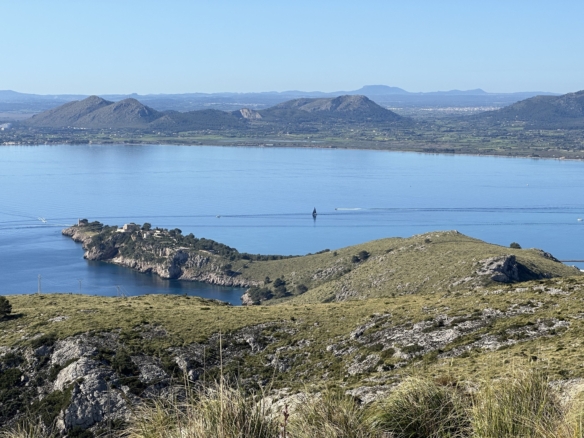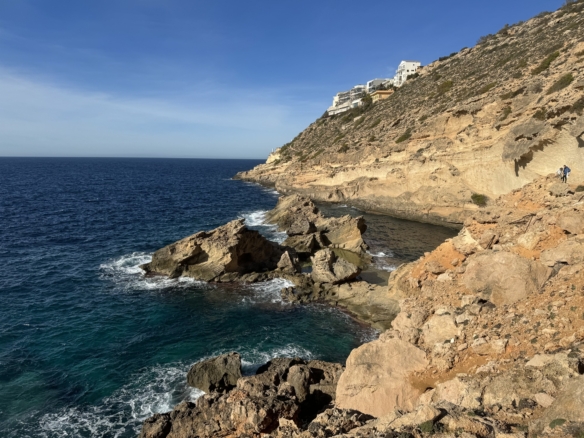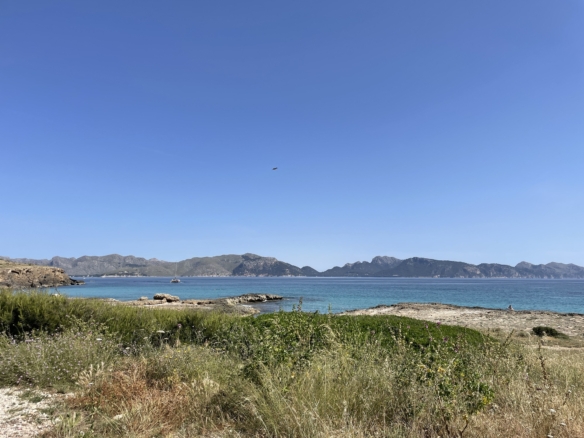

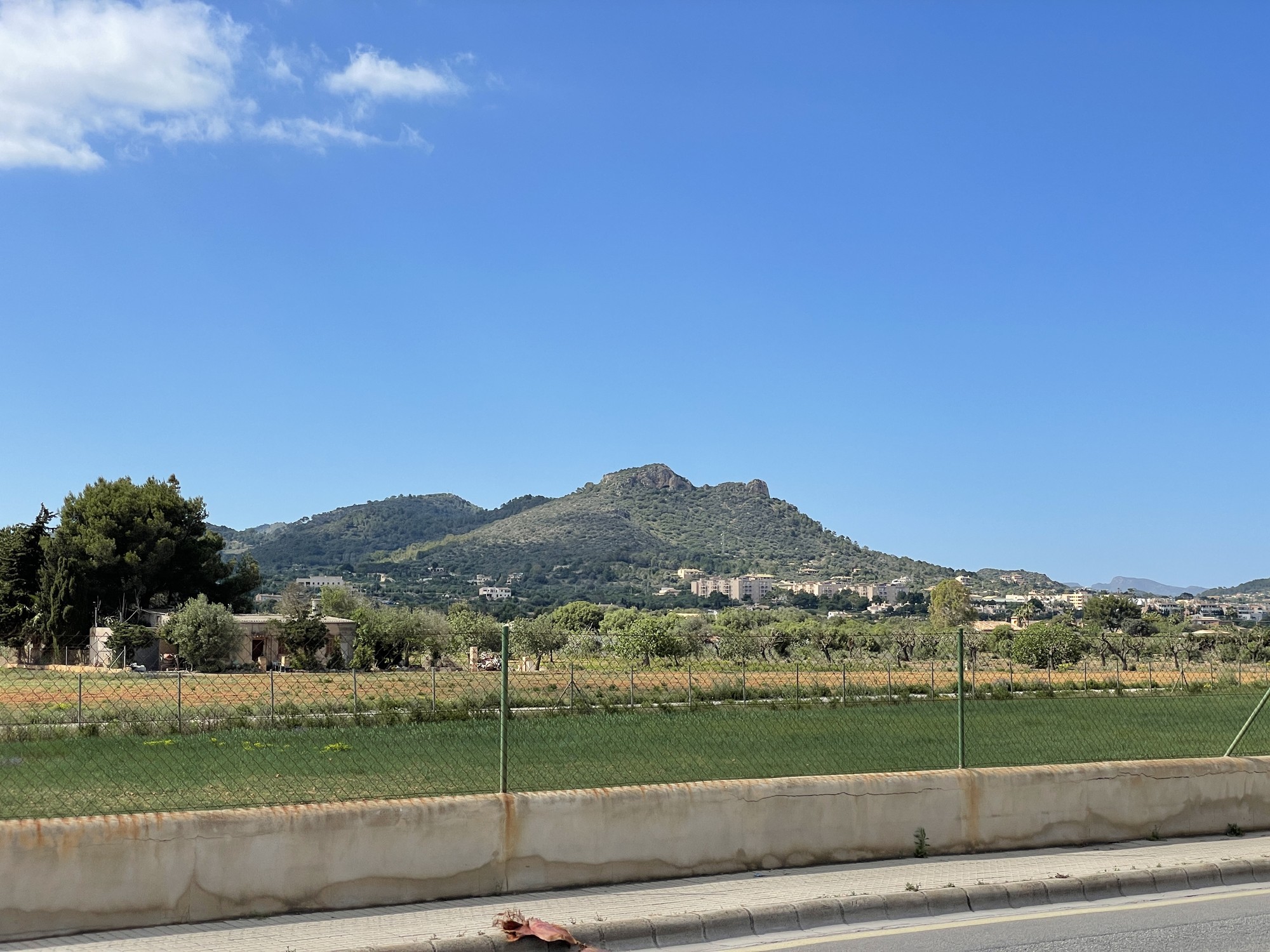
The short version: Portocristo and Manacor are two halves of the same municipality on the east coast of Mallorca. Portocristo is a harbor town built around a natural inlet, with a sandy beach in the middle of town and the Drach and Hams caves on its doorstep. Manacor, about fifteen minutes inland, is the second-largest town on the island after Palma: a working town with a hospital, a train station, weekly markets and the Rafa Nadal Academy. Along the coast lie undeveloped coves such as Cala Varques and Cala Magraner and quiet residential areas such as s’Illot and Cala Anguila. This guide explains how the area lives and how far it is from everything else.
One municipality, two ways of living
According to its tourism office, the municipality of Manacor covers about 260 square kilometers in the east of the island, with 27 kilometers of coastline. Inland are the town of Manacor and the villages of Son Macià and Son Negre; on the coast, Portocristo, s’Illot and a string of smaller residential areas (Visit Manacor).
For someone thinking of living here, the map reads simply. Manacor is where the services are; Portocristo is where the sea is. The drive between them takes about fifteen minutes, so most residents live in one and use the other every week. To compare this coast with Palma, the south-west, the north and the south-east, our guide to where to live in Mallorca covers every area.
Portocristo: a natural harbor with a beach in town
Portocristo grew up around a small bay that opens to the south-east and is almost closed on one side by a large rock, Es Morro de sa Carabassa. The municipal tourism office describes it as an old fishing port that is now a natural fishing and yacht harbor, and notes that the town celebrated the centenary of its foundation in 1988. A lighthouse from 1851 and the Torre dels Falcons, a watchtower from 1577, stand on the headland (Visit Manacor).
What sets it apart is that the beach is part of the town. According to the same source, it is a sheltered sandy beach of about 300 by 30 meters, with shallow water, right next to the port. Along the seafront runs the Passeig de la Sirena, the setting for markets and summer concerts. The parish church is dedicated to the Mare de Déu del Carme, patron saint of fishermen and sailors, whose feast day on 16 July is the town’s own celebration.
In what we see, homes in Portocristo are a mix of village houses and apartment buildings in the streets around the harbor, with detached houses in the residential areas on the edges of town. Daily needs are close at hand: a public health center, shops, restaurants around the port and a market on Sunday mornings on the Passeig de la Sirena, with a second one on Thursdays from June to October (Visit Manacor).
The caves next door: Drach and Hams
Two of the island’s show caves are a few minutes from the harbor. The Coves del Drach are about three minutes away by road. According to their official website, they extend for almost 1,200 meters, reach 25 meters below ground and were first explored in 1880. They hold Lake Martel, which the caves describe as one of the largest underground lakes in the world, and the visit includes a live concert on the lake.
The Coves dels Hams, about five minutes away, take their name from formations shaped like fish hooks, hams in Mallorquín. According to their official website, they were discovered in 1905 by Pedro Caldentey while he was searching for onyx, and in 1910 he brought electric light into the cave before the village of Portocristo itself had it.
For a resident, the caves mean visitors. In what we see, coaches and rental cars come and go all summer day, and the tourism office advises arriving early to park near the beach.
Manacor: a working town with city services
The tourism office describes Manacor as the second-largest town on the island after Palma, with a strong cultural identity, an active economy and a range of services for residents. Historically it was known for its furniture industry and for the production of artificial pearls. Both industries have lost strength, according to the same source, but their legacy survives in some workshops, and Perlas Majorica keeps exhibition and sales centers in Manacor and Portocristo where the manufacturing can be seen (Visit Manacor).
The services are what matter day to day:
- Hospital. The Hospital de Manacor is the public hospital of the Llevant health sector of IB-Salut, the Balearic health service. That sector covers the east and south-east of the island, including Santanyí, Campos and Ses Salines, and Portocristo has its own health center, with clinics in s’Illot and Cales de Mallorca (IB-Salut).
- Train. Manacor is the terminus of the Palma–Manacor railway line run by SFM, which reaches Plaça d’Espanya in Palma by way of Inca. The tourism office notes shuttle buses from Portocristo and s’Illot to the station.
- Markets and parking. The weekly market is on Monday mornings in Plaça de Ramon Llull, and a fruit and vegetable market opens Monday to Saturday mornings in Plaça de la Constitució. The town center has a residential priority zone controlled by cameras, so visitors from the coast use the municipal underground car parks.
Rafa Nadal Academy and the international school
The Rafa Nadal Academy stands just outside Manacor, Nadal’s hometown, about five minutes from the town center and fourteen from Portocristo. According to its website, it combines high-performance tennis, under the methodology of the team that coached Nadal, with classroom education at Rafa Nadal International School. The campus also has a sports clinic, restaurants and the Rafa Nadal Museum Xperience, with his trophies.
For families, the school is the part that counts. Rafa Nadal International School teaches the British curriculum up to Year 6 and an American program from Grade 7 to Grade 12, leading to a US High School Diploma. Our guide to international schools in Mallorca lists it with its official details and driving times.
Nadal never left. His family home is in Portocristo, the coastal town where he spent his childhood (Majorca Daily Bulletin, September 2023; The Objective, October 2024). Our guide to celebrities in Mallorca covers other names, each reported by at least two outlets and without addresses.
The Manacor coast: undeveloped coves and quiet residential areas
South of Portocristo, between Cala Antena and s’Estany d’en Mas, the tourism office describes a stretch of virgin coves, of which the best known are Cala Varques and Cala Magraner. In what we see, they are reached on foot and have no services (Visit Manacor).
The residential areas are a different world:
- s’Illot, about eight minutes north of Portocristo, was born in the 1930s as a summer retreat for families from Manacor. It has the sandy beach of Cala Moreia, the rocky cove of Cala Morlanda, a few hotels and, in the tourism office’s words, many summer residences.
- Cala Anguila, about nine minutes south, lies within the residential area of Porto Cristo Novo: a sheltered cove with clear water and fine sand, surrounded by a small residential zone.
In what we see, these areas are calm all year and very quiet in winter, with Portocristo and Manacor a short drive away.
Summer and winter
Portocristo keeps two rhythms. In summer, the beach and the caves bring day visitors, the Thursday market joins the Sunday one and the town celebrates the Carme on 16 July. In winter, in what we see, the town belongs to the people who live here: the Sunday market goes on, the harbor is calm and the restaurants work with their regulars.
Manacor barely changes with the seasons: schools, offices and shops work all year, and its great celebration, Sant Antoni, with bonfires and traditional dimonis, falls in January.
Getting around: what nobody tells you
Driving times below come from OpenStreetMap routing, in free-flowing traffic:
- Portocristo: about 15 minutes to Manacor, 57 minutes to central Palma and 56 minutes to the airport.
- Manacor: about 46 minutes to central Palma and 45 minutes to the airport.
- s’Illot and Cala Anguila: about 61 to 62 minutes to central Palma and about 60 to 61 to the airport.
- Portocristo to Santanyí, in the south-east: about 37 minutes.
What nobody tells you is the trade-off that comes with this coast. Palma is about an hour away, so it becomes a destination rather than a daily commute, and the airport run is part of every trip. In exchange, almost everything else is within fifteen minutes: the hospital, the train, the markets, the international school and a town that works all year.
What you need to know
How far is Portocristo from Manacor?
About 13 kilometers, or 15 minutes by road in free-flowing traffic, according to OpenStreetMap routing.
How far is Portocristo from Palma and the airport?
About 57 minutes to central Palma and about 56 minutes to the airport terminal, in free-flowing traffic.
Is there a beach in Portocristo?
Yes. The town beach is a sheltered sandy beach of about 300 by 30 meters with shallow water, next to the harbor, according to the municipal tourism office.
Is there a hospital near Portocristo?
Yes. The Hospital de Manacor, the public hospital of the Llevant health sector, is about 15 minutes away, and Portocristo has its own public health center.
Where is the Rafa Nadal Academy?
Just outside Manacor, about five minutes from the town center and fourteen minutes from Portocristo. Rafa Nadal International School is on the same campus.
Where we work
We work across Mallorca from our base in the south-east, where you can browse homes in Santanyí, homes in Ses Salines and homes in Campos. If Portocristo, Manacor or the coast around them is on your list, contact Villas y Fincas Mallorca and we will answer in English.
Updated October 2026. Driving times come from OpenStreetMap routing and vary with traffic and season; other facts come from the tourism office of the Ajuntament de Manacor, the official websites of both caves, IB-Salut, the Hospital de Manacor and SFM, consulted in October 2026. Each celebrity reference was reported by at least two news outlets. The descriptions reflect what we see with our clients and are for general information only.