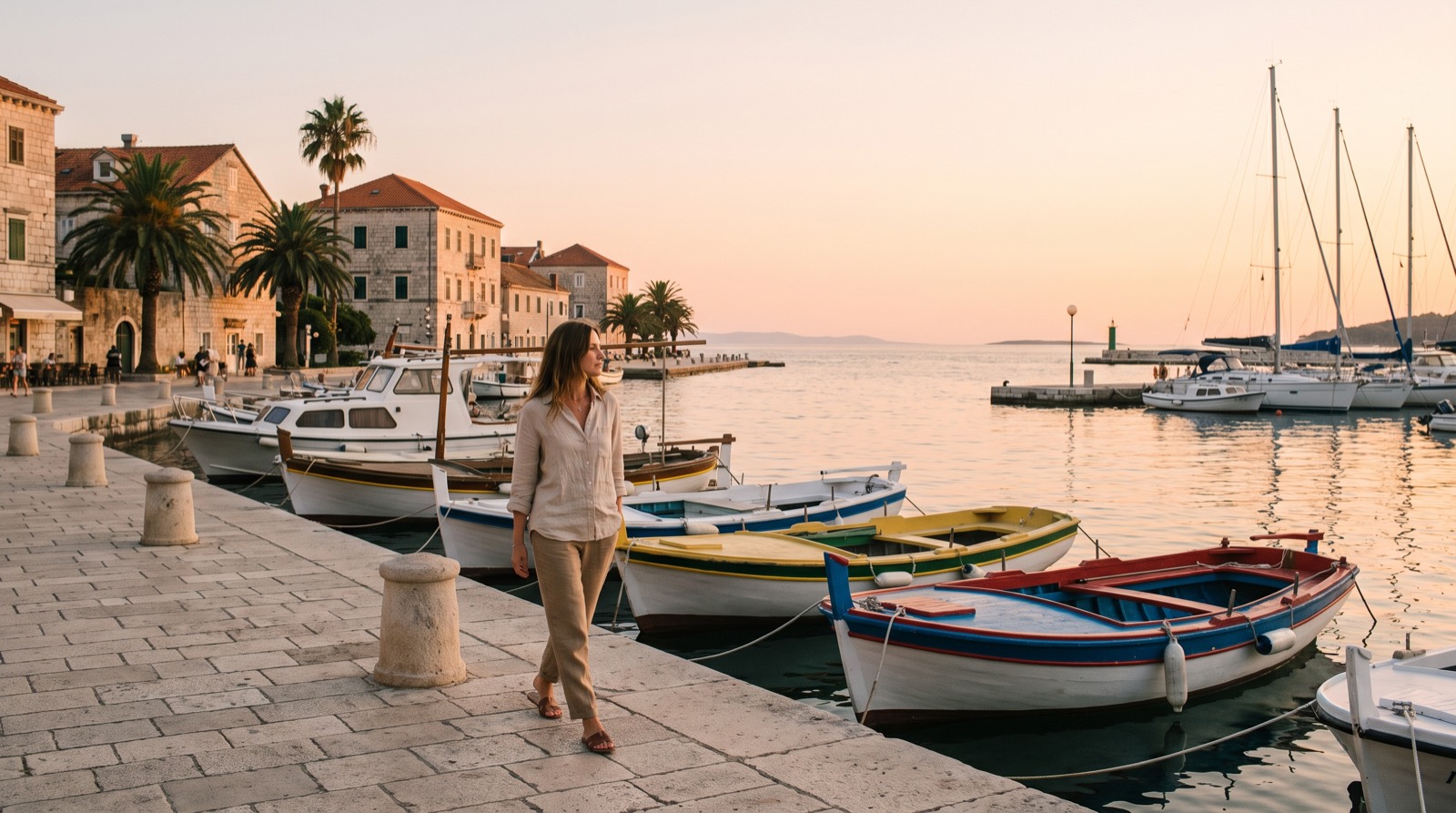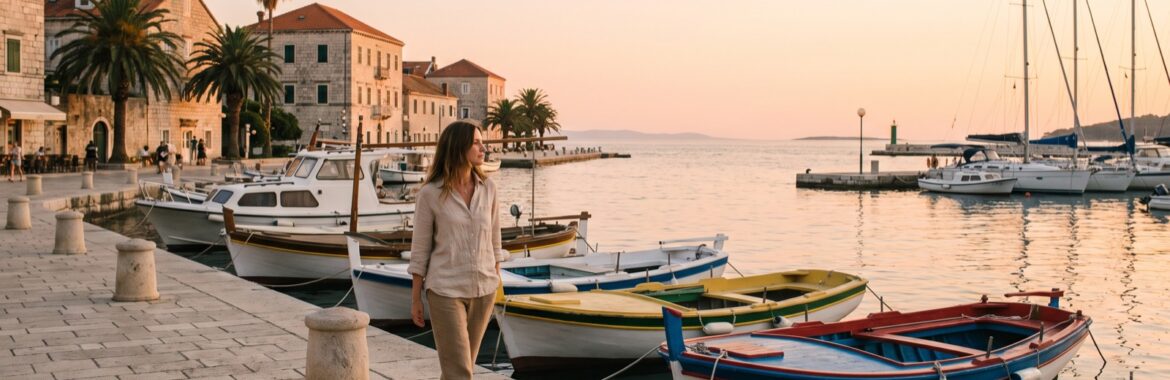
If there’s one village in the southeast that lives facing the sea, it’s the Colònia de Sant Jordi. A working harbour, a seafront promenade, restaurants almost in the water, and some of the finest beaches in Mallorca a stone’s throw away. It belongs to the municipality of Ses Salines, it’s right on our doorstep, and we know it all twelve months of the year. We’ll tell you what living here is really like: the joy of the sea at your door, and also what’s worth knowing about its seasonal rhythm.
The Colònia is the classic Mediterranean seaside village: it was born as a harbour and has never moved away from that. It has a fishing and marina port, a pleasant promenade for walking, and an outlook turned entirely towards the coast. This isn’t an inland village with the beach “nearby” — here the beach is the centre of life, and the sea is everywhere you look.
Real life
What it's like to live in the Colònia all year round
Let’s be honest, because it matters when you actually live somewhere: the Colònia is firmly a seasonal village. In summer it fills up, buzzes and has every service running at full tilt; in winter the pace drops a great deal, part of the dining scene closes, and the village settles into a deep quiet, almost just for its residents. For many people, that’s precisely the charm — having the sea to yourself from October to May. For others, it can feel too quiet outside summer.
That said, it covers the basics all year round — supermarkets, a pharmacy, a bakery, a couple of the lifelong restaurants — and for everything else, Campos and Santanyí are fifteen to twenty minutes away by car, with Ses Salines closer still. It’s a good option for anyone who wants to live literally beside the sea and doesn’t mind taking the car for certain errands.
The rhythm of the year here is strongly marked: summer brings life, energy and a community that swells enormously; autumn winds the atmosphere down all at once and the village returns to its true self, with its year-round neighbours, its fishing boats and its calm. Winter has a magic all of its own — the empty promenade, the restless sea, the gulls in the harbour, and the feeling of having all that space to yourself. For anyone who enjoys that alternation, living here is an experience that’s hard to replicate anywhere else.
The treasure
The beaches: Es Trenc, Es Carbó and the southern coves
This is the real treasure. On one side, Es Trenc, the most famous unspoilt beach in Mallorca, with its white sand and turquoise, almost Caribbean water; on the other, the coves by the lighthouse and beaches as lovely as Es Carbó, Ses Roquetes and Platja des Dolç, plus the small coves of the village itself. Few places on the island pack so much, and such good, beach into so little space.
Living here means being able to go down for a swim before breakfast, walk the shoreline in the middle of January with no one around, and have the blue as your everyday landscape. For anyone who sees the sea as a way of life, the Colònia is hard to beat. And out of season, once the summer bustle disappears, Es Trenc and the southern coves become an almost private luxury that very few people get to enjoy.
The excursion
The harbour and the Cabrera National Park
The harbour is the heart of the village. From here the boats set off to the Cabrera National Park, the protected archipelago off the coast — one of the best-preserved marine spaces in the Mediterranean, and an excursion that leaves from the Colònia itself. The marina, the fishing boats and the terraces along the promenade give it that genuinely seafaring feel, alive all year round though livelier in summer. Being able to head out to Cabrera on a Wednesday in October, with the archipelago almost to yourself and the autumn sea calm, is one of those privileges reserved for the people who live here.
The village’s food revolves around the sea: fresh fish and seafood straight off the boats, terraces overlooking the water, and a choice that in summer is broad and varied. In the low season it narrows to the places that open all year, but there’s always somewhere to eat well. And for more variety, Ses Salines — with its emblematic Casa Manolo — is right next door.
Nature
Salt flats, flamingos and the Cap de Ses Salines
The surroundings are pure southeast: the Salobrar salt flats, where at dusk you’ll see flamingos, and from which comes the prized flor de sal d’Es Trenc, hand-harvested in summer. Nearby is the Cap de Ses Salines, the southernmost point of the island, with its lighthouse and one of the darkest, most star-filled skies in Mallorca. Walking or cycling through these low, luminous landscapes, among salt, pines and sea, is part of daily life for anyone who lives around here. They’re places of a calm, bright scale — no heights, no steep climbs — perfect for sport or simply for a stroll.
Logistics
Connections, distances and property
The Colònia sits at the far southern tip of the island, which makes it quiet but perfectly accessible. Palma airport is around 45-50 minutes away by car, and the capital itself a little more. Around you is the whole southeast — Ses Salines (10 min), Campos (15 min), Sa Ràpita, Santanyí — and the great beaches right on your doorstep. A car is essential for getting around beyond the village core.
The property here looks to the sea: apartments and houses near the beaches and the harbour, villas in the residential areas close to the coast, and homes sought after precisely for their nearness to the water. It’s an area in strong demand for its seaside-village character and the quality of its beaches, with prices to match that appeal. We live and work in the southeast, so we know every corner of the Colònia well, and what each home is really like — in August and in February.
Common questions
Frequently asked questions about living in the Colònia de Sant Jordi
Does the Colònia de Sant Jordi have life in winter?
Considerably less than in summer — we have to say so honestly. The basic services stay open (supermarket, pharmacy, the odd restaurant and bar), but a good part of the offer closes or cuts its hours out of season. For anyone after peace and quiet with the sea as their priority, that hushed winter is perfect. For anyone who needs activity and services all year round, Ses Salines or Santanyí are a better fit.
Can you live here without a car?
Not comfortably. Public transport in the southeast is very limited. For day-to-day life beyond the village core — work, school, errands — a car is essential. Within the village itself you can walk perfectly well, and there’s a greenway linking Ses Salines with the Colònia by cycle path, but for everything else you need your own vehicle.
How long is it to Palma airport?
Around 45-50 minutes by car. It’s a reasonable trip for coming and going without losing your day. In summer it can stretch a little at the access roads to the dual carriageway. The capital is a touch further, around an hour.
Are there schools in the Colònia de Sant Jordi?
Not directly in the Colònia; the municipality’s children go to the schools in Ses Salines (10 minutes away) or in Campos. The secondary school is in Ses Salines. It’s a small, manageable distance for daily life, though you’ll need the car for the school run.
Is property expensive in the Colònia de Sant Jordi?
It’s an area of high demand thanks to its seaside-village character and good beaches. Apartments and houses near the sea carry high prices, especially on the front line. There are more affordable options in the residential areas further from the centre. Either way, the “beach at your door” factor comes at a price that many people consider well worth it.
Can you reach the Cabrera National Park from here?
Yes — the Colònia de Sant Jordi is the only point of access to Cabrera. The excursions leave from the harbour and let you visit the protected archipelago by boat in a day. In high season you need to book ahead. Outside July and August, access is far quieter. For anyone who lives here, being able to go to Cabrera on a Tuesday in October is an almost exclusive luxury.
Is it for you?
Is the Colònia de Sant Jordi your place?
The Colònia is a perfect fit if your priority is to live beside the sea, with the best beaches in the southeast on your doorstep and a relaxed, seafaring atmosphere. It’s ideal for lovers of the beach, of sailing, and of quiet coastal life. It’s less suited if you’re after a village with plenty going on all year, or every service without taking the car: for that, neighbouring villages like Ses Salines, Santanyí or Campos offer more activity in winter.
If you can picture yourself living with the sea at your door, get in touch: we live in the area all twelve months of the year and would be delighted to help you find your place. And if you’re still deciding which village, take a look at what living in Ses Salines — the municipality the Colònia belongs to — is really like.