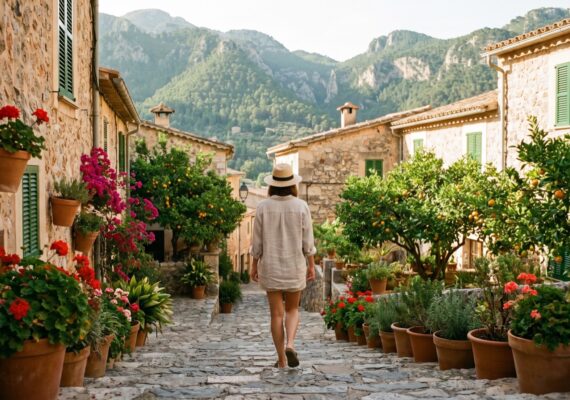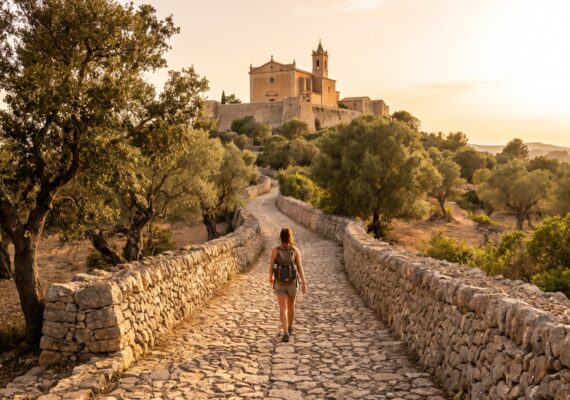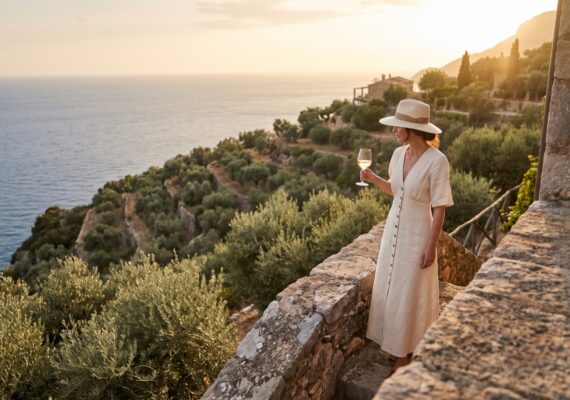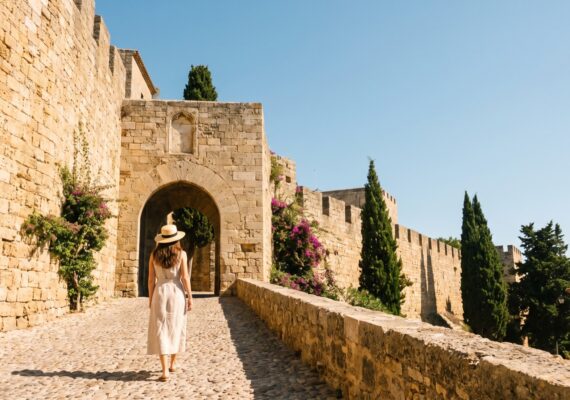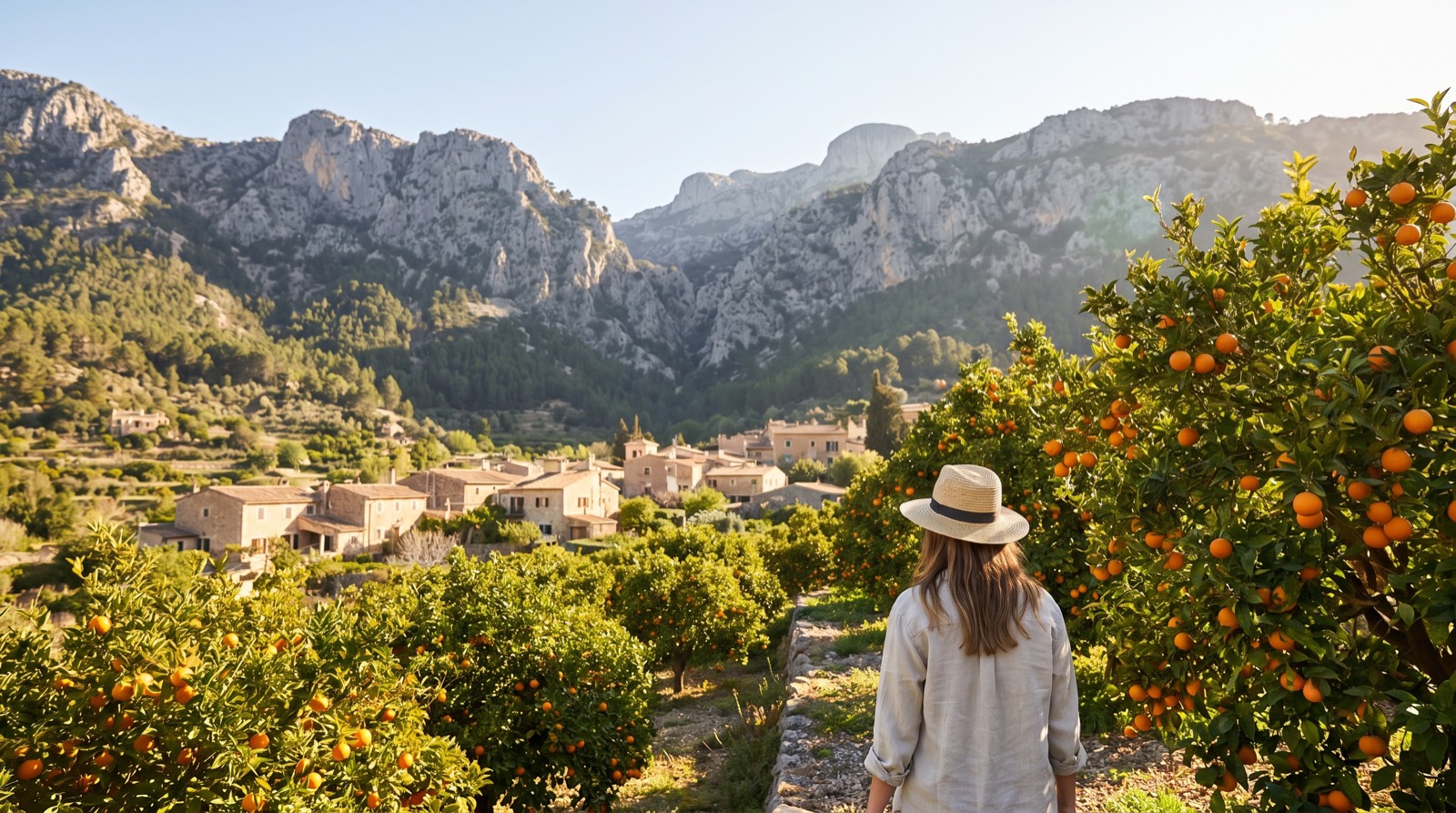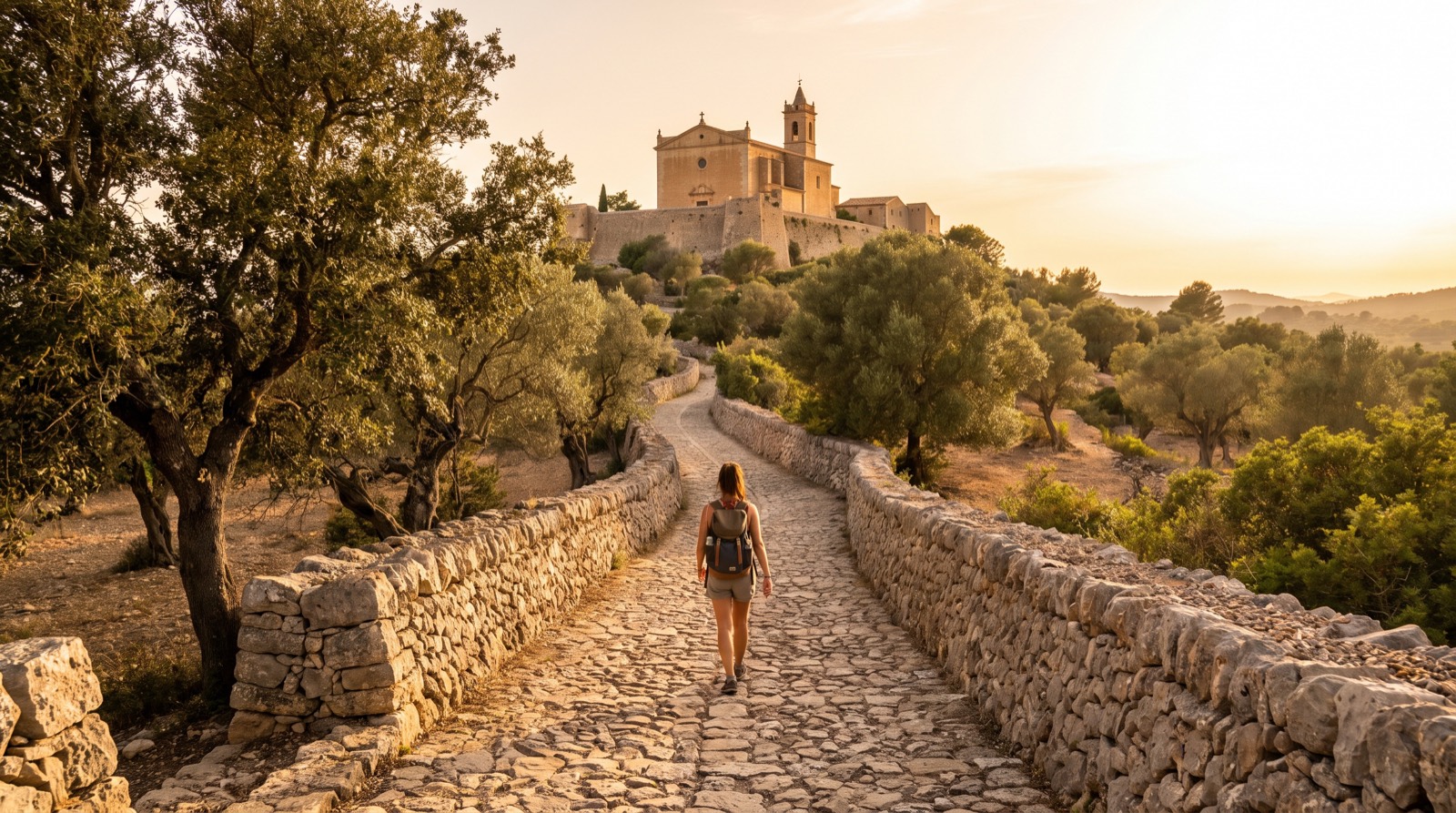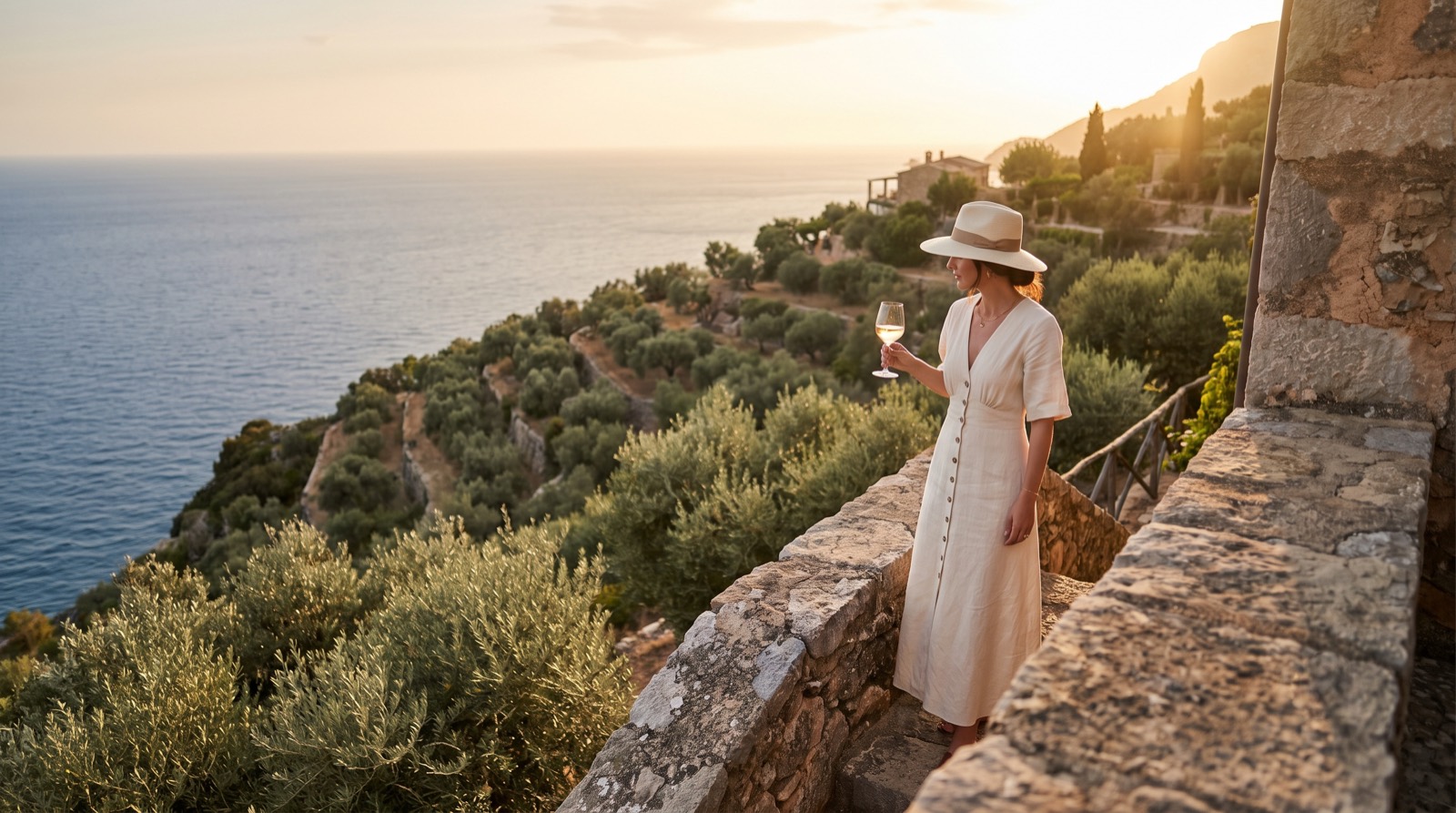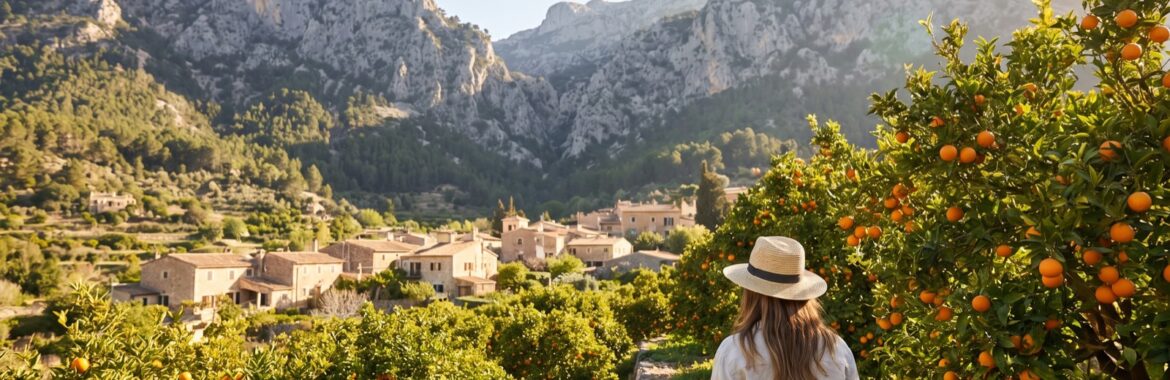
Sóller is one of those villages people visit for a day and then can’t quite bring themselves to leave. An orange-growing valley wedged between the peaks of the Serra de Tramuntana, a wooden train that has rolled down to Palma since 1912, a tram that carries on to the sea, and a Port set on a bay so enclosed it looks like a film set. And yet it’s also a real, year-round village — with its market, its services and a genuinely mixed community that has made this place home. We’ll tell you what living in Sóller is actually like.
Set in the heart of the Serra de Tramuntana — a UNESCO World Heritage Site — Sóller lives between mountain and sea. Its near-isolated position gave it a strong character of its own over the centuries, reinforced by the historic orange trade with France and the modernista wealth that trade brought home. Today it’s one of the island’s most sought-after places to live, and at the same time a village with deep roots.
Real life
What it's really like to live in Sóller all year round
Sóller is a sizeable village with full services and a life of its own across all twelve months. It has supermarkets, a health centre, schools, a good range of shops, restaurants and a cultural calendar that doesn’t pack up when the season ends. This is not a place that goes dark in October — it has far too much of its own life for that.
The community here is one of the most varied on Mallorca: lifelong Mallorcans, families with French roots from the orange-trade era, and an international set — Germans, Scandinavians, British, Dutch — that has been established for decades and gives the village a very natural, unforced cosmopolitanism. It’s a place where settling in is easy and where you’ll meet interesting people from all sorts of backgrounds, which makes the social life of anyone arriving from elsewhere all the richer.
The climate in the Sóller valley is a little different from the rest of the island: more humid and cooler, especially in winter, thanks to the shelter of the mountains. Spring is spectacular — orange trees in blossom, green terraces, clean air — and summer, though fresher than the south, keeps every option of the Port within reach. For anyone who enjoys four real seasons, Sóller is one of the villages on Mallorca where they feel most pronounced.
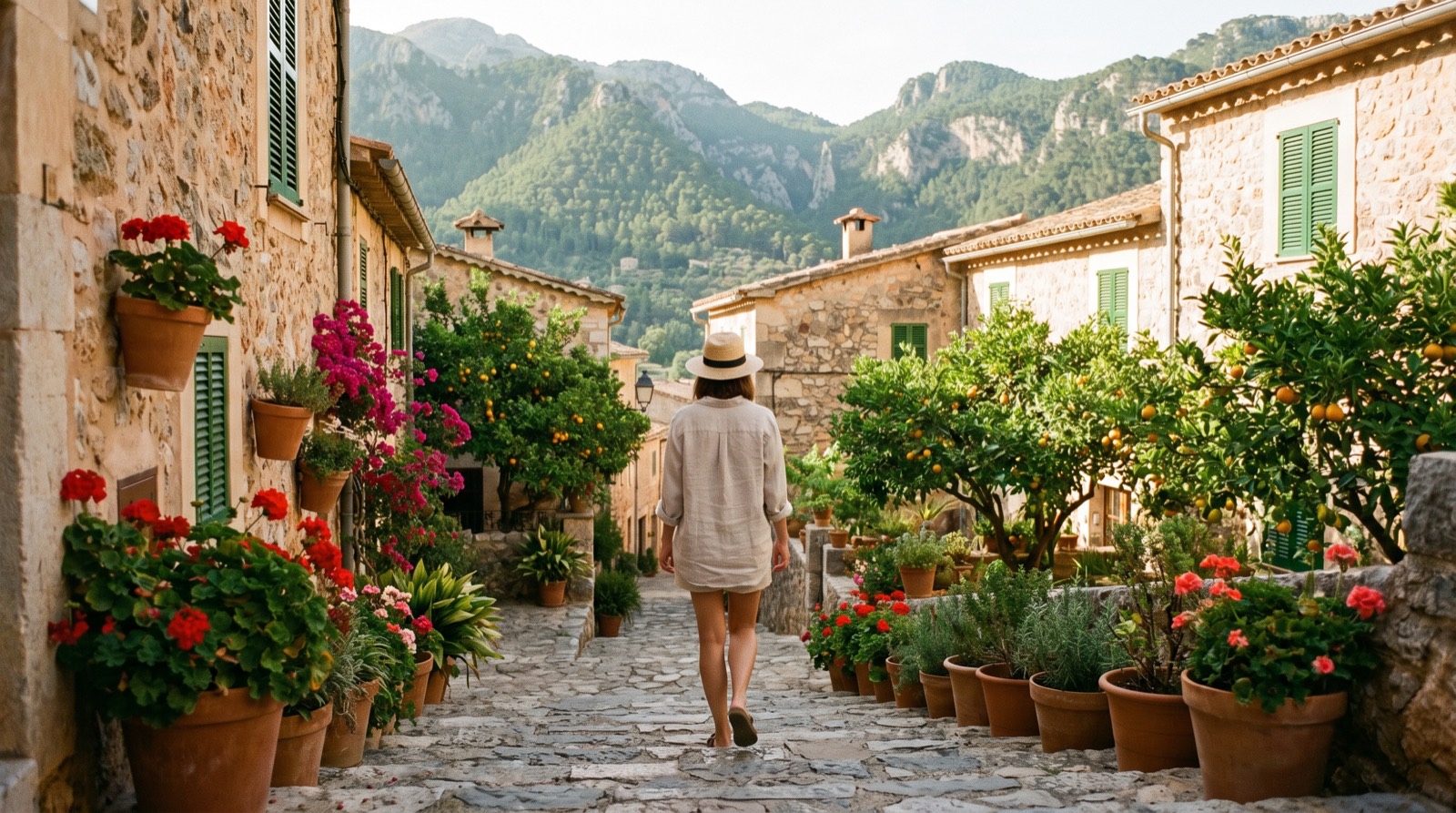
The village market has its own weekly rhythm and is part of the social fabric. And the village itself — its square, its cafés, its streets — is a gift for daily life: modernista façades, stone, orange trees, and that soft valley light that goes so well with a camera and breakfast on the terrace.
The train and the tram
Two pieces of living history
Sóller has two gems of industrial heritage that still run and are woven into village life. The wooden train — opened in 1912 — links Sóller with Palma along a roughly 30-kilometre route between mountain and capital, threading through tunnels and dramatic scenery in a journey of just under an hour. Its original timber carriages are iconic, and the ride is one of the loveliest on the island. For those who live in Sóller, the train is also a genuine everyday option for reaching Palma without a car — something rare in rural Mallorca.
The tram — the first electric tram on Mallorca, opened in 1913 — connects the village with the Port de Sóller, dropping down through the valley between orange groves over a route of less than four kilometres. It’s the most picturesque, and most practical, way to get down to the sea. For anyone living in Sóller, the tram is part of the daily rhythm: a cheap ticket and a ride with a view that doesn’t lose its charm even on the hundredth time.
Nature
The valley, the sierra and the trails
Sóller’s surroundings are among the most spectacular on Mallorca. Puig Major (1,445 m), the highest peak on the island, dominates the valley skyline. The Barranc de Biniaraix, which begins in the small hamlet of Biniaraix a stone’s throw from the village, is one of the most beautiful trails in the Mediterranean: stone steps between terraces of orange and lemon trees, wild flowers and dizzying views. It’s a walk that those who live here repeat every spring, year after year, because it’s always different and always glorious.
The Serra de Tramuntana offers hundreds of kilometres of hiking and cycling routes with Sóller as the perfect base. From here you can also reach Sa Calobra and the Torrent de Pareis — the geological wonder of the Tramuntana — and the mountain villages such as Fornalutx and Biniaraix with ease. Living in Sóller means having Mallorca’s largest natural park quite literally on your doorstep.
The coast
Port de Sóller: the sea in the mountains
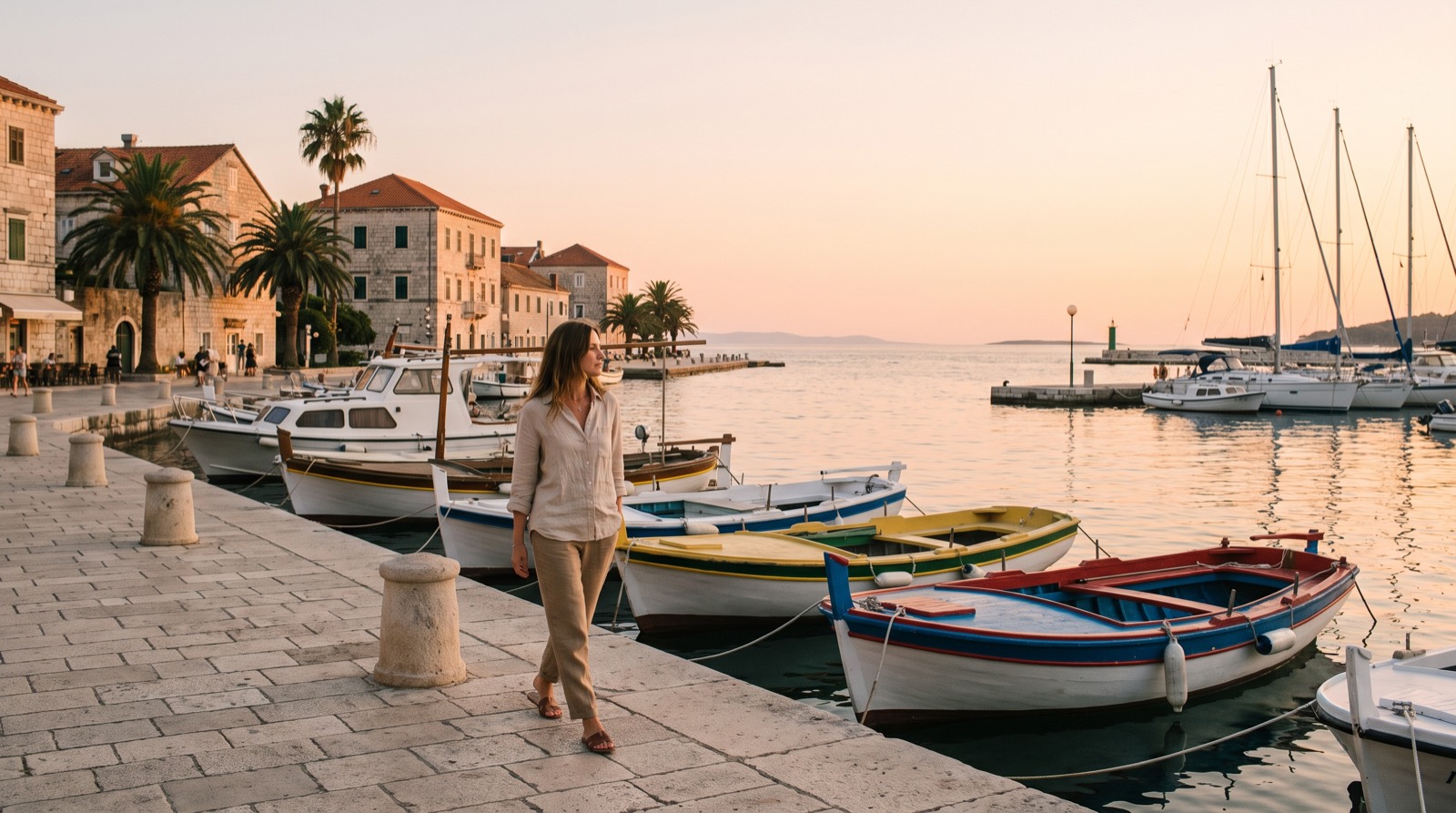
The Port de Sóller is one of the most striking natural harbours on Mallorca: a near-enclosed bay, deep and sheltered, that looks like a saltwater lake set among the mountains. Its two little lighthouses — one red, one green — at the mouth of the bay are another classic island image. The port beach is urban and family-friendly; the seafront promenade is lively and full of atmosphere. From the port you can head out by kayak, snorkel the coves along the coast — such as Cala Tuent, on the far side of the cape — or catch the boat that runs as far as Sa Calobra in summer.
Coming down to the sea from the village by tram, with the orange valley as a backdrop and the Port at the end of the line, is one of those everyday experiences that’s hard to improve on. The Port also has its own distinct character, with fresh-fish restaurants, terraces with a view and an offering that holds up well for most of the year.
Heritage
Modernisme, art and architecture
The wealth of the late-19th-century orange trade with France left a remarkable architectural legacy. The church of Sant Bartomeu, with its modernista façade designed by Joan Rubió i Bellver (a collaborator of Gaudí), presides over the village square. The Banco de Sóller, also on the square, is another example of modernisme on Mallorca. And Can Prunera is a restored modernista house museum with excellent art collections — one of the cultural jewels of northern Mallorca. Sóller, in short, is a village with far more layers than first meet the eye.
Logistics
Connections and distances
One of Sóller’s surprises is how well connected it is, despite being ringed by mountains. The Sóller tunnel links the valley with the central plain and gets you to Palma in around 30-35 minutes by car — a surprisingly short distance for somewhere that feels so tucked away. The airport is roughly 45-50 minutes away. And the historic train offers the picturesque alternative of reaching Palma without a car.
To reach the rest of the Tramuntana — Deià, Valldemossa, Fornalutx — the mountain roads are narrow and winding, but short. The Llevant and the southeast are further off, but perfectly accessible. For day-to-day life, Sóller covers almost everything you need without leaving the municipality.
Where to live
What property is like in Sóller
Sóller offers a bit of everything: characterful village houses in the old centre, apartments and villas in the Port, country houses with orange terraces out in the countryside, and a handful of properties with spectacular views over the bay. It’s a much-in-demand area, with a well-established international community and prices to match its appeal. It isn’t the cheapest corner of Mallorca, but the quality of setting you get for the price is very good indeed.
Sóller is especially sought after by those who want nature, heritage and quality of life without straying far from Palma, and by anyone who values the train as a real alternative to the car. We know the valley well — its pockets and its properties — and we can guide you on what fits best with what you’re looking for.
Common questions
Frequently asked questions about living in Sóller
How long is it from Sóller to Palma?
By car through the tunnel, about 30-35 minutes. It’s a lot less than people imagine. The tunnel has a toll (around 5-6 €). Over the mountain road without the tunnel it’s more than 45 minutes and far more winding. Most residents use the tunnel day to day. The train is a beautiful alternative, though slower (about 55 minutes) and with limited frequencies.
Does Sóller work well in winter?
Yes — it’s one of the Tramuntana villages with the best out-of-season life. It has full services, active shops and a permanent community that doesn’t vanish in October. That said, winter here is a touch cooler and wetter than in the south — you’re ringed by mountains and closer to the north — which many people love and others may find too much. Spring and autumn are the residents’ favourite seasons.
Are there schools in Sóller?
Yes. Sóller has a primary school and a secondary school within the municipality itself. It’s one of the few Tramuntana villages that covers the whole of compulsory education without having to travel to another town, which makes it especially convenient for families with children.
Is the historic train used by residents or just tourists?
Both. The train is as much a tourist attraction as a genuine means of transport for many residents who go to Palma without a car. Its frequencies are limited (it’s not a metro), but for spending the day in Palma or getting home without driving the curves at night, it’s a very practical and much-loved option. In summer it’s busier; in winter it’s an almost private pleasure.
How does the cost of living in Sóller compare with the southeast?
Sóller is among the most prized areas on Mallorca, especially the Port and properties with views over the bay. In general, prices are comparable to or a little above those in Santanyí. Village houses in the old centre can offer better value. The sierra and the orange terraces add a quality of setting that’s hard to find anywhere else on the island.
What is there to do around Sóller?
Plenty. Hiking and cycling in the Tramuntana (the GR-221 passes through here), the Barranc de Biniaraix, Puig Major, the cyclists’ road up to Sa Calobra, kayaking and snorkelling in the Port, cultural visits to Can Prunera and the village museums, boat trips to Sa Calobra, and easy access to Deià, Fornalutx and Biniaraix. It’s a place for anyone who loves active nature and heritage in large doses.
Is it for you?
Is Sóller the village you're looking for?
Sóller fits beautifully if you’re after mountain, sea and a living village all at once, with a historic train to Palma, a spectacular bay ten minutes away by tram, and the Tramuntana at the door. It’s especially good for lovers of nature, hiking and heritage, for families with children — it has both primary and secondary schools — and for anyone wanting to work from home in a high-quality setting. It’s less of a match if you’re after the warmth and quiet of the southeast, or if the humid mountain climate doesn’t suit you.
If you can picture yourself living in the Sóller valley or the Port, get in touch: we know Mallorca well and would be glad to help you find your place.