
The short version: Cala d’Or and Portopetro sit side by side on the south-east coast of Mallorca, four minutes apart by road, both in the municipality of Santanyí. Cala d’Or is a white, Ibiza-style resort town founded in the 1930s around a string of small urban coves and a marina; it is very seasonal, yet it keeps a large supermarket and everyday services open all year for the people who live there. Portopetro is a quiet natural harbor with fishing boats, restaurants that stay open for most of the year on shorter hours, a pharmacy and a tobacconist, and Mondragó Natural Park next door.
Two places, four minutes apart
Cala d’Or and Portopetro almost run into each other, but they are two settlements with different characters. Both belong to the municipality of Santanyí, whose main village, about a quarter of an hour inland, holds the town hall, the secondary school and the Wednesday and Saturday market; our guide to Santanyí, Cala Figuera and Es Llombards covers that side of the municipality.
One detail surprises many newcomers: the built-up area people call Cala d’Or does not stop at the municipal line. According to the Ajuntament de Felanitx, Cala Ferrera is the last cove on the Felanitx coast, and the municipality of Santanyí begins right after it, with Cala d’Or (Ajuntament de Felanitx). Cala Ferrera and Cala Serena, which most visitors treat as part of Cala d’Or, therefore belong to Felanitx.
Cala d’Or: a 1930s idea with an Ibiza accent
Cala d’Or is one of the most recent settlements in the municipality. The town hall dates its origins to 1932, when its founder, José Costa, chose the land for a residential development. Costa came from Ibiza, and he named the place Cala d’Hort, after a cove on his home island; with time and use, the name drifted into Cala d’Or. In 1956 he donated a plot for the church, which was built in the Ibizan style, like many of the houses, and that is what gives the area its white, Balearic-island look (Ajuntament de Santanyí).
Among the first residents, the town hall names the folklorist Antoni Mulet, the painters Olegari Junyent and Hermen Anglada Camarasa, and Natacha Rambova, who had been married to Rudolph Valentino. Rambova, a Hollywood designer, was American, born in Salt Lake City; the Majorca Daily Bulletin has also written about her Mallorca years (contrast source, November 2020). An American, then, was among the first to settle on this coast.
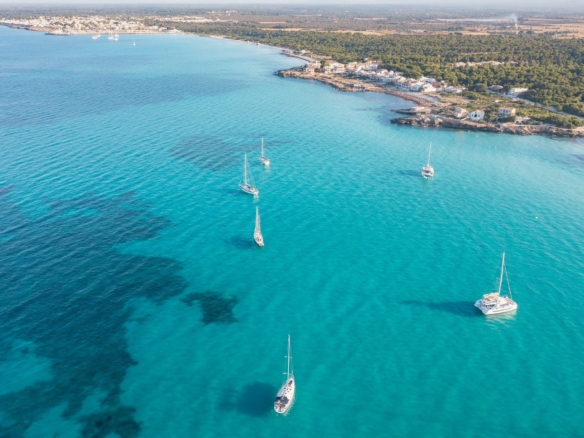
In what we see, the Ibiza look still defines Cala d’Or: low white buildings, pines down to the water and streets that curve around the inlets, with shops, bars and terraces in the center.
The coves and the marina
Cala d’Or is not one beach but a sequence of small coves cut into the rock. Cala Gran, Cala Esmeralda and Caló de ses Dones sit within walking distance of the center, and Cala Ferrera follows on the Felanitx side. In what we see, they are small urban coves set between hotels and houses, with sand and calm water. Residents walk to them from the center. In season they have sunbeds, beach bars and lifeguards; outside the season many of those services stop, and the coves become quiet and very much the residents’ own.
The longest inlet, Cala Llonga, holds the marina. The Balearic port authority, Ports de les Illes Balears, lists Marina de Cala d’Or among the island’s marinas, and its official notices place the marina at Cala Llonga, on the Santanyí coast (Ports de les Illes Balears).
On 15 August, the feast of Santa Maria del Mar, Cala d’Or celebrates a mass at dusk followed by a procession at sea, according to the town hall’s calendar of festivities (Ajuntament de Santanyí).
Portopetro: a natural harbor on a quieter rhythm
According to the town hall, the land was once part of the Sa Punta estate; at the beginning of the twentieth century plots began to be sold, and that is how the first settlement formed. The first stone of the present church was laid on 27 May 1954.
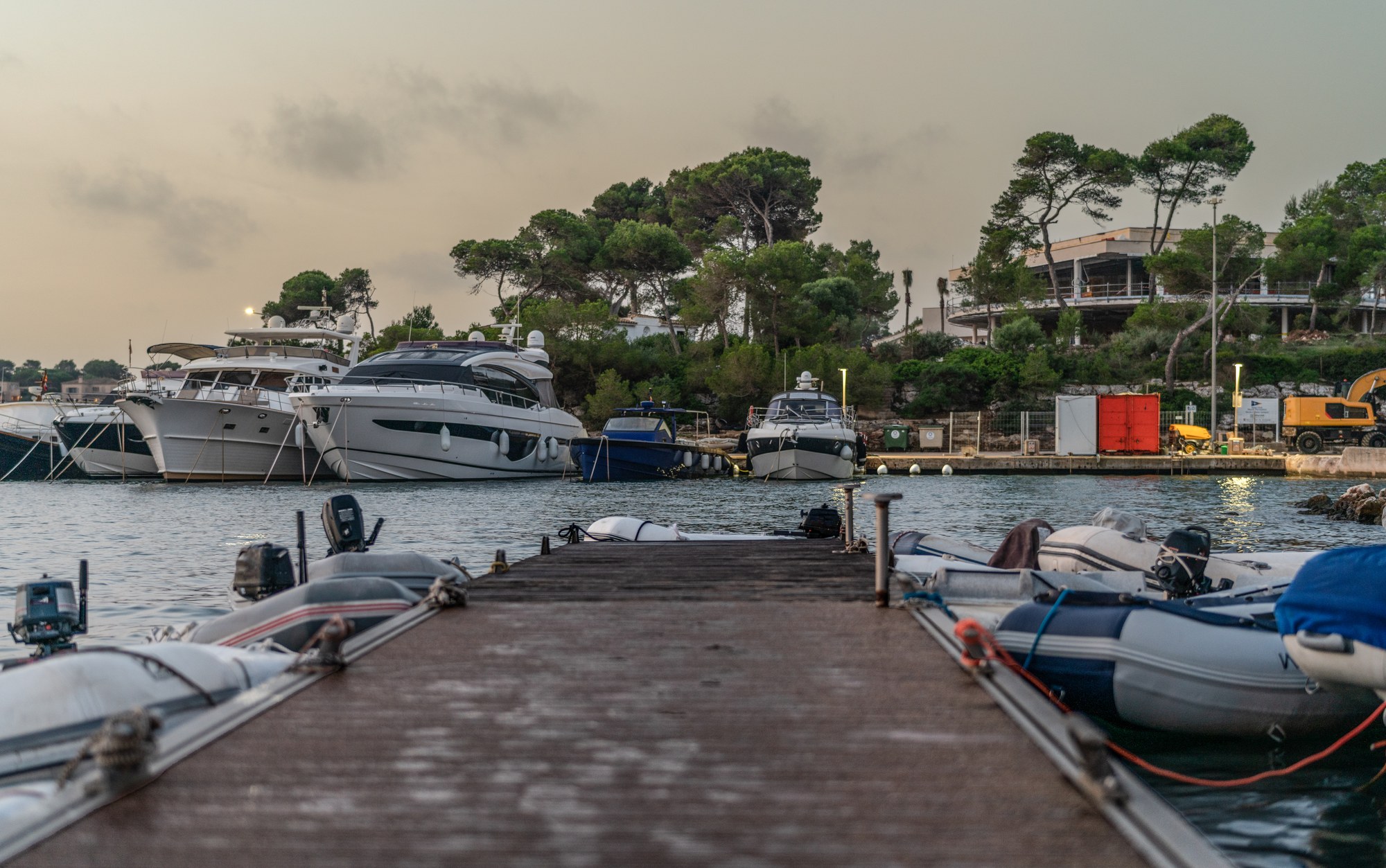
Ports de les Illes Balears manages the Port de Portopetro directly and also lists the Real Club Náutico Portopetro among the island’s nautical clubs. In what we see, fishing boats still share the sheltered inlet with small yachts and residents’ boats.
Day to day, Portopetro is calm. Its restaurants open for most of the year, on reduced hours outside summer, and the harbor keeps a pharmacy and a tobacconist for everyday needs. It also has a following among people from Palma, who come for its restaurants and its calm.
Mondragó, next door
Portopetro is the gateway to Mondragó Natural Park, about six minutes away by road. The Balearic government describes a protected area of about 766 hectares in the municipality of Santanyí, declared a Natural Park in 1992 and part of the Natura 2000 network, with woodland, wetlands, beaches and dunes, cliffs and dry-stone farmland (Govern de les Illes Balears).
Its two beaches, s’Amarador and ses Fonts de n’Alis, each have a public car park. The park’s information center stands next to the Fonts de n’Alis car park, on the road from Portopetro to Cala Mondragó, and five signposted walking routes take between 15 and 60 minutes.
Summer and winter
Cala d’Or is very seasonal. From spring to autumn the coves, the terraces and the marina are full; in winter, in what we see, it is much quieter and the streets belong to the people who live there. What matters for someone who lives here is that the essentials stay: a Mercadona supermarket and the services residents need are open all year.
Portopetro changes less. Its restaurants work through most of the year on shorter hours, the pharmacy and the tobacconist stay, and the harbor keeps its pace. Inland, the villages of s’Alqueria Blanca and Calonge, a few minutes away, keep their own weekly markets: s’Alqueria Blanca on Tuesday mornings and Calonge on Thursday mornings in Plaça de Sant Miquel, according to the town hall.
Services, schools and health
The town hall’s directory lists a medical unit in Cala d’Or, the Unitat Sanitària de Cala d’Or, alongside those in Calonge, s’Alqueria Blanca and Es Llombards (Ajuntament de Santanyí). IB-Salut, the Balearic public health service, is the body to ask about registering with a doctor and opening hours.
For families, Cala d’Or has its own public primary school, CEIP Santa Maria del Mar, and the Balearic education department assigns it to IES Santanyí for secondary school (Govern de les Illes Balears). Families who look at international schools will find them in Palma, Calvià and Manacor; our guide to international schools in Mallorca lists each one with official details and distances.
Getting around
Driving times below come from OpenStreetMap routing, to central Palma (the cathedral) and to the airport terminal, in free-flowing traffic:
- Cala d’Or: about 62 minutes to central Palma and about 55 to the airport.
- Portopetro: about 59 minutes to central Palma and about 48 to the airport.
From Cala d’Or, Cala Ferrera is about 3 minutes away, Portopetro 4, Calonge 5, Mondragó 9, Portocolom 14, Santanyí 16, Felanitx 23, Ses Salines 24, Campos 28 and Manacor 32. In summer, traffic adds time, and a car is part of everyday life. The town hall also lists a bus line from Palma through Santanyí to Cala d’Or.
The homes
In what we see, Cala d’Or is mostly white: apartments and houses in the Ibiza style, many within walking distance of a cove or the marina, among the pines. Portopetro is smaller and more contained, with homes around the harbor and on the slopes above it, some of them looking straight over the water. Inland, between Calonge and s’Alqueria Blanca, there are country houses on land a few minutes from the sea. To compare this coast with the rest of the island, our guide to where to live in Mallorca covers every area.
What nobody tells you
Cala d’Or in August and Cala d’Or in February are two different places. The full coves of summer and the quiet streets of winter are both part of living here, and a visit in each season shows the difference.
The car stays home in summer. Parking near the coves and the center is difficult in high season, so living within walking distance changes summer life completely.
In winter, the coves are yours. Outside the season the sunbeds and beach bars disappear, and the same coves that are full in August become quiet places for a swim or a walk, used mostly by the people who live here.
What you need to know
Is Cala d’Or in Santanyí or Felanitx?
Cala d’Or is in the municipality of Santanyí. The neighboring coves of Cala Ferrera and Cala Serena, often seen as part of Cala d’Or, belong to Felanitx, according to the Ajuntament de Felanitx.
Is Cala d’Or quiet in winter?
Yes, much quieter than in summer. A large supermarket and the services residents need stay open all year, and Portopetro’s restaurants work most of the year on shorter hours.
How far is Cala d’Or from Palma airport?
About 55 minutes in free-flowing traffic, and about 62 minutes to central Palma, according to OpenStreetMap routing. Portopetro is a few minutes closer.
What is Portopetro like?
A quiet natural harbor with fishing boats, restaurants open most of the year on shorter hours, a pharmacy and a tobacconist, four minutes from Cala d’Or and six from Mondragó Natural Park.
Is there a school in Cala d’Or?
Yes. CEIP Santa Maria del Mar is the public primary school, and the Balearic education department assigns it to IES Santanyí for secondary education.
Where we work
We work across Mallorca from our base in the south-east, where you can browse homes in Santanyí, homes in Ses Salines and homes in Campos. Whatever area you are considering, contact Villas y Fincas Mallorca and we will answer in English.
Updated October 2026. Driving times come from OpenStreetMap routing and vary with traffic and season; local facts come from the official websites of the Ajuntament de Santanyí, the Ajuntament de Felanitx, Ports de les Illes Balears and the Govern de les Illes Balears, consulted in October 2026. The descriptions reflect what we see with our clients and are for general information only.