
The short version: Portixol and El Molinar are Palma’s old fishermen’s quarter, on the east side of the bay. Restored fishermen’s houses face a seafront promenade, two small harbors keep their nautical clubs, and residents cycle into the center in about a quarter of an hour. The urban beach of Ciutat Jardí lies at one end and the cathedral at the other. The airport is close, which is a convenience and, on some streets, the sound of planes. This guide describes what living here is like.
Where Portixol and El Molinar are
Palma looks south over its bay. The old town and the cathedral sit in the middle of the waterfront; Santa Catalina and the marinas lie to the west; and to the east, past the highway that runs along the shore, the city turns into a line of low seafront neighborhoods. Portixol is the first of them, built around a small harbor. El Molinar follows it along the coast, and after it come Es Coll d’en Rabassa and Ciutat Jardí, where the promenade reaches the city’s eastern beaches.
If you are still deciding between areas of the island, our guide on where to live in Mallorca places these neighborhoods next to the rest of Palma and the villages; this guide goes street level.
A fishermen’s quarter with a history of its own
The name comes from the windmills. According to the coastal route published by Palma City Council, El Molinar grew in the nineteenth century around flour mills, when outbreaks of cholera in the walled city pushed residents out toward the coast. The mills stopped working before the twentieth century and have since disappeared, but the fishing tradition stayed: the same municipal source describes the harbor as having always had an important traditional fishing activity.
Industry passed through as well. In 1881, the building known as Can Salas was put up as part of Sa Petrolera, a complex that refined petroleum for oil lamps and later produced soap and other goods, and that, in the council’s words, had a strong impact on what was then a neighborhood of fishermen and windmills. The complex was dismantled in the 1980s, the main building was protected by the city in 1985, and since its restoration in 2006 it has been an environmental education center with the Aula del Mar, which the council describes as the only Blue Centre in the Balearic Islands, and, since 2018, a municipal library.
The houses: restored fishermen’s homes and apartments
The image most people have of Portixol and El Molinar is the fishermen’s house: low, narrow, often one or two floors, with the front door on the promenade and the sea on the other side. Many have been restored, some very thoroughly, and the most sought after are those on the front line, looking over the promenade to the water. Behind that first line, the streets mix older houses with apartment buildings, which is where most of the neighborhood’s homes are.
Two things are worth knowing before you fall for one. A front-line house on the promenade lives with the promenade: walkers, runners and cyclists pass the door from early morning, and the terraces fill on summer evenings. And because the original houses were built for fishing families, rooms tend to be compact and outdoor space small; a roof terrace is often where the view is. In what we see, few of these houses come up for sale, and buyers tend to decide quickly when one does.
The promenade and the ride into Palma
The promenade is the reason many people choose this side of the city. A bike lane runs along the waterfront from the center, and Palma City Council describes the bathing areas of El Molinar as well connected to the center by that cycle path. In our experience with residents, the ride from Portixol to the old town takes about a quarter of an hour. By OpenStreetMap routing, the bike route from the harbor of Portixol to the cathedral is about 3.2 km (2 miles), and the walk along the seafront is about 2.6 km (1.6 miles).
For days without the bike, EMT, Palma’s municipal bus company, runs line 35 from Plaça de la Reina, beside the cathedral, with stops named es Portitxol, es Molinar and Ciutat Jardí, before continuing to Can Pastilla; other city lines share some of those stops. Timetables change by season, so the EMT website is the place to check them.
Beaches: Portixol, the Molinar shore and Ciutat Jardí
This is an urban coastline, not a cove coast, and residents use it as such. Palma City Council lists three bathing areas along it. The small beach of Portixol is about 90 meters long and 20 meters wide on average, with showers during the bathing season; it has no lifeguard post of its own, although the beach rescue service patrols the area. Along the Passeig del Molinar, artificial rocky breakwaters have formed small sandy coves where neighbors swim straight from the promenade.
At the far end, Ciutat Jardí is the proper beach: about 500 meters long and 36 meters wide, set between breakwaters, with a seafront promenade behind it that links Platja de Palma with Can Pere Antoni. The council notes that it sits in a residential area with good connections to the center, which is why so many Palma residents use it, and that it offers facilities and services during the bathing season, including a bathing assistance service for people with reduced mobility. The neighborhood itself was conceived in 1891 on the model of the garden city, and its Hotel Ciutat Jardí, opened in 1921 with arabesque domes, was the first hotel built outside the city and is today a protected asset of cultural interest.
The harbors and the nautical clubs
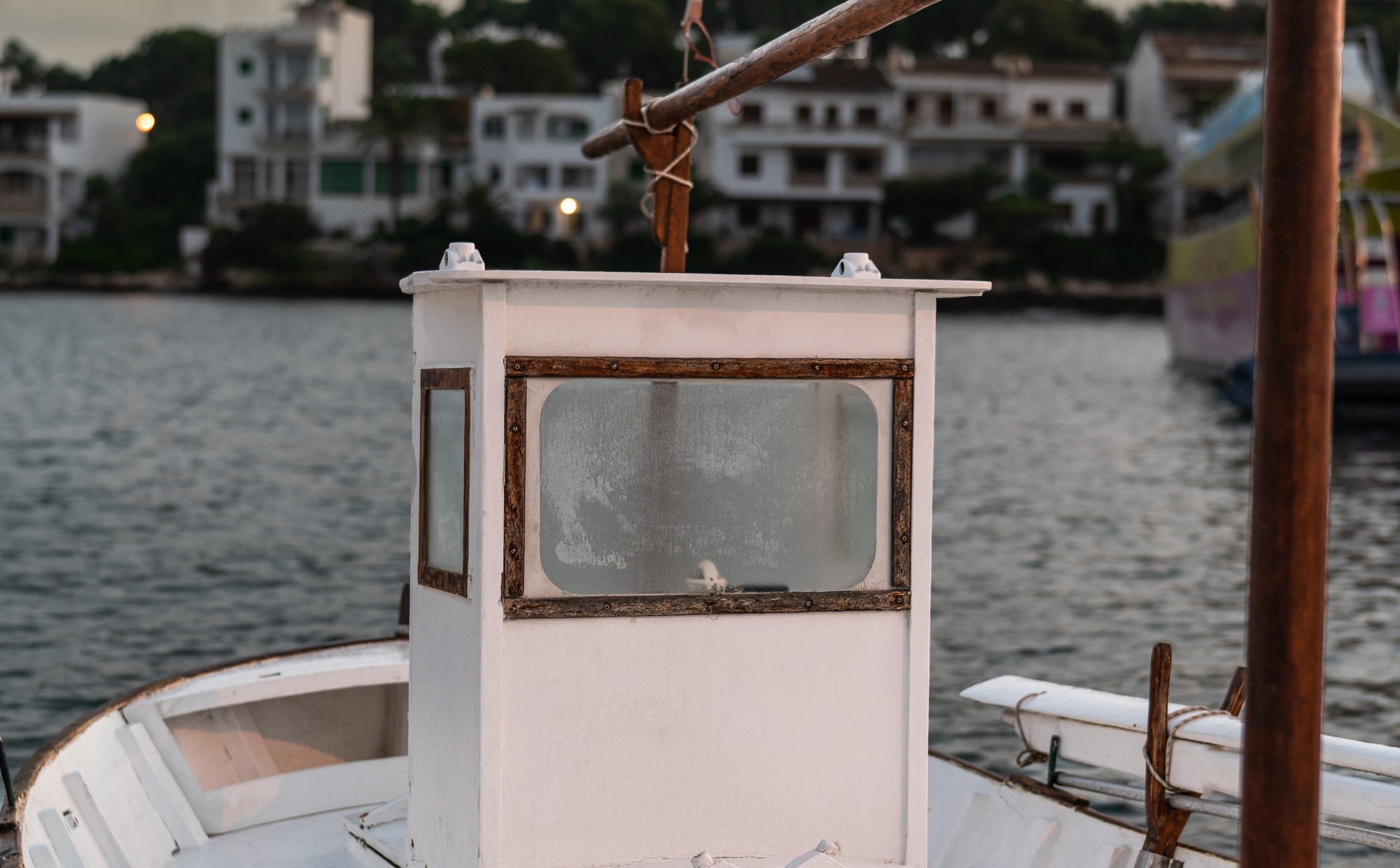
Portixol and El Molinar each have a small harbor with a nautical club, and they are part of daily life rather than a place for superyachts: small boats, fishing boats and sailing classes. The council’s coastal route notes that the harbor of El Molinar is home to the oldest nautical club in the Balearic Islands. For someone moving here with a small boat in mind, the clubs are the first door to knock on; for everyone else, the harbor is where the neighborhood’s restaurants and terraces gather.
Those terraces draw people from across the city, and sometimes from much further away. In June 2024, local press, including the Majorca Daily Bulletin and Última Hora, reported that Michael Jordan had lunch with his family in Portixol before returning to the yacht on which they were touring the islands.
Summer and winter by the sea
The neighborhood keeps two rhythms. From late spring to early autumn, the promenade is busy from early morning until late at night: swimmers at the breakwaters, families from other parts of Palma heading for Ciutat Jardí, bikes in a steady stream and tables full at the harbor.
In winter, it belongs to the people who live here. The promenade is for runners, cyclists and dog walkers and the restaurants work with their regulars. This is a neighborhood of Palma, lived in all year, rather than a holiday resort, and that is a large part of its appeal for those who settle here.
What nobody tells you: the planes
Being this close to the airport is a real advantage: by OpenStreetMap routing, the terminal is about 10 km (6 miles) from Portixol by road, under 20 minutes in free-flowing traffic. The other side of that proximity is that on some streets you hear aircraft. In what we see, it depends a great deal on the exact street and the moment, and two homes a few minutes apart can be very different.
Aena, the airport operator, publishes strategic noise maps for Palma de Mallorca airport, and its noise monitoring system includes a public interactive map, WebTrak, that shows aircraft tracks. Looking at both, and visiting a home at different times of day, gives a clearer picture than any description.
Services, schools and daily life
Because Portixol and El Molinar are part of Palma, daily life runs on the city’s services, with the center a short ride away. For families, our guide to international schools in Mallorca lists every school on the official register. Parking is the everyday question: streets are narrow and spaces are scarce, so a garage space, where there is one, matters, and many residents use the bike for almost everything.
What you need to know
How far is Portixol from the center of Palma?
About a quarter of an hour by bike along the seafront. By OpenStreetMap routing, the bike route to the cathedral is about 3.2 km and the walk about 2.6 km; EMT bus line 35 also links the two.
Is there a beach in Portixol and El Molinar?
Yes. Portixol has a small beach of about 90 meters, the Molinar shore has small coves between breakwaters, and the beach of Ciutat Jardí, about 500 meters long, is at the end of the promenade.
Do you hear the planes in El Molinar?
On some streets, yes, because the airport is close. It depends on the exact street; Aena’s noise maps and a visit at different times of day help.
What kind of homes are there in Portixol and El Molinar?
Restored fishermen’s houses, the most sought after on the front line facing the promenade, and apartment buildings in the streets behind. Few houses come up for sale.
How far is Portixol from Palma airport?
About 10 km by road, under 20 minutes in free-flowing traffic, by OpenStreetMap routing.
Where we work
We work across Mallorca from our base in the south-east, where you can browse homes in Santanyí, homes in Ses Salines and homes in Campos. If Portixol and El Molinar are on your list, contact Villas y Fincas Mallorca and we will answer in English.
Updated October 2026. Distances come from OpenStreetMap routing, and beach, bus and airport details from Palma City Council, EMT Palma and Aena as consulted in October 2026; the descriptions reflect what we see with our clients and are for general information only.