
The short version: Mallorca has two official languages, Spanish and Mallorquín, the island’s own language. Spanish is the one you need for paperwork: the town hall, the notary, the bank and the public health service. In the villages of the south-east, English gets you a long way in shops, restaurants and private clinics, and German is common in some areas. Mallorquín is heard everywhere, but nobody will require it of you. What we tell every client who plans to live here is simple: learning Spanish changes everything.
Two official languages, and the ones you will actually hear
Under Article 4 of the Statute of Autonomy of the Balearic Islands, the islands’ own language is official alongside Spanish, everyone has the right to know and use both, and nobody may be discriminated against because of language. In Mallorca, that own language is Mallorquín: a Romance language, like Spanish, Italian or French, and the one many island-born families speak at home.
Spanish, which Spaniards also call castellano, is the language of the whole country and the one every resident understands. Mallorcans move between the two without thinking about it, and very often switch to English with you. Because the island lives on international visitors and residents, English is the working language of much of the hospitality trade, and German is widely spoken where a long-established German community has made its home.
Where you will hear each one
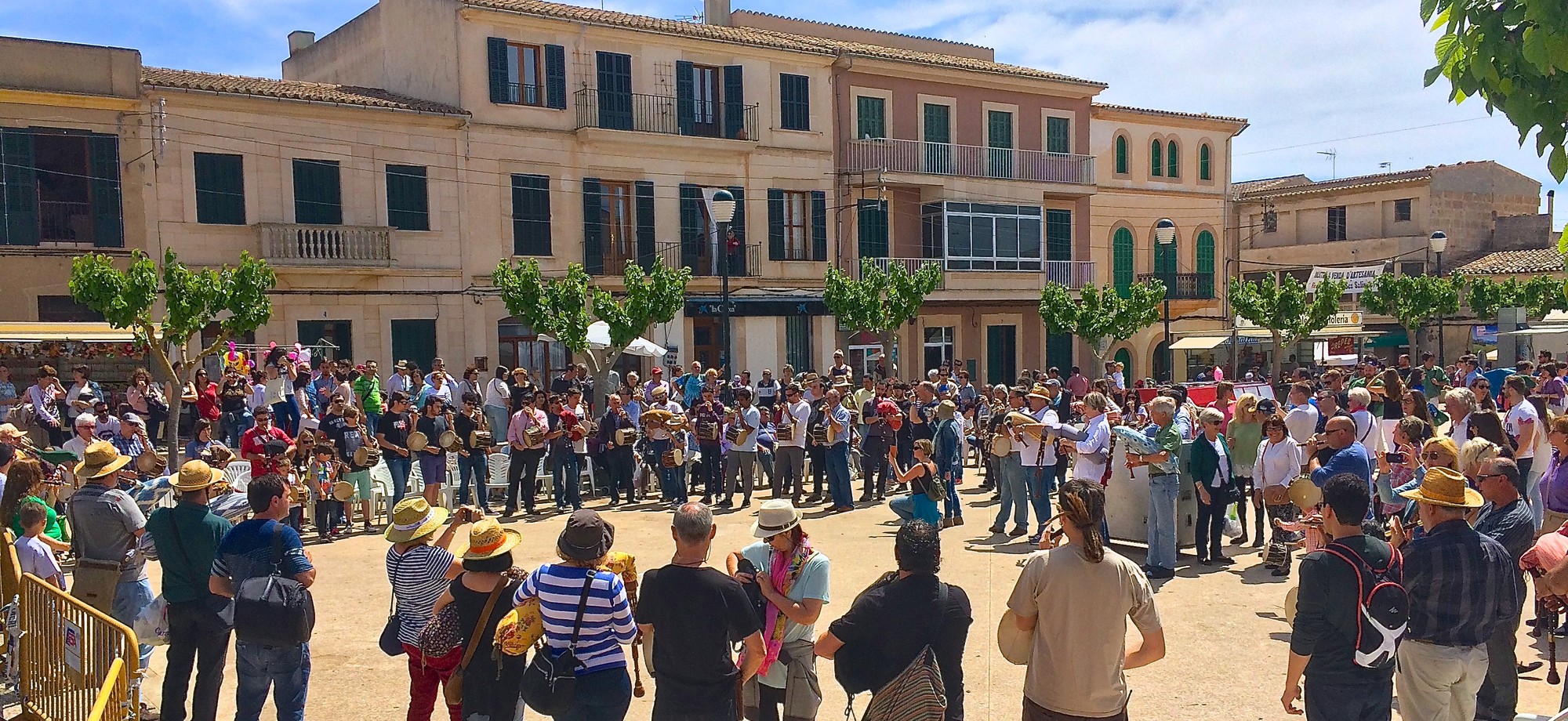
In Palma, Spanish dominates on the street, with a great deal of English and German in the center and around the marinas. In the villages of the interior, Mallorquín is the language of the bar, the market and the church square: listen to two older neighbors in Campos or Santanyí on market day, and that is what they are speaking. On the coast, in summer, English and German take over the terraces. The island has newspapers in Spanish, in Mallorquín, in English and in German, which says a great deal about who lives here.
Paperwork is done in Spanish
This is the part that matters most when you move here or buy a home: every formal step happens in Spanish. At the town hall, when you register as a resident or apply for a permit, the forms are often bilingual and the staff will attend you in Spanish. Article 14.3 of the Statute gives citizens the right to address the Balearic Government in either official language and to receive the reply in that same language.
At the notary, the deed of a purchase is drafted in an official language, and in our transactions with international buyers that language is Spanish. Article 150 of the Spanish Notarial Regulation covers buyers who do not understand Spanish: the notary can translate orally if they speak your language, the deed can be drawn up in two columns if you ask for it, or you bring an interpreter of your choice, who also signs. Your lawyer will tell you which option suits your case; this guide describes practice and is not legal advice.
The bank works the same way: every document you sign is in Spanish. In the public health service, appointments and conversations with the family doctor happen in Spanish, and it is wiser not to count on English.
In the village, English gets you far
Day to day, the picture is friendlier than the paperwork suggests. In the villages of the south-east, you can get by in English in shops, in restaurants and with private doctors and dentists, many of whom see international patients every week. In a village such as Ses Salines, the waiter, the pharmacist and the supermarket staff will usually find a way to help you in English.
Where English runs out is with the trades and the utilities: the electrician, the plumber, the builder, the water company. With them, Spanish is the working language, and it is where newcomers feel the gap most. It is one of the reasons we handle the change of utilities into our buyers’ names after the sale and, for those who want them, put them in touch with cleaning, gardening and maintenance services while they settle in.
Mallorquín: heard, not required
Nobody expects an American to speak Mallorquín. It is heard everywhere and it is the language of the island’s identity, but it is not required of you. What it does is open doors: a greeting in Mallorquín at the market is noticed and appreciated, and it tells your neighbors that you intend to stay. These are the words you will hear in your first week:
- “bon dia” (good morning) until lunchtime, and “bona tarda” (good afternoon) after it.
- “gràcies” (thank you) and “moltes gràcies” (thank you very much).
- “adéu” (goodbye).
- “idò” (well, so), a very Mallorcan word that turns up in almost every conversation.
- “es”, “sa” and “ses” (the), the articles of Mallorquín, which you will see in place names such as Ses Salines (the salt flats), Es Trenc or Sa Colònia.
Street names and signs are in Mallorquín
Under Article 14 of Law 3/1986 on Linguistic Normalization, place names in the Balearic Islands have a single official form in the islands’ own language, signs must match it, and town halls name their own streets, giving preference to traditional local names. Your address, your utility bills and your navigation app will all use the Mallorquín form, so a few words decode most of what you see: “carrer” (street), “plaça” (square), “camí” (country lane), “platja” (beach), “ajuntament” (town hall), and on shop doors “obert” (open) and “tancat” (closed).
Learning Spanish changes everything
If there is one piece of advice we give every client who plans to live here, it is this: learning Spanish changes everything. It turns the plumber, the notary’s office and the family doctor from obstacles into conversations. Mallorquín can come later, if you want it.
We have seen it from both sides. A client who signed at the bank with every document in Spanish and needed us beside him to follow what he was signing; neighbors in the village who switch to Spanish out of courtesy the moment they hear you are not from here; and clients who took the trouble to learn Spanish and, within a couple of years, had a life in the village rather than next to it.
The public route is the Official Language Schools (Escoles Oficials d’Idiomes, EOI) of the Balearic Government. The EOI in Palma has a Spanish department for non-native speakers, with placement tests in June and enrolment for remaining places in September. The EOI in Manacor, the reference school for the east and south of the island, teaches German, English, French and Italian, and was authorized in 2026 to teach the island’s own language too (BOIB no. 83, 2 July 2026), but not Spanish. Manacor also has a municipal school for the island’s language, the Escola Municipal de Mallorquí, and the Government’s adult education center for the area, CEPA Sud, based in Campos with classrooms in Santanyí, Ses Salines and Felanitx, runs English courses and an introductory course in the island’s language for foreign residents. Private academies fill the gaps, and your town hall can tell you which courses it runs each year.
How schools handle two languages
For families, the rules come from the same law, in Articles 18 to 20: pupils have the right to receive their first schooling in their own language, Spanish or the island’s own; the island’s language and literature are compulsory at every level below university, with at least as many hours as Spanish; and by the end of compulsory schooling every pupil should use both languages normally and correctly, whatever language they speak at home.
Two official details help an American family. Since the 2025-2026 school year, the Government has run a voluntary free choice of language pilot programme in the state-funded schools that sign up, and publishes the list of participants. And pupils who live on the islands temporarily, for three years or less in total, can apply to be exempted from assessment in the island’s language subject. Before choosing a school, ask how its timetable is split between the two languages.
What you need to know
What language do they speak in Mallorca?
Spanish and Mallorquín, the island’s own language, and both are official. Everyone understands Spanish; Mallorquín is the everyday language of many island-born families, especially in the villages.
Do they speak Spanish in Mallorca?
Yes. Every resident understands Spanish, and it is the language of paperwork: the town hall, the notary, the bank and the public health service all work in Spanish.
Do they speak English in Mallorca?
In restaurants, shops, hotels and private clinics, usually yes, even in the villages of the south-east. With trades, utilities and public offices, English is not guaranteed and Spanish is the working language.
Do I need to learn Mallorquín to live in Mallorca?
No. Mallorquín is heard everywhere but nobody requires it of you. A few words, such as “bon dia” (good morning), are noticed and appreciated; Spanish is the language worth learning first.
Where can I learn Spanish near the south-east of Mallorca?
The official option is the Official Language School (EOI) in Palma, which teaches Spanish to non-native speakers. The EOI in Manacor and CEPA Sud in Campos teach other languages, including the island’s own, and private academies cover the rest.
Where we work
If you are thinking of making the south-east your home, these are the villages where we work every day: homes in Santanyí, homes in Ses Salines and homes in Campos. For anything else, contact Villas y Fincas Mallorca and we will answer in English.
Updated October 2026. Course offers and school programmes change every year; this guide reflects the official sources we consulted in October 2026 and what we see in the south-east of Mallorca. It is for general information only and is not legal advice.