

When you live in Mallorca, sooner or later you become a tour guide. The parents arrive, the old friends, the children with their partners, and suddenly it is you who decides what is worth showing of the island. And that is when you discover something: the Mallorca of the excursions — of the monuments, the caves, the viewpoints and the wooden train — is not the Mallorca of the holidays. It is the one you learn to ration so as not to wear it out, the one you save for the visit you really want to impress.
We have been in the southeast since 2010, and in all that time we have taken a great many people to see the island. This is the guide to the essentials of Mallorca told not as a brochure but as a neighbour would tell it: what is genuinely worth seeing, when to go so as not to find half of Europe in front of you, and why the best of it is almost always outside August.
The capital
Palma: the cathedral, the round castle and the old town
If you show only one thing of Mallorca, make it Palma Cathedral, La Seu. It is one of the great Gothic cathedrals of the Mediterranean, raised on the sea wall facing the water, with an enormous rose window and a later intervention by Antoni Gaudí inside. Seen from the Parc de la Mar, mirrored in the water, it is the image people take home of the island. Around it, the old town of Palma is a maze of grand courtyards, alleys and squares that you wander on foot with no fixed route and no disappointment.
Crowning the city is the Castell de Bellver, a 14th-century fortress and one of the few circular-plan castles in Europe. You climb up through a pine wood, and from the top you command the whole bay of Palma. It is the perfect morning outing: history, forest and one of the best views of the city all in the same place.
A journey in time
The Sóller train: a wooden railway from 1912
There are outings and there are experiences, and the Sóller train is one of the latter. It is a historic railway opened in 1912, with its original wooden carriages, that links Palma with the Sóller valley across the Serra de Tramuntana. Over its roughly 27 kilometres it passes through more than a dozen tunnels cut into the mountain and comes out in a valley of orange groves ringed by peaks. In Sóller you can connect with the tram that runs down to the Port de Sóller, beside the sea.
It is not the fastest way to get anywhere — that is what the road is for — but a journey made for the journey’s sake. People from elsewhere love it, and those who live here still find it beautiful however many times they have done it.
Underground
Les Coves del Drac: an underground lake with a live concert
In Porto Cristo, in the municipality of Manacor and on the doorstep of the southeast, are the Coves del Drac — the Caves of Drach — one of the most astonishing visits on the island. The route descends through galleries full of stalactites and stalagmites to Lake Martel, one of the largest underground lakes in the world, named after the speleologist Édouard-Alfred Martel, who explored it in the late 19th century.
And here comes the moment no one forgets: over the lake, in the half-light, a classical quartet plays live from illuminated boats. It is a tradition kept up since 1935. After the short concert you cross the lake by boat or over the bridge. With a constant temperature of around 20 degrees, it is also the perfect plan for a hot day or a wet one. Nearby are the Coves dels Hams, another option should the place fill up.
The balcony
Cap de Formentor: cliffs over the sea in the north
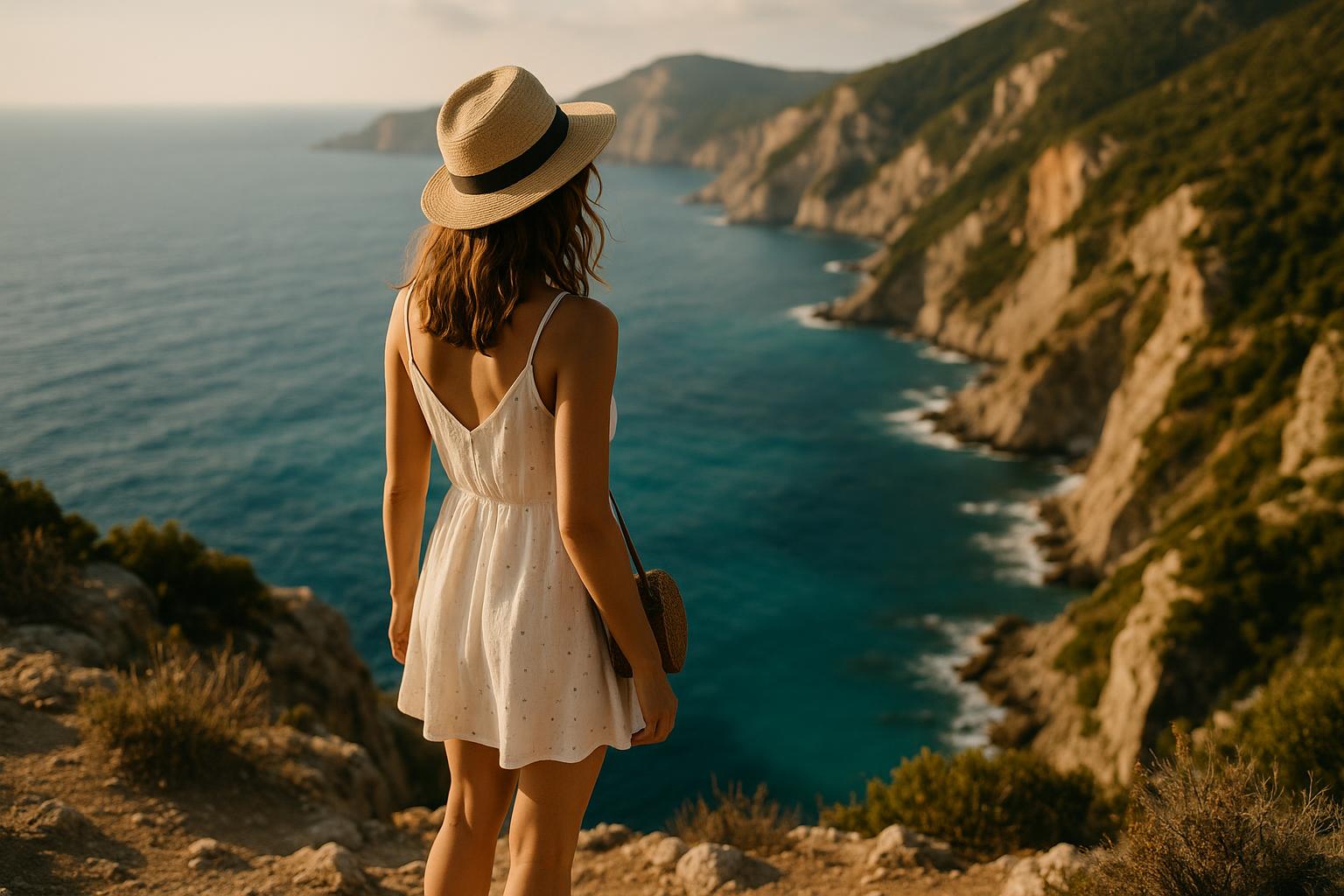
At the northern tip of the island, beyond Pollença, a narrow, hairpin-laced road leans out over the void to the Cap de Formentor. These are cliffs of more than 300 metres dropping sheer into a turquoise sea, with viewpoints like the Mirador des Colomer and the Albercutx watchtower, and at the end the Formentor lighthouse. It is one of the most spectacular landscapes in the Mediterranean and one of the best places on the island to watch the sunrise or the sunset.
A practical warning: in high season car access is regulated during the middle of the day because of congestion, so it pays to go very early or very late — which is also when the light is at its best.
The mountains, with history
Valldemossa, Deià and the Torrent de Pareis
The Serra de Tramuntana is not only mountains to walk: it also holds some of the most storied corners of the island. Valldemossa, with its Royal Charterhouse where the composer Frédéric Chopin and the writer George Sand spent the winter of 1838, is one of those stone villages that seem stopped in time. A few kilometres away, Deià tumbles down the hillside towards the sea and has been a refuge for artists and writers for decades.
And for lovers of monumental nature, the Torrent de Pareis, which opens out at the cove of Sa Calobra after carving a canyon between towering walls, is an outing of the kind you do not forget. Many of these villages are, moreover, extraordinary places to live; we cover them in detail in our guide to the villages of the island.
The protected island
Cabrera: a national park a boat ride away
From the Colònia de Sant Jordi, in the southeast, the boats leave for the Cabrera Archipelago Maritime-Terrestrial National Park, the only national park in the Balearics. It is a small, uninhabited and protected archipelago, with transparent waters and an exceptional marine biodiversity. A day in Cabrera is the ideal outing for showing the wild Mallorca, the one from before tourism, to anyone who thinks they have already seen it all.
The inland viewpoints
Sanctuaries on high: Sant Salvador and the Puig de Randa
The interior has its own summits, and almost all of them have a sanctuary at the top and a view of the whole island. Above Felanitx, deep in the southeast, the Santuari de Sant Salvador crowns a mountain from which you can see much of the Migjorn and the sea beyond. In the centre, the Puig de Randa, tied to the figure of Ramon Llull, rises alone above the plain of Es Pla with its tiered sanctuaries.
They are half-day outings, rarely crowded, perfect for a Sunday. And they have something the big draws do not: you almost always find them quiet, even in season.
Common questions
Frequently asked questions about what to see in Mallorca
What are the must-sees in Mallorca?
The essentials: Palma Cathedral (La Seu) and the old town, the Castell de Bellver, the Sóller train of 1912, the Coves del Drac in Porto Cristo with their underground lake, the Cap de Formentor in the north, the Serra de Tramuntana villages such as Valldemossa and Deià, and the Cabrera National Park from the Colònia de Sant Jordi.
Is the Sóller train worth it?
Yes — it is an experience in itself rather than a means of transport. It is a railway from 1912 with its original wooden carriages that crosses the Serra de Tramuntana over some 27 kilometres and more than a dozen tunnels, and in Sóller it connects with the tram down to the port. It is loved as much by those visiting the island as by those who live on it.
What are the Coves del Drac and why are they famous?
They are caves in Porto Cristo (Manacor) with one of the largest underground lakes in the world, Lake Martel. Their great draw is the live classical-music concert played over the lake from illuminated boats, a tradition kept up since 1935. Afterwards you cross the lake by boat. The interior temperature is around 20 degrees all year.
When is the best time to visit the big sights of Mallorca?
Out of high season and first thing in the day. In summer, places like the Coves del Drac or the Cap de Formentor fill up by mid-morning, and car access to Formentor is regulated in the middle of the day. Spring and autumn offer good weather, fewer people and better light.
Can you visit Cabrera?
Yes. It is the only national park in the Balearics and is visited by boat from the Colònia de Sant Jordi, in the southeast, with regular excursions. It is a protected, uninhabited archipelago, with exceptionally well-preserved waters and seabeds.
Are there plans for rainy or very hot days?
Yes. The caves (Coves del Drac, Coves dels Hams) keep a constant temperature of around 20 degrees, and in Palma there are the cathedral, the old-town courtyards and the museums. They are ideal plans when the weather does not lend itself to the beach or the mountains.
Let’s talk
Living here is having the finest of outings on your doorstep
The difference between visiting Mallorca and living it is this: the tourist tries to see everything in a week and wears themselves out; the person who lives here spreads it over the years, chooses the day and the hour, and enjoys the island without queues. Everything in this guide is a short drive away, for the day you feel like it or for the next visitor you want to leave open-mouthed.
We have been helping people find their place in the southeast of the island since 2010. If you would like to keep discovering it, see what it means to live among the most beautiful villages in Mallorca and its best beaches and coves by area.