

You can drive across Mallorca in about two hours, and still spend a lifetime without truly knowing it. This is an island with a mountain range listed as a UNESCO World Heritage Site, the only national park in the Balearics, salt pans with flamingos, one of the cleanest night skies in the Mediterranean, and the roads half the world’s professional cycling peloton dreams about. Living here doesn’t mean having the sea nearby: it means having the mountains, the countryside and the coast all at once, and getting to choose every morning.
We’ve been based in the southeast since 2010 — Ses Salines, Santanyí, Campos, Colònia de Sant Jordi, Felanitx — and this is the Mallorca that never makes the crowded-August postcard: the off-season one, where people walk among almond trees in blossom in February or ride a mountain pass on a Tuesday in March with the road to themselves. This is our guide to the island’s nature and outdoor life, told by people who live it all year round.
The mountains
The Serra de Tramuntana: a World Heritage Site made for walking
The island’s northwest coast is taken up by a chain of mountains that UNESCO declared a World Heritage Site: the Serra de Tramuntana. It isn’t just any nature reserve; it’s a cultural landscape, shaped over centuries by hand into dry-stone terraces — walls built without mortar — that hold the olive groves onto the hillside. That craft gives its great hiking trail its name, the Ruta de Pedra en Sec (GR-221), which crosses the range from end to end, linking villages, refuges and valleys.
Here you’ll find Puig Major, the roof of Mallorca at 1,436 metres, and villages clinging to the rock such as Valldemossa, Deià, Fornalutx and Sóller. You can walk almost year-round, though the best season runs from autumn to spring: high summer brings real heat, and in winter the highest peaks can hold snow for a few days. As for the exact length of the GR-221, we’d avoid trusting the first figure you find — sources disagree between the certified sections, the main route and the variants; what matters is that you can do it in stages, refuge to refuge, or as single morning walks.
Cycling
Why half the world’s pro peloton trains here
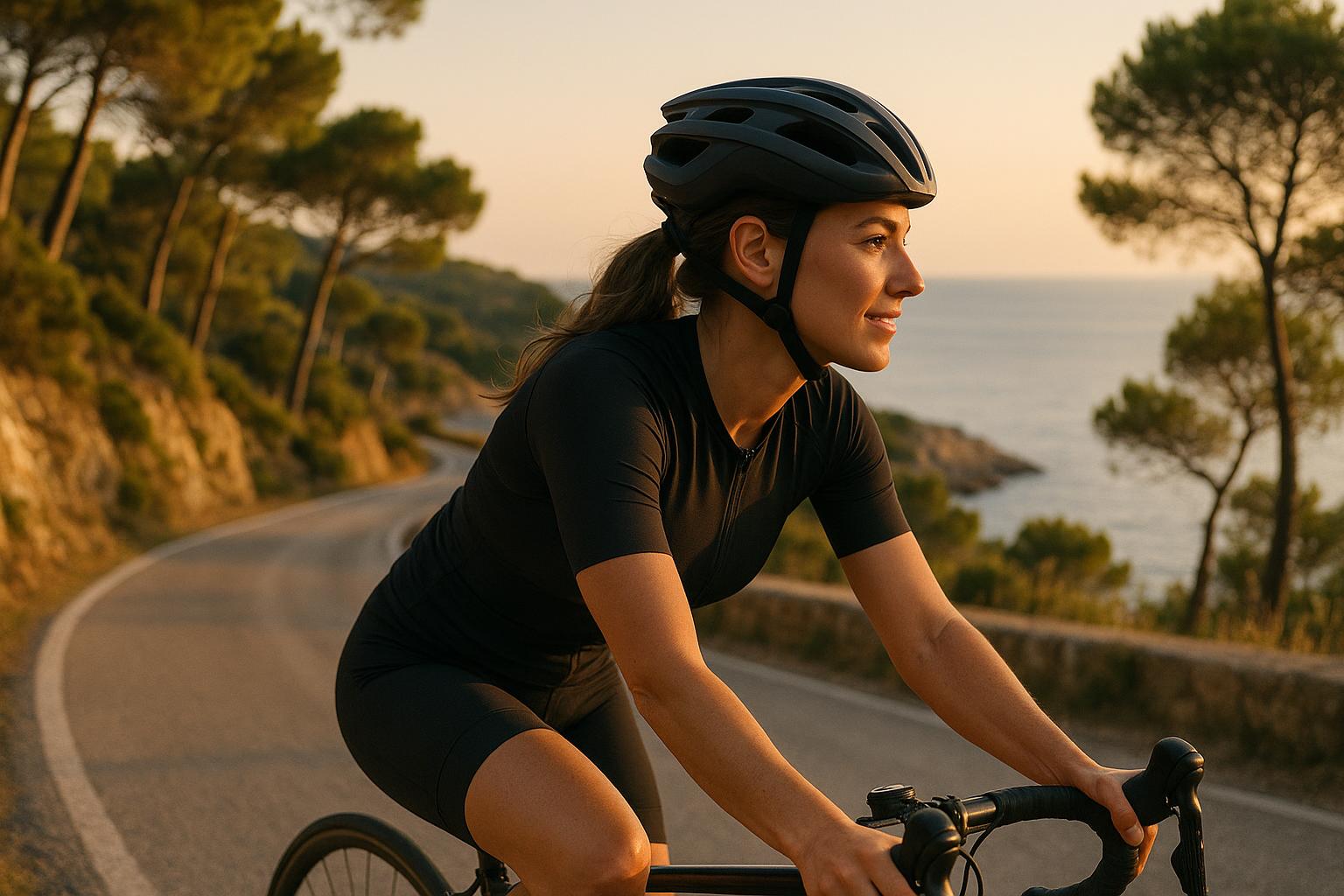
If one sport put Mallorca on the world map, it’s road cycling. Every winter and spring, when it’s too cold to ride across northern and central Europe, professional teams and thousands of amateur cyclists from Germany, the UK, Scandinavia and the United States land on the island to train. The reason is simple: mild weather in January and February, superbly surfaced roads, and huge variety in a small space — a flat day on the Pla plain, then a mountain pass the next.
The legendary climb is Sa Calobra, deep in the Tramuntana: roughly 9.5 km at an average 7%, with 26 hairpin bends and the famous Nus de sa Corbata — the “necktie knot” — a loop where the road passes over itself. You climb and descend by the same road, because it’s a dead-end that finishes at a cove, and that’s part of its legend. There’s also Puig Major, the island’s longest and hardest ascent, and the road out to Cap de Formentor, a balcony over the sea and one of the most photographed in Europe.
The event of the year is the Mallorca 312, a cyclosportive starting near Playa de Muro that offers routes of 167, 225 and 312 kilometres on roads closed to traffic, much of it through the Serra de Tramuntana. In 2026 it takes place on Saturday 25 April. You don’t need to be a pro to feel the buzz: the whole island breathes cycling in those months.
The wild sea
Cabrera and the Torrent de Pareis: nature at its purest
Off the southeast coast, a short hop from Colònia de Sant Jordi, lies the Cabrera archipelago, the only national park in the Balearic Islands. It’s a protected land-and-sea reserve, uninhabited, reached only by boat from Colònia — there are regular excursions — where the seabed and the birdlife are preserved as in few other places in the Mediterranean. Spending a day there is the closest you’ll get to seeing the coast as it was before tourism.
At the opposite end, in the heart of the Tramuntana, the Torrent de Pareis reaches the sea at the cove of Sa Calobra after carving a spectacular canyon between walls hundreds of metres high. You can hike down through the gorge — a serious outing, dry season only and with care — or, more easily, reach the mouth and take it in from below. It’s one of those landscapes that remind you Mallorca is far more than a beach.
The birds
Flamingos on the salt pans: nature on your doorstep
Here in the southeast, you don’t have to go far for real nature. The salt pans of Ses Salines and s’Avall — worked since Punic and Roman times, among the oldest in the Mediterranean — are still working salt pans and, at the same time, a wetland where the birds stop over. With a little luck and no hurry you’ll spot flamingos, along with black-winged stilts, avocets and a rosary of migratory birds that use the south of the island as a staging post.
Nearby lies the Parc Natural de Mondragó and the whole Migjorn coast, with unspoilt coves linked by pine-shaded paths. This is everyday nature: what you find on a stroll, not what demands an expedition. For anyone coming from the tarmac of northern Europe, having this ten minutes from your door is hard to explain until you live it.
The sky
Nights without streetlights: one of the cleanest skies in the Mediterranean
There’s something about the southeast that almost nobody lists, and yet it changes how you experience the nights: the darkness. The area around Cap de Ses Salines and the far south of the island are among those with the least light pollution on Mallorca. Far from the lights of Palma and the crowded tourist coast, on a clear winter night the sky fills with stars in a way that no longer exists in a European city.
You don’t need to be an astronomer. Just step out into the countryside, switch off your phone torch and wait ten minutes for your eyes to adjust. It’s one of those quiet luxuries that never appear in a property listing and that, once you’ve lived here a while, you wouldn’t want to lose.
The secret season
Almond blossom: the spectacle tourism misses
And then there’s the best-kept secret of all, precisely because it happens when no one is here. Between late January and February — variable by area and year, sometimes into early March — the almond trees blossom and much of Mallorca’s interior turns white and pink. Whole fields snowed under with flowers in the middle of winter, twenty degrees at midday and not a single parasol in sight.
Anyone who only knows Mallorca in August won’t believe it. But it’s in exactly those weeks that the island shows why it’s worth living in, not just visiting: because the best of it happens off-season.
All year round
An island for living outdoors in any season
What makes Mallorca special isn’t a single landscape, but that you can be outdoors twelve months a year. In winter you walk the mountains and ride with empty roads; in spring everything blossoms and the cyclists arrive; summer is for the sea and dawn swims before the heat; and autumn, with the sea still warm and the island already calm, is for many the best time of the year.
There’s no dead month. There’s a different month. And that’s the real difference between spending a week here and living here: you discover the island has four faces, and not one of them is surplus to requirements.
Common questions
Frequently asked questions about nature and the outdoors in Mallorca
Is Mallorca a good place for road cycling?
It’s one of the best in the world, which is why professional teams and thousands of amateur cyclists from northern Europe train here in winter and spring. It has mild weather, superbly surfaced roads and huge variety: flat riding on the Pla plain and mountain passes in the Serra de Tramuntana, with legendary climbs such as Sa Calobra (around 9.5 km at 7%, with 26 hairpins and the Nus de sa Corbata) or Puig Major, the island’s hardest.
When is the Mallorca 312?
The Mallorca 312 cyclosportive takes place in 2026 on Saturday 25 April, starting near Playa de Muro, with routes of 167, 225 and 312 kilometres on roads closed to traffic, much of it through the Serra de Tramuntana.
Can you see flamingos in Mallorca?
Yes. The salt pans of Ses Salines and s’Avall, in the southeast, are a working wetland where, with a little luck, you can spot flamingos as well as other migratory birds. It’s nature right on your doorstep, with no need to travel far.
What is the Serra de Tramuntana?
It’s the mountain range along Mallorca’s northwest coast, declared a UNESCO World Heritage Site as a cultural landscape for its dry-stone terraces. It’s home to Puig Major (1,436 m, the island’s highest point) and the great GR-221 hiking trail, the Ruta de Pedra en Sec, which crosses it in stages.
Can you visit the Cabrera National Park?
Yes. Cabrera is the only national park in the Balearics and is visited by boat from Colònia de Sant Jordi, in the southeast, with regular excursions. It’s a protected, uninhabited archipelago with one of the best-preserved seabeds in the Mediterranean.
When do the almond trees blossom in Mallorca?
Between late January and February, and in some areas into early March, depending on the year and the microclimate. It’s one of the island’s great spectacles and happens in the depth of winter, well outside the tourist season.
Let’s talk
Living here means having the mountains, the countryside and the sea in the same week
Mallorca’s nature isn’t a holiday backdrop: it’s part of daily life for the people who live here. Walking among almond blossom in February, riding a mountain pass on an empty road in March or looking at the stars on a winter night with no streetlights costs nothing and fits into no listing. But it’s often the real, underlying reason people stay.
We’ve been helping people find their place in the southeast since 2010. If you’d like to keep discovering the island, explore the most beautiful villages to live in and the best beaches and coves by area.