
The short version: with us, buying a house in Mallorca usually takes four to eight weeks from the reservation to the notary. You reserve the house with your passport and a deposit, and it comes off the market; two or three weeks later you sign the arras, a private contract with a deposit of 10 percent of the price that commits both sides; and about a month and a half after the reservation you sign the deed before a Spanish notary, everything in one sitting. We always recommend that you have your own lawyer, and if you do not have one, we introduce you to one. This guide tells the process step by step.
The whole process at a glance
An American buyer usually expects offer, inspection, appraisal, escrow and closing. In Mallorca the steps are fewer and each one carries more weight. In our transactions, the sequence is almost always the same:
- Visits: a trip of a few days, with visits planned around what you have told us you are looking for.
- Reservation: you reserve the house with a deposit and your passport, and it is taken off the market.
- Arras: two to three weeks later, you sign the private contract and pay 10 percent of the price.
- Notary: about a month and a half after the reservation, you sign the deed, pay the rest and receive the keys.
- After the signing: we change the utility contracts into your name, and other services are available if you want them.
From reservation to notary, that is four to eight weeks in practice. Each transaction has its own pace, depending on the documents of the house and the buyer’s own paperwork, but this is the rhythm we see most often.
The visits
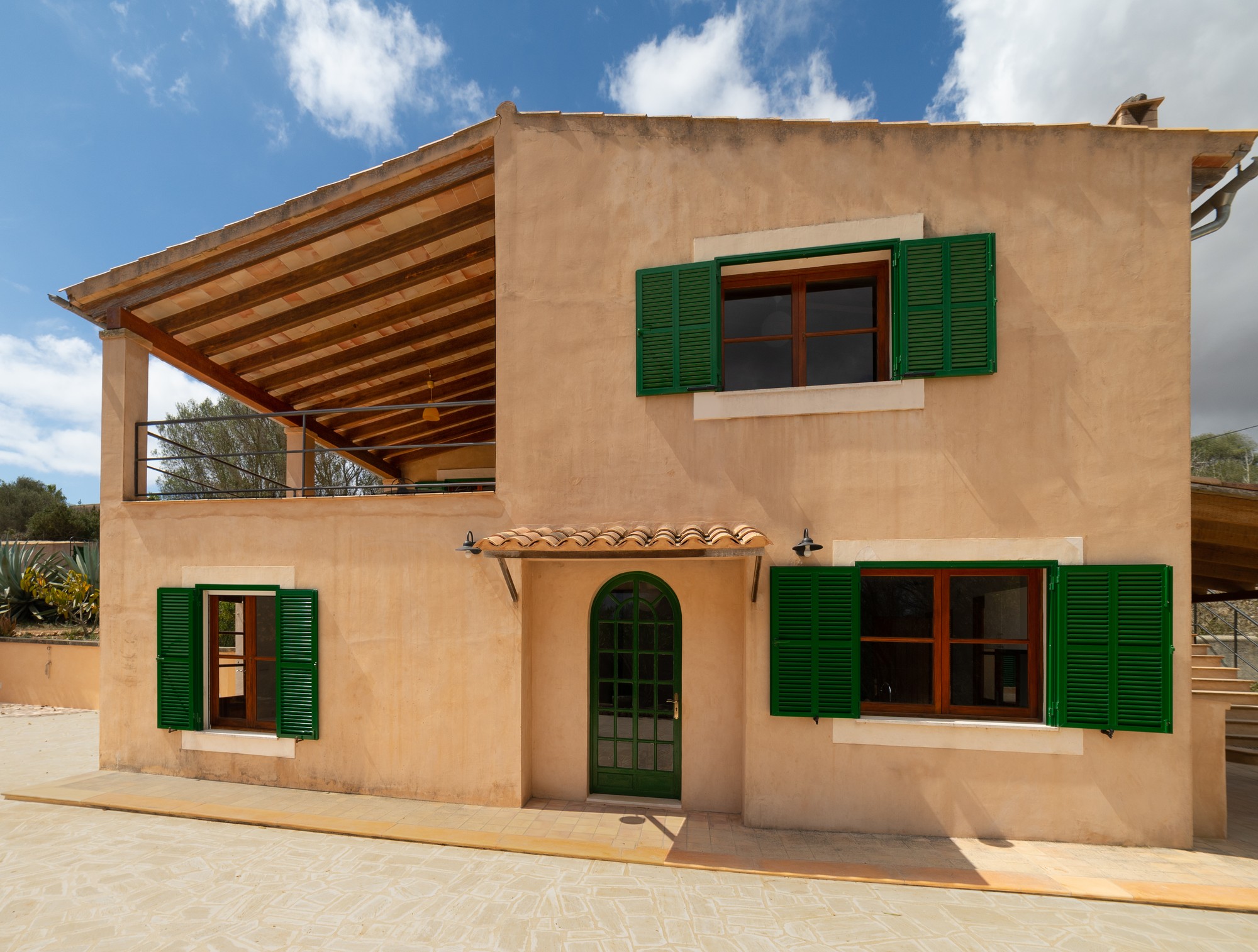
A purchase usually starts with a trip of a few days and visits planned around what you have told us you are looking for, whether that is a village house in Santanyí, a home near the sea in Ses Salines or a country house with land around Campos. The visits are about comparing light, views, space, the road to the house and the feel of each village.
It is also worth looking at how the house works in winter, where the water and electricity come from and how far the nearest shop, school or beach really is. The visits are also the moment to bring your family, take measurements and walk the village at a different time of day.
The reservation: taking the house off the market
When you decide on a house, the first formal step is the reservation. In practice, you sign a short reservation document and pay a deposit, the señal, and the house is taken off the market while the purchase moves forward. For this step, your passport is enough to identify you.
The reservation gives both sides time: the seller knows you are serious, and you know nobody else will buy the house while the paperwork is reviewed.
Before the arras: the paperwork we gather
Between the reservation and the arras, we gather the documents of the property so that your lawyer can review them before you sign anything that commits you. Among them are the nota simple, the extract from the Land Registry that shows who owns the house and whether there are charges registered against it, the property’s record in the Cadastre and the habitability certificate, known as the cédula. The Colegio de Registradores, the professional body of Spain’s land registrars, explains that a nota simple is a purely informative extract.
What those documents mean for your purchase is your lawyer’s job to explain. Ours is to get them on the table early and in order.
The arras: the step that commits you
Two to three weeks after the reservation, buyer and seller sign the contrato de arras. In our transactions, the buyer pays 10 percent of the price on signing, and the contract sets the date and conditions for the deed at the notary.
This is the step Americans underestimate most. The arras is not a letter of intent and it is not an offer you can walk away from without consequences: it is a strong commitment on both sides. Walking away after signing has real financial consequences, and exactly what they are is written in the contract itself. That is why, in our transactions, the buyer’s lawyer reads and agrees the arras contract before it is signed. If something about the house worries you, the moment to raise it is before the arras, not after.
Your NIE and a Spanish bank account
The order, in practice, is simple. Your passport is enough for the reservation and the arras. By the time of the notary, our clients already have their NIE, the identification number for foreigners in Spain, which is also what the bank asks for to open an account. Many of our American clients start that process at a Spanish consulate in the United States before they fly.
How to obtain the NIE in your particular case, and which documents the bank will ask of you, are questions for your lawyer and your bank; this guide only describes the order in which things usually happen.
Your own lawyer, always
We always recommend that the buyer has their own lawyer, independent of the seller and of us. Villas y Fincas Mallorca does not give legal advice: we are the agency, and our job is to find the house, coordinate the steps and make sure everyone has the documents they need when they need them. The lawyer reviews the paperwork, reads the arras contract and advises you on anything legal about the purchase.
If you do not have a lawyer in Spain, we introduce you to one. The same goes for taxes: buying and owning a home involves taxes and notary and registry fees, which depend on your situation, so figures are not quoted here. We have a tax adviser and we introduce you.
The notary: everything in one sitting
About a month and a half after the reservation, buyer and seller meet at a notary’s office to sign the deed of sale, the escritura. We are there with you. The notary is a public official who reads the deed, confirms the identity of everyone signing and authorizes the document. The remaining price is paid, the deed is signed, and you leave with the keys. There is no separate closing day weeks later: it all happens in one act.
The deed is drafted in Spanish. Article 150 of the Spanish Notarial Regulation covers buyers who do not understand Spanish: the notary can translate orally if they speak your language, the deed can be drawn up in two columns if you ask for it, or you bring an interpreter of your choice, who also signs. Your lawyer will tell you which option suits your case. Our guide to what language they speak in Mallorca explains why Spanish matters at the notary, the bank and the town hall.
After the signing: utilities in your name, and services if you want them
Once the deed is signed, we take care of changing the utility contracts, such as electricity and water, into your name. It is part of our service, and it spares new owners the first round of calls and forms in Spanish.
Beyond that, there are services available to you if you want them: professional cleaning, gardening and maintenance, and insurance and community-of-owners matters. None of them is included: you are free to use them or not. If the house will stand empty for long periods, our guide to whether Mallorca is safe covers what owners usually do.
What surprises Americans most
Three things come up again and again with our American buyers:
- There is no standard home inspection. In Mallorca, a technical inspection is not a routine step of the purchase. You can commission your own from an architect or building surveyor, and the sensible time to do it is before the arras.
- The arras. A deposit of 10 percent and a strong commitment, signed only a few weeks after you first see the house.
- The notary. Signing, payment and keys in one sitting, in Spanish, with a public official reading the deed aloud.
What you need to know
How long does it take to buy a house in Mallorca?
With us, usually four to eight weeks from the reservation to the notary: arras two to three weeks after reserving, and the deed about a month and a half after the reservation.
What documents do I need to reserve a house in Mallorca?
Your passport is enough for the reservation and the arras. By the notary date, our clients already have their NIE, which the bank also asks for to open an account; your lawyer can tell you how to obtain it in your case.
What are arras when buying a house in Spain?
The private contract signed between reservation and notary. In our transactions the buyer pays 10 percent of the price, and it is a strong commitment on both sides; your lawyer should read it before you sign.
Is there a home inspection when buying in Mallorca?
Not as a standard step. You can commission your own from an architect or building surveyor, ideally before signing the arras.
Do I need my own lawyer to buy a house in Mallorca?
We always recommend having your own, independent lawyer. Villas y Fincas Mallorca does not give legal advice, and if you do not have a lawyer in Spain, we introduce you to one.
Where we work
If you are thinking of buying in the south-east, these are the villages where we work every day: homes in Santanyí, homes in Ses Salines and homes in Campos. For anything else, contact Villas y Fincas Mallorca and we will answer in English.
Updated October 2026. This guide describes how purchases usually work with Villas y Fincas Mallorca; every transaction has its own timing and documents. It is for general information only and is not legal or tax advice: your own lawyer is the one to advise on your case.