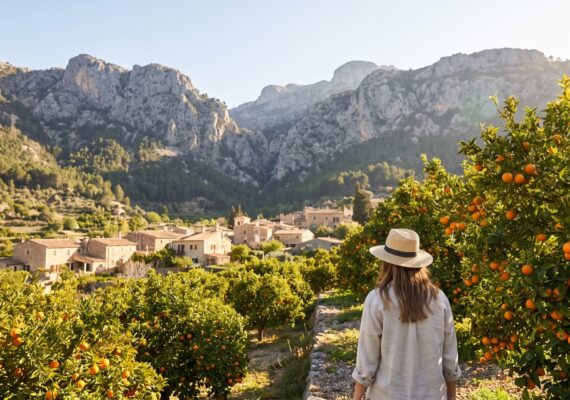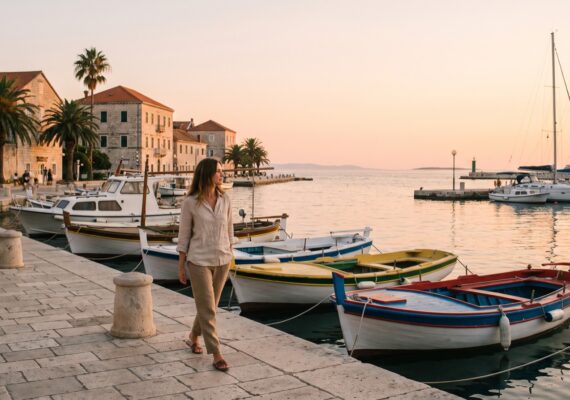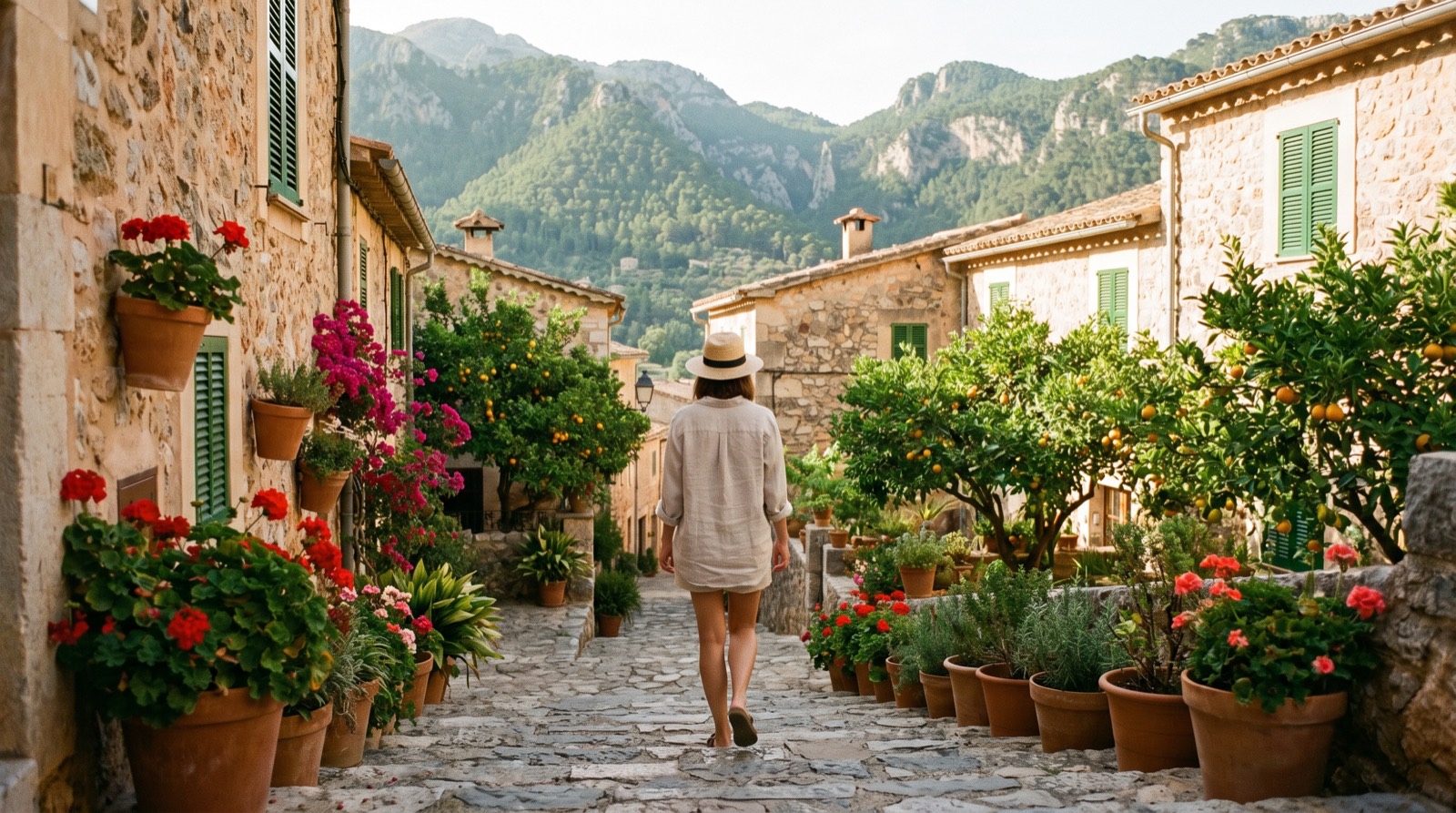
Alcúdia is one of the most complete villages in northern Mallorca, and one of the most surprising for anyone who looks beyond the beach. Fourteenth-century medieval walls you can still walk along, the ruins of the Roman city of Pollentia, two markets a week, the largest bay on the island, the s’Albufera nature park, and ferry links to Menorca and mainland Spain. This isn’t just a holiday spot: it’s an excellent place to live all year round. We work in the north every day of the year, so we’ll tell you what it’s really like.
Set on the north coast, Alcúdia has two very distinct sides: the walled old town, quiet and beautifully preserved, where life moves at its own pace, and the Port d’Alcúdia, far more touristy and lively in summer. People who live here tend to value precisely that duality: an authentic village with everything the sea has to offer just five minutes away.
Real life
What it's really like to live in Alcúdia all year round
Alcúdia is one of the northern villages with the most life outside the season. It has every day-to-day service — supermarkets, banks, a health centre, primary and secondary schools, pharmacies, shops — and a momentum of its own that doesn’t depend solely on tourism. Its Tuesday and Sunday markets are among the largest and most complete in the north, and they’re the social meeting point of the week. Tuesday is the big one, with hundreds of stalls on the fairground; Sunday is more intimate, held in the old town.
The community is varied: lifelong Mallorcans, families from other parts of Spain who have settled here, and an international community — Germans, British, Scandinavians — that in some parts of the Port has been established for decades. It’s a village where socialising is easy and where many faces and many worlds live side by side. For anyone arriving from abroad who wants to integrate, there’s plenty to plug into.
In winter, the old town of Alcúdia is one of the best places in the north to live: quiet, well preserved, with all its services open. The Port slows right down, but the village itself keeps its activity going. For anyone after the balance between an authentic village with history and easy access to the sea, Alcúdia is one of the best options in the north.
Living history
The medieval walls and the old Alcúdia
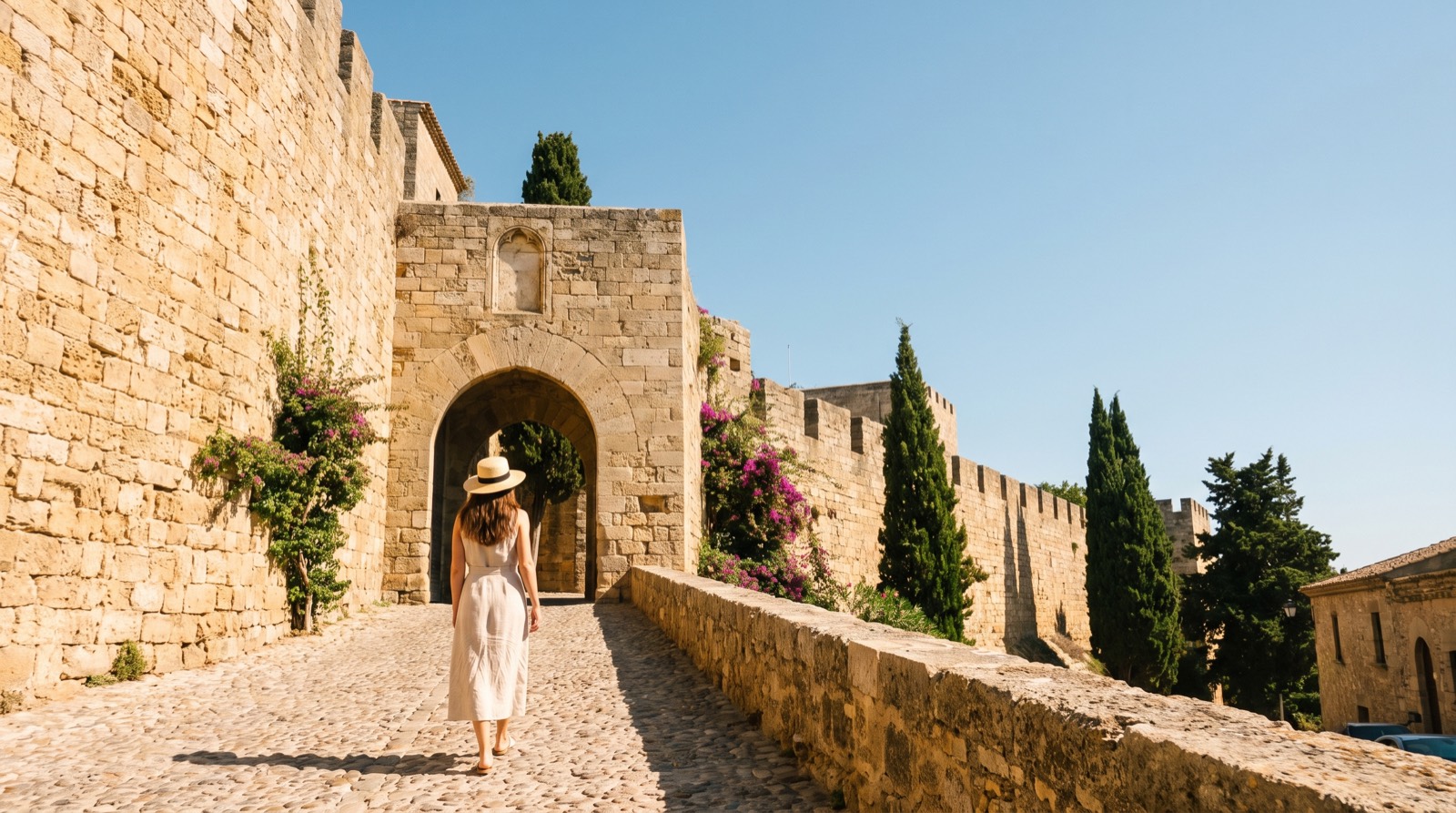
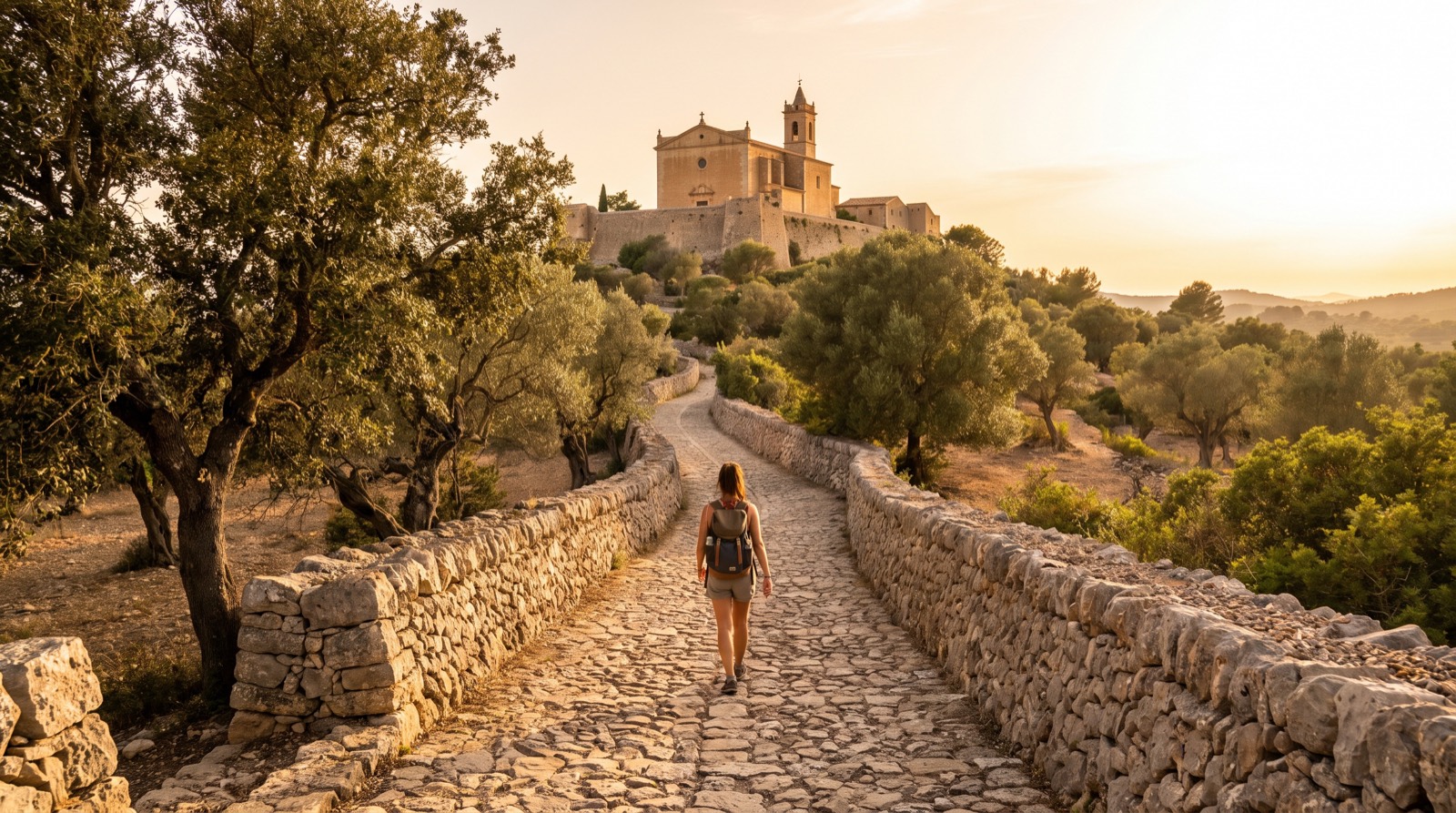
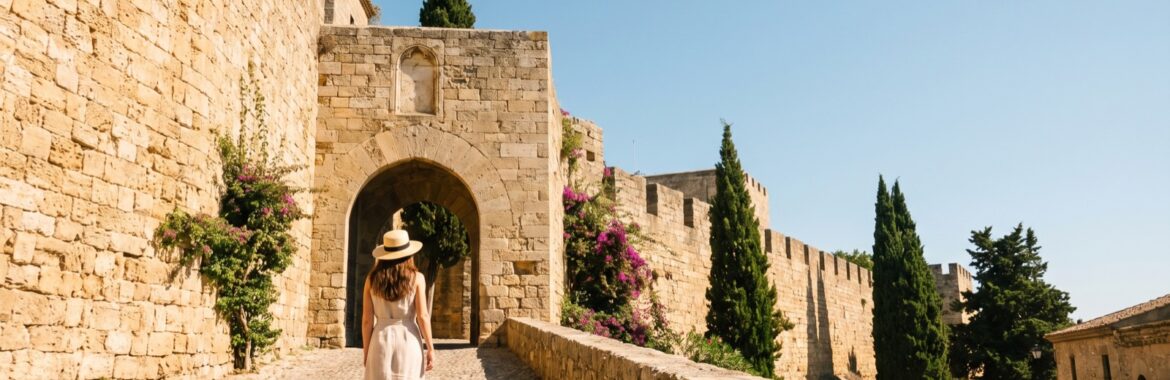
The old town of Alcúdia is encircled by a fourteenth-century walled enclosure, one of the best preserved in Mallorca, which you can walk along its rampart path. The medieval gates, the towers and the stretches of wall give the village a singular look you won’t find anywhere else in the north. Wandering inside the enclosure, with its narrow streets, its churches and its grand old houses, is something residents value especially in winter, when tourism eases off and the centre returns to the scale of a living village.
The church of Sant Jaume, inside the walled enclosure, is the spiritual and heritage heart of the village. And the medieval gates — the Porta del Moll and the Porta de Xara — frame the entrances to the old town with a quiet, powerful monumentality.
Roman roots
The Roman city of Pollentia
Beneath the streets and beside the village lie the remains of Pollentia, the Roman city founded in the first century BC, and one of the most important archaeological sites in the Balearic Islands. You can visit the forum, the Roman houses and, above all, the Roman theatre, the best preserved in all the Balearics and one of the most complete in the western Roman Empire. Having a Roman theatre five minutes from home isn’t something that happens in many places, and the people of Alcúdia simply fold it into their everyday surroundings.
The Museu de Pollentia, with the pieces unearthed in the excavations, rounds out the picture of the area’s history and is one of the finest archaeological museums on the island. For families with curious children, or for anyone who loves history, living in Alcúdia means having this educational and cultural resource literally in the neighbourhood.
Sea and nature
The bay, s'Albufera and the Victòria peninsula
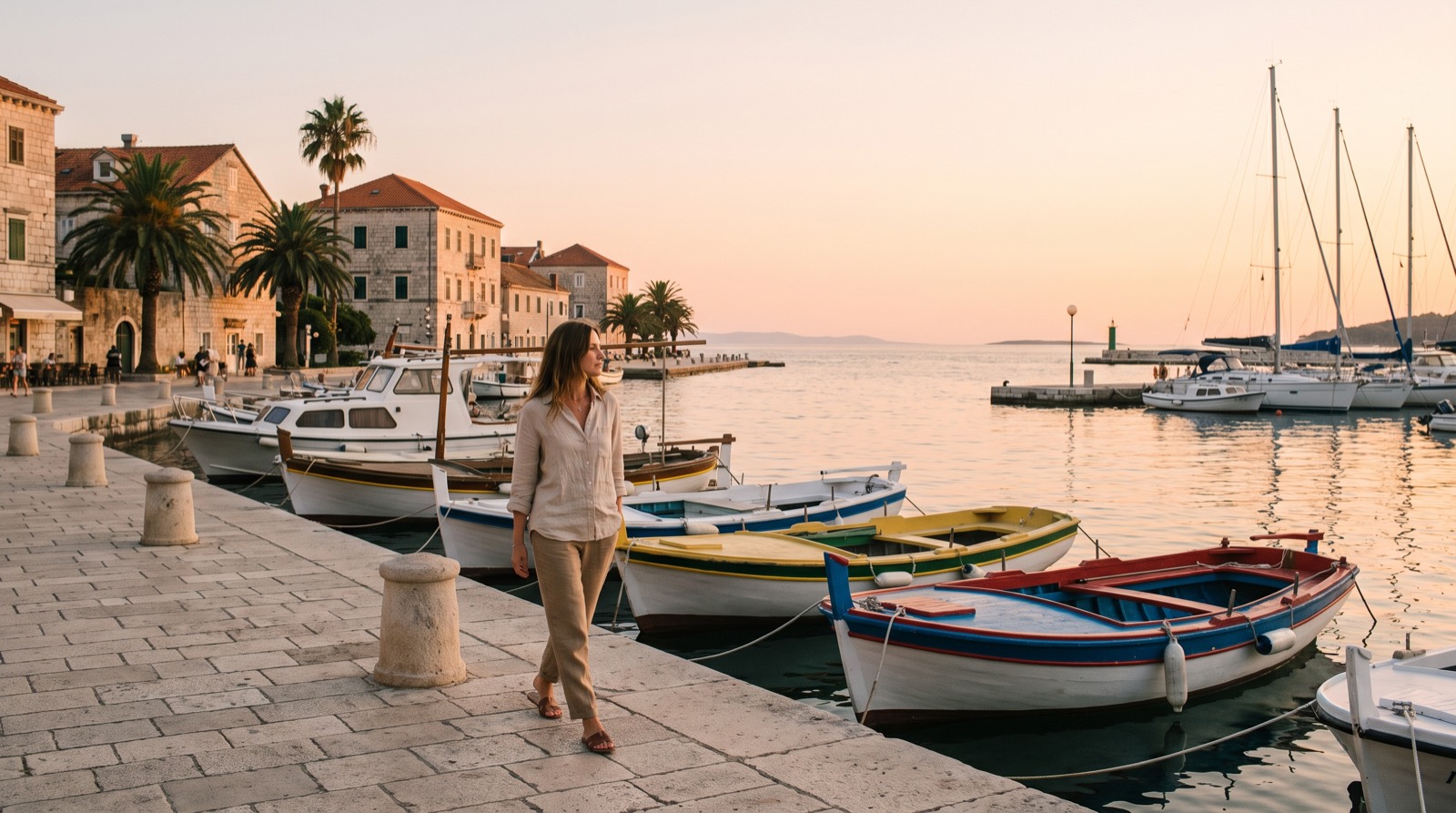
The Badia d’Alcúdia is the largest bay in Mallorca, with kilometres of fine sand and shallow waters that warm up beautifully in summer — perfect for families with young children. At the head of the bay, the Port d’Alcúdia is the reference harbour for the north of the island, with regular ferry links to Menorca and to mainland Spain. For anyone who travels often to the other islands or the mainland and would rather not fly, having a ferry on your doorstep is a very practical advantage.
On one side of the bay, the s’Albufera Nature Park is the largest wetland in Mallorca and one of the best birdwatching spots in the Balearics: more than 200 recorded species, an astonishing biodiversity, and a landscape of lagoons, reedbeds and paths made for walking or cycling. In spring, when the migratory birds arrive, s’Albufera is a spectacle that Alcúdia residents have a quarter of an hour from home. On the other side, the Victòria peninsula offers mountain hiking with spectacular views over the bay, just minutes from the village.
Logistics
Connections and distances
Alcúdia is relatively well connected for a northern village. Palma airport is around 50 minutes away by car, and the capital itself a little less. The motorway from Inca cuts the journey down considerably. Pollença is 10 minutes away; Inca, with its train station, 30. Public transport includes buses to Palma and to the northern villages, though a car is still the most practical option for daily life.
The harbour at the Port d’Alcúdia adds the maritime connection: ferries to Menorca in season and routes to the mainland through the year. For anyone who travels frequently for work or family, it’s a link that can prove very useful.
Where to live
What property is like in Alcúdia
Alcúdia offers genuine variety when it comes to housing: village houses within the walled enclosure, properties in the old town beyond the walls, detached and terraced homes in more modern residential areas, and the full spectrum of seafront and urbanisations in the Port. It’s an area with plenty of choice, which opens up options across different budgets. It isn’t as expensive as Pollença or the more exclusive north, and it has more services than many northern coastal areas.
For families wanting to combine history, nature and beach with complete services, Alcúdia is one of the best options in the north of the island. We know the municipality well and can guide you on which area best fits your profile.
Common questions
Frequently asked questions about living in Alcúdia
Does Alcúdia have enough services to live all year round?
Yes, it’s one of the most complete villages in the north. It has a health centre, primary and secondary schools, large supermarkets, banks, pharmacies, a sports centre and a varied range of shops. For more specialised services, Inca is 30 minutes away and Palma 50. The level of self-sufficiency is very high for a village of its size.
How far is Palma airport from Alcúdia?
Around 50 minutes by car, similar to Pollença. The motorway from Inca makes the journey comfortable. For anyone who travels relatively often, it’s a perfectly manageable distance. On top of that, the harbour at the Port d’Alcúdia offers ferry links to Menorca and the mainland as an alternative to flying.
When are the Alcúdia markets?
Tuesdays and Sundays. The Tuesday one is the big market: one of the largest in northern Mallorca, on the fairground, with hundreds of stalls of clothes, footwear, local produce and crafts. The Sunday one is smaller and held in the old town, with a quieter feel. Both are a much-valued social meeting point for residents.
Is Alcúdia good for families with children?
One of the best in the north. It has a primary and secondary school, the bay with its shallow-water beach (ideal for young children), the s’Albufera park for nature outings, the Roman ruins of Pollentia for culture, and the feel of a safe village. The variety of outdoor options is huge.
How does the Port d’Alcúdia compare with the old town?
They’re two very different atmospheres. The Port is more touristy, more modern and livelier in summer, with hotels, apartments, restaurants and the bay. The old town is quiet, well preserved, with far more history and the rhythm of an authentic village all year round. Many residents live in the old town but use the Port for the beach and the maritime services. It’s worth visiting both before deciding where to settle.
Is the s’Albufera park accessible for residents?
Completely. The s’Albufera nature park is about 5 minutes by car from Alcúdia, has free entry and offers trails, bird hides and impressive nature all year round. Residents use it for walking, cycling and birdwatching. In spring, with the migration, the experience is among the best on the whole island.
Is it for you?
Is Alcúdia the village you're looking for?
Alcúdia is a very good fit if you’re after a northern village with history, nature, sea and complete services. It’s especially good for families with children, for anyone who values nature and heritage in daily life, and for those who want a complete setting without depending on Palma. It’s less suited to anyone prioritising the absolute silence of a tiny village or the lower prices of the inland areas.
If you can picture yourself living in Alcúdia or in the Port, get in touch: we know the north of Mallorca well and would be delighted to help you find your place.