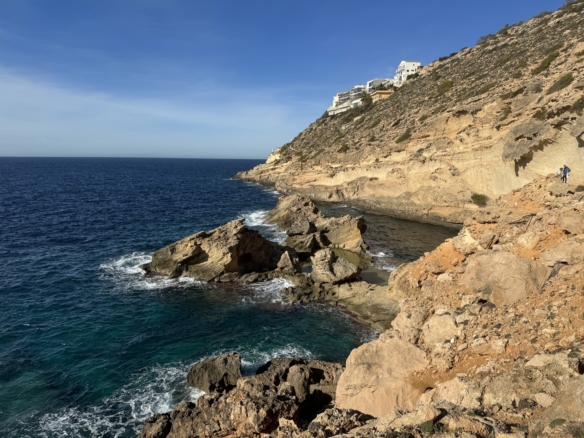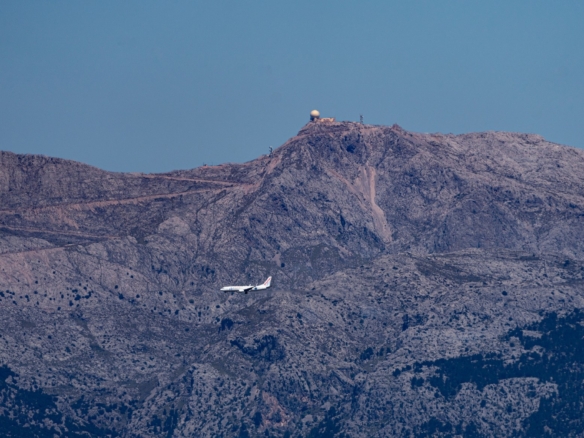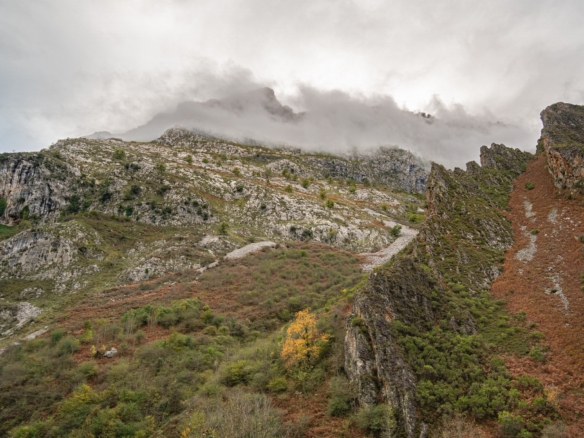

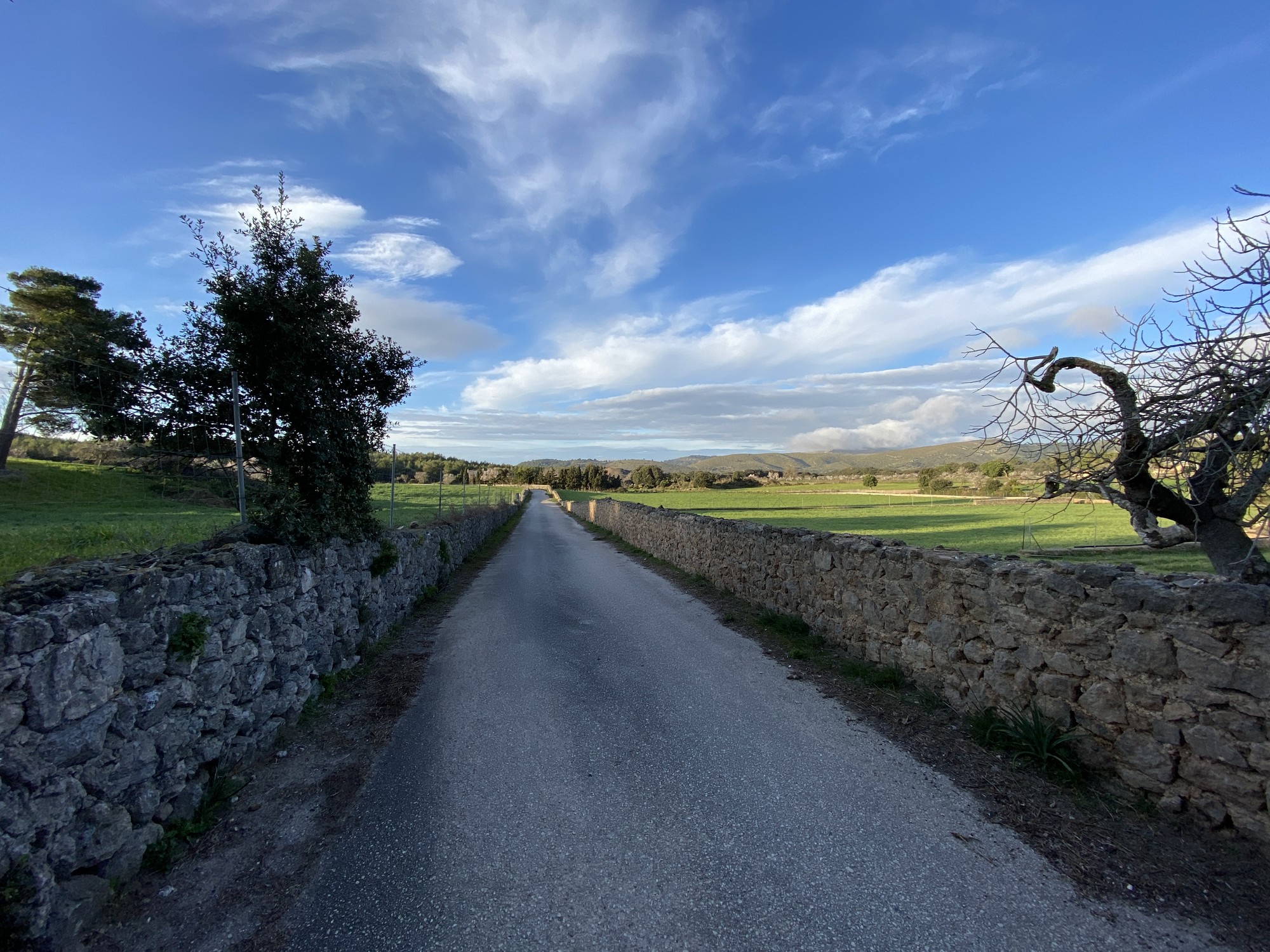
The short version: Mallorca’s north-east is two municipalities with different characters. Artà is an inland town in a wide valley, crowned by the sanctuary of Sant Salvador, with a market every Tuesday of the year and a natural park on its doorstep. Next door, Capdepera runs down to the sea: Cala Ratjada, a harbor town with a lighthouse on the island’s easternmost point, and Canyamel, a quieter bay with a medieval tower, golf and the Coves d’Artà. In summer this coast speaks a great deal of German; in winter it is calm. It is also the corner of Mallorca farthest from Palma and the airport.
Two municipalities, one corner of the island
The area people call “Artà and Cala Ratjada” is in fact two municipalities at the eastern end of the island. Artà covers the town itself and, on the shore of Alcúdia bay, Colònia de Sant Pere and the residential areas of Betlem and S’Estanyol, according to the town’s official tourism website. Capdepera, its neighbor to the east, includes the old walled village of Capdepera and the coastal communities of Cala Ratjada, Cala Mesquida, Font de sa Cala and Canyamel, as the Ajuntament de Capdepera lists them.
The two share a landscape of low mountains, almond and carob terraces and pine-backed coves. If you are still comparing areas, our guide on where to live in Mallorca places the north-east next to the rest of the island.
Artà: a town with character, under Sant Salvador
Artà is built in a large valley, and the hill of Sant Salvador presides over it. On top stands the Santuari de Sant Salvador, the town’s best-known landmark: a walled enclosure shaped like an ellipse of 93 by 24 meters, rebuilt in the 16th century against pirate raids, around a sanctuary built in 1825 and blessed in 1832. Inside is the Romanesque carving of the Virgin of Sant Salvador, patron of Artà since 1922 (Artà Travel, Ajuntament d’Artà).
Below, the streets are lived in all year: shops, cafés and restaurants along a pedestrian axis, stone village houses and a daily life that does not depend on visitors. The weekly market fills the center every Tuesday of the year, from about 10:30 am to 1:30 pm, in Plaça del Conqueridor and the streets around it, with local produce in the covered market beside the square, according to the municipal tourism website.
Just outside town, Ses Païsses is a Talayotic settlement founded around 850 BC. And in Artà’s hills stands the Ermita de Betlem, a hermitage founded in 1805 and reached by a path lined with cypresses; its church was blessed in 1824 (Artà Travel).
The Llevant natural park
North of Artà and Capdepera lies the Parc Natural de la Península de Llevant. According to the Balearic Government, it covers parts of Artà, Capdepera, Sant Llorenç and Santa Margalida, with 17,111 hectares, of which 10,917 are on land and 6,194 at sea, and includes the highest peaks of the Llevant ranges, led by the Talaia Freda at 564 meters. It belongs to the European Natura 2000 network (Govern de les Illes Balears).
For residents it works as a back garden: more than 30 walking routes, among them the paths to Cala Torta and Cala Mitjana, and an information center at s’Alqueria Vella, near Artà. Many who choose Artà choose it for exactly this.
Cala Ratjada: the harbor, the promenade and the lighthouse
Cala Ratjada is the coastal heart of Capdepera, about five minutes from the old village by road. Life here runs around the harbor and along the promenade that follows the rocky shore toward the beaches, as the video above shows.
East of town, the Far de Capdepera stands on the easternmost point of Mallorca. The lighthouse came into service in 1861, and on clear days Menorca is visible from it, according to the Ajuntament de Capdepera. In town, Sa Torre Cega, the former summer residence of the March family built over an old watchtower, opens its sculpture gardens through guided visits booked in advance with the Fundació Bartolomé March, as the town hall’s tourism department notes.
The beaches are what fill Cala Ratjada in summer. The Ajuntament describes Cala Agulla as surrounded by pines and mountains, suited to families, and Cala Mesquida, to the north, as a long beach of white sand with protected dunes. Inland, the medieval castle of Capdepera crowns the old village, with views over the coast; every third weekend of May it hosts the Mercat Medieval (Ajuntament de Capdepera).
Canyamel: tower, golf and a quieter bay
Canyamel lies about 13 minutes south of Cala Ratjada, where the Canyamel valley meets the sea. Three things define it. The first is the Torre de Canyamel, a fortified tower built around 1237 to defend the valley against corsairs: square, 23 meters high and today restored as an ethnological museum and exhibition space, according to the Ajuntament de Capdepera. The second is golf: Canyamel Golf has been open since 1988 with an 18-hole course, and the municipality also has Golf Capdepera, an 18-hole course designed by Dan Maples.
The third is underground. The Coves d’Artà, despite the name, sit on the coast of Capdepera, in the bay of Canyamel; they have been visited since at least the 16th century and are seen on guided visits of 35 to 40 minutes, open all year (Cuevas de Artà, official website). The beach of Canyamel is a family beach, calmer than those of Cala Ratjada, with homes on the slopes around the bay.
Summer and winter
In summer, Cala Ratjada is full and very German: menus, shop signs and conversations on the promenade switch to German. In winter it is quiet; the promenade belongs to residents and the coves are empty.
Artà changes much less: it keeps its shops and its Tuesday market through the winter. Buyers who plan to live here twelve months a year weigh that difference: the coast offers the sea at the door, the town a year-round community.
According to the Balearic health service, Capdepera has a health center with clinics in Cala Ratjada and Canyamel, Artà has the Nuredduna health center, and both belong to the Llevant sector, whose hospital is the Hospital de Manacor (IB-Salut).
Getting around: the farthest corner from Palma
Driving times below come from OpenStreetMap routing, in free-flowing traffic, to central Palma and to the airport terminal:
- Artà: about 66 minutes to central Palma and about 63 to the airport.
- Canyamel: about 70 minutes to central Palma and about 67 to the airport.
- Cala Ratjada: about 73 minutes to central Palma and about 70 to the airport.
In daily practice, we count on about an hour and a quarter to Palma or the airport. Of all the areas in our zone guides, this is the one farthest from both: by the same routing, Port de Pollença and Cala Figuera are each around 50 minutes from Palma.
Manacor, the nearest city, is about 23 minutes from Artà and 30 from Cala Ratjada. For families, Rafa Nadal International School, on the Rafa Nadal Academy campus outside Manacor, is about 26 minutes from Artà and 34 from Cala Ratjada. Our guide to international schools in Mallorca lists it with its official details.
Who buys in the north-east
The north-east has a clear accent. German buyers have been settling around Artà since the 1990s, drawn by a town with its own life and the natural park. Along the shore, Cala Ratjada and Canyamel are, in practice, a German coast.
What they share is that distance does not worry them: they accept the hour and a quarter to the airport in exchange for space, the eastern light and a quieter island. For an American buyer, that established international community is part of the picture.
What nobody tells you
The distance is felt most on airport runs: a late flight into Palma means more than an hour on the road, for you and for every visitor. Buyers who live here happily plan around it. And the same street can feel like two places: a home near the promenade of Cala Ratjada is lively in August and very still in January, which is why buyers we work with often visit in both seasons before choosing between the coast and Artà.
What you need to know
How far is Cala Ratjada from Palma?
About 73 minutes to central Palma in free-flowing traffic, according to OpenStreetMap routing; in daily practice, about an hour and a quarter. Artà is a few minutes closer.
How far is Cala Ratjada from Palma airport?
About 70 minutes to the terminal in free-flowing traffic. Among the areas in our zone guides, this is the corner farthest from the airport.
What day is the market in Artà?
Every Tuesday of the year, from about 10:30 am to 1:30 pm, in Plaça del Conqueridor and the surrounding streets, according to Artà’s official tourism website.
Is there a Sant Salvador in Artà?
Yes. The Santuari de Sant Salvador stands on the hill above the town, inside a walled enclosure; the current sanctuary was built in 1825. Artà also has the Ermita de Betlem, a hermitage founded in 1805 in its hills.
Is Cala Ratjada quiet in winter?
Yes. It is full and very German in summer and calm in winter, while Artà keeps its shops and market every month.
Where we work
We work across Mallorca from our base in the south-east, where you can browse homes in Santanyí, homes in Ses Salines and homes in Campos. Whatever area you are considering, the north-east included, contact Villas y Fincas Mallorca and we will answer in English.
Updated October 2026. Driving times come from OpenStreetMap routing and vary with traffic and season; other facts come from the Ajuntament d’Artà, the Ajuntament de Capdepera, the Govern de les Illes Balears, IB-Salut and the official websites of the caves and the golf course, consulted in October 2026. The descriptions reflect what we see with our clients and are for general information only.