
The short version: every town in this guide is within about an hour and a quarter of Palma by road, yet each part of the island lives differently. Palma is the only city; the south-west is marinas and large villas; the Serra de Tramuntana is mountain villages on a winding road; the north and the Llevant are wide bays with long-established foreign communities; the interior is farmland close to Palma; and the south-east, where we live and work, is small coves, Es Trenc and villages open all year.
How to read the map of Mallorca
Everything on the island revolves around Palma, which holds the airport, most of the international schools and about 435,000 of the island’s roughly 960,000 registered residents, according to the official INE population figures for 1 January 2025. From Palma, the main roads run north-east to Inca and the bay of Alcúdia, east toward Manacor and south-east toward Campos and Santanyí. The Serra de Tramuntana, inscribed by UNESCO as a World Heritage cultural landscape in 2011, closes the island along its north-west coast.
Driving times in this guide come from OpenStreetMap routing, from each town to central Palma and to the airport terminal, in free-flowing traffic; in summer and at school-run hours, add time.
Palma: four neighborhoods, four ways of living
These are the four Palma neighborhoods we describe to American clients.
The old town, around La Lonja and Calatrava, is the Palma of restored palaces, stone courtyards and life on foot: the cathedral, the waterfront and the restaurants are a walk away, and the car is for weekends. Santa Catalina, just west of the old town, is the neighborhood of the moment, built around its market and its restaurants. Portixol and El Molinar are the old fishermen’s quarter to the east, now a seafront promenade from which people cycle into the center. Son Vida, on the hills above the city, is the opposite: a gated area of villas and golf courses next to Génova, with international schools a short drive away.
Port d’Andratx, Camp de Mar and Portals
The south-west is the Mallorca many Americans have already seen in magazines. Port d’Andratx is a natural harbor ringed by hillside villas, with yachts below; Camp de Mar, next door, is a small bay with homes on the slopes around it. Both are about half an hour from Palma and 45 minutes from the airport, the trade-off accepted for the setting. Portals, with the marina of Puerto Portals and the residential area of Bendinat, is different: about a quarter of an hour from Palma, with golf nearby and two international schools, Agora Portals and King Richard III College, in Portals Nous.
In what we see with our clients, three profiles buy here. The American who wants that magazine Mallorca and, above all, privacy, often discovered through the press or social media: a villa with security and the harbor in view. The family that lives on the island all year because of the schools in Portals and Calvià. And the investor buying a home to rent at the top of the market. Celebrities moor here too: in July 2026, local press reported Michael Jordan’s yacht off Puerto Portals.
The Calvià coast: from Illetes to Magaluf
In Calvià, Illetes and Bendinat are about 15 minutes from Palma, with small urban coves and villas above the water. Santa Ponça is golf, families and a British community that lives there all year, with shops open in winter. Port Adriano and Sol de Mallorca combine a marina for large yachts with villas on the cliffs: a more discreet luxury. Magaluf is the name many Americans know, a reputation built on summer tourism for a young crowd; the resort is changing.
The Serra de Tramuntana: Deià, Valldemossa and Sóller
Deià was the home of the poet Robert Graves from 1929 until his death in 1985, and his house is now a museum; Valldemossa is where Chopin and George Sand spent the winter of 1838 to 1839, in the old Carthusian monastery. What matters for someone living here is the road: Deià is about 37 minutes from Palma and Valldemossa about 23, on mountain roads full of curves, driven every day. Few homes come up for sale, and in what we see, buyers purchase when one appears rather than waiting for a choice.
Sóller is the exception in rhythm. It is a real town, in a valley about 27 minutes from Palma through the tunnel, with its own market, secondary school and life all year; the wooden train that has linked it with Palma since 1912 still runs, and a tram continues down to Port de Sóller. It is much in demand among the Americans and Germans we work with. Deià and Valldemossa, by contrast, are livelier in season and quieter in winter.
The north: Pollença, Port de Pollença and Alcúdia
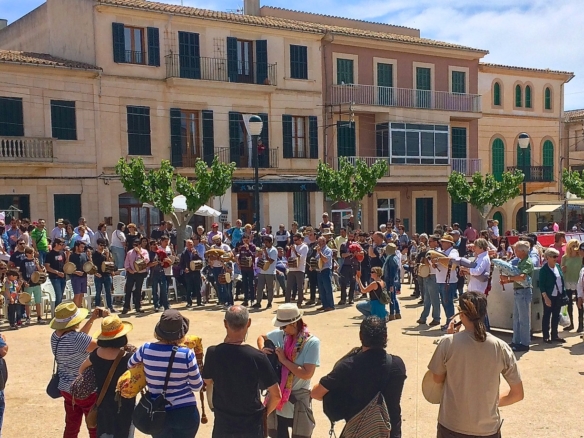
Pollença is an old town with a British community that has been coming for decades, with the Calvari stairway climbing above the old town and a market every Sunday. Port de Pollença, on its bay, is calm and popular with families, with the Pinewalk along the water and the Formentor peninsula next door. Alcúdia combines a walled old town with Port d’Alcúdia and its long, busier beach, plus the remains of the Roman city of Pollentia, a market on Tuesdays and Sundays and ferries to Menorca from its harbor.
Pollença and Alcúdia are about 40 minutes from Palma by road and close to an hour from the airport; Port de Pollença, a little more. For clients planning to live here all year, that distance weighs most.
The Llevant: Artà, Cala Ratjada, Canyamel and Portocristo
The east coast has a strong German accent. Artà is a town with character, crowned by the sanctuary of Sant Salvador, with a market every Tuesday; German buyers have been settling here since the nineties. Cala Ratjada and Canyamel, in the municipality of Capdepera, are the coast that German residents have made their own: coves such as Cala Agulla and Cala Mesquida, golf in Canyamel and villas among the pines. Portocristo is a harbor town next to the Coves del Drach caves, about a quarter of an hour from Manacor, where the Rafa Nadal Academy and its international school are.
It is the part of the island farthest from Palma: Portocristo is about an hour away, Artà a little more and Cala Ratjada an hour and a quarter, with similar times to the airport.
The interior: the Pla and the villages near Palma
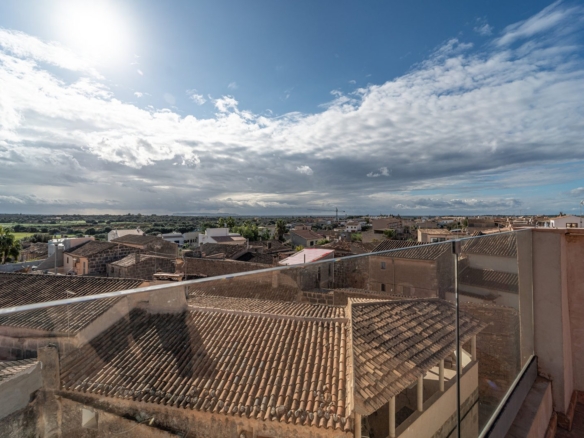
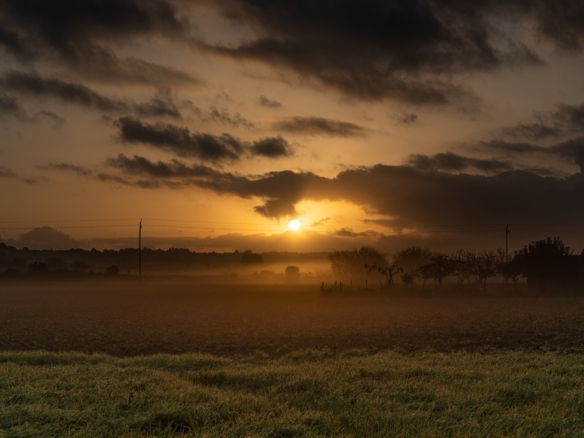
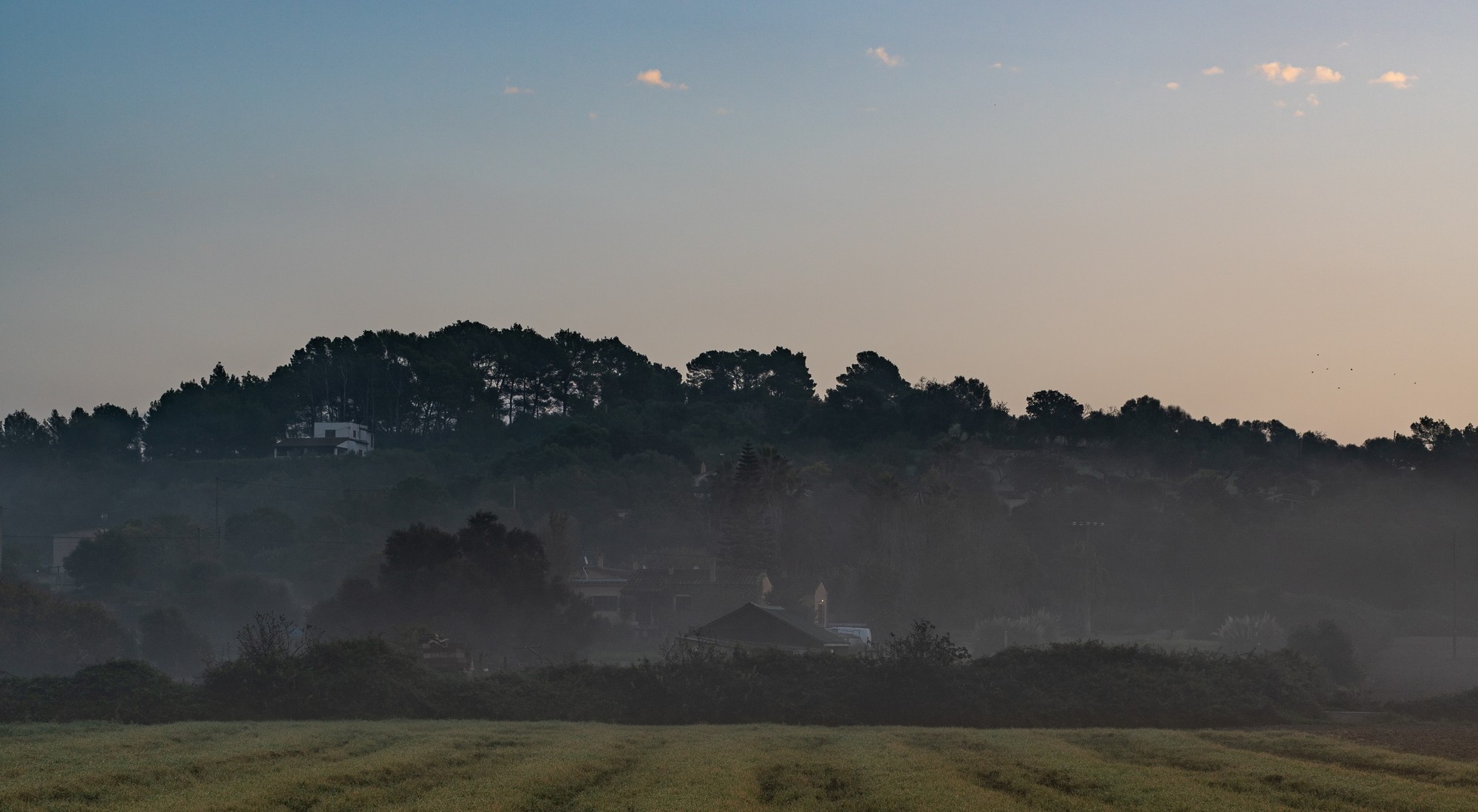
The center of the island is farmland, almond trees and villages not built for tourism. It suits the buyer who wants a country house with land and silence within about half an hour of Palma and, in what we see, people who work remotely all year: a real village, fiber in town and no tourist season to speak of. Santa Maria del Camí, about 15 minutes from Palma on the Inca road, and Algaida, about 23 minutes away, are close to the city and its schools; The Montessori School of Mallorca is in Santa Maria.
The south-east: Santanyí, Cala d’Or, Colònia de Sant Jordi, Campos and Ses Salines
We know this part of the island best, because we live here. The coast is small coves rather than big resorts: Mondragó, Cala Llombards, Caló des Moro and Cala Figuera around Santanyí, and, toward Ses Salines and Campos, the long beach of Es Trenc and the coves of Es Carbó near Colònia de Sant Jordi. Mondragó and Es Trenc are both protected natural areas. Cala d’Or is the resort town on this coast; Colònia de Sant Jordi is a seafront village whose harbor is the departure point for boat trips to the Cabrera archipelago, a national park.
Inland, Santanyí, Ses Salines and Campos are working villages open all year, not holiday developments. Around them lie country houses with land: space, silence, a pool and the sea about ten minutes away. Compared with the south-west, buyers find more house and more land for the same money. Santanyí and Ses Salines are about 45 minutes from Palma and the airport, Campos about 35, Cala d’Or close to an hour.
In what we see, two profiles buy here: couples of roughly 35 to 55 who work remotely and want to live here all year, and buyers looking for an investment or a second home.
Daily life, wherever you land
Our clients ask the same two things everywhere. Groceries are easy: towns have supermarkets and weekly markets, and online orders, Amazon included, reach the villages. The other is internet. Towns have fiber; in the countryside, coverage depends on the exact spot, and some owners of country houses use satellite internet. It is worth checking before you fall in love with a view.
What you need to know
Where do Americans live in Mallorca?
Across the island. In what we see, those after the classic image look at Port d’Andratx and Portals, Sóller is much in demand, and remote-working couples choose the south-east.
How far is the south-east of Mallorca from Palma airport?
By road, about 36 minutes from Campos, 47 from Ses Salines, 48 from Santanyí and 50 from Colònia de Sant Jordi, in free-flowing traffic.
Which areas of Mallorca are lived in all year?
Palma, Sóller, Santa Ponça and the villages of the interior and the south-east keep shops open in winter; Deià and Valldemossa are quieter off season.
Is the north of Mallorca far from Palma?
Pollença and Alcúdia are about 40 minutes from Palma by road and close to an hour from the airport; Port de Pollença is about 50 minutes from Palma.
Where do you get more house and land in Mallorca?
In what we see, in the interior and the south-east: the same budget usually buys a larger home with more land than on the south-west coast.
Where we work
We work across Mallorca from our base in the south-east, where you can browse homes in Santanyí, homes in Ses Salines and homes in Campos. Whatever area you are considering, contact Villas y Fincas Mallorca and we will answer in English.
Updated October 2026. Driving times come from OpenStreetMap routing and vary with traffic and season; the descriptions reflect what we see with our clients and are for general information only.