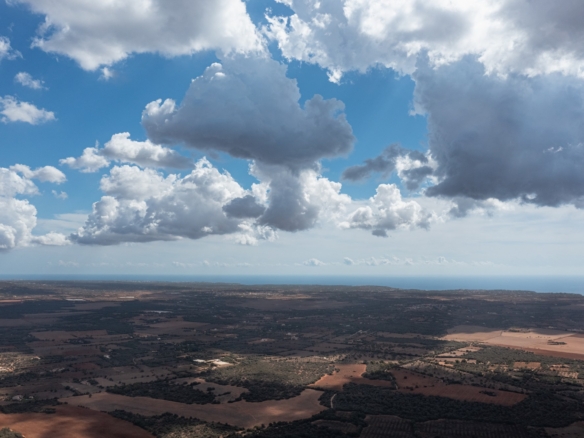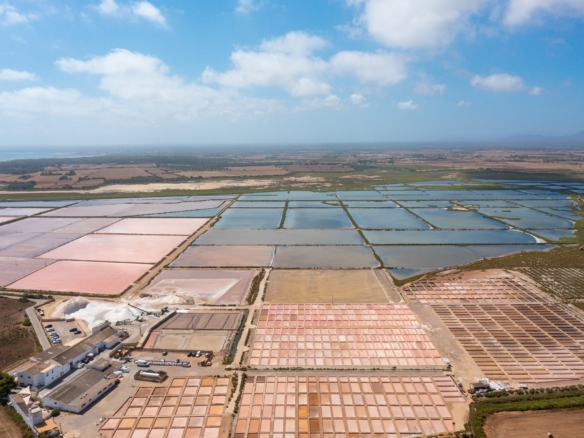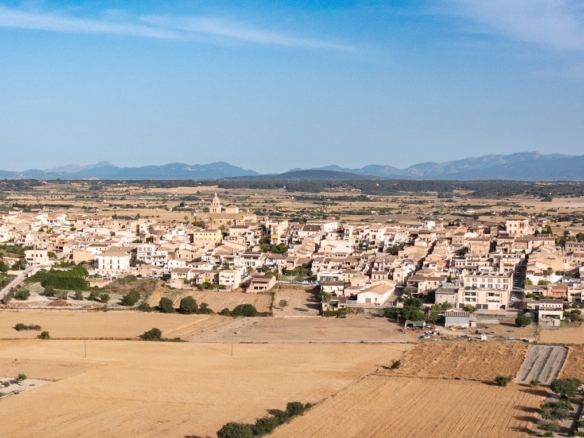

The short version: Mallorca is one island in a group of five. The Balearic Islands, a Spanish autonomous community in the Mediterranean, are Mallorca, Menorca, Ibiza, Formentera and Cabrera, together with a scatter of smaller islets. Mallorca is the largest and holds the capital, Palma; Menorca is a UNESCO Biosphere Reserve; Ibiza’s old town and seagrass meadows are World Heritage; Formentera is reached only by sea; and Cabrera is a national park off the south coast of Mallorca, near the village where we live. This is the archipelago explained for an American reader, with figures from official sources.
Five islands, one region
Spain is organized into autonomous communities, and the Balearic Islands are one of them. Its founding law, the Statute of Autonomy of the Illes Balears, published in Spain’s official gazette, sets out the territory in a single sentence: the islands of Mallorca, Menorca, Ibiza, Formentera and Cabrera, and the smaller islands around them. The official name of the community is Illes Balears, and the same law makes Palma its capital and the permanent seat of its Parliament and Government.
The Statute adds a layer that works a little like a county government. Mallorca, Menorca, Ibiza and Formentera each have a Consell Insular, an island council that governs, administers and represents its island and the islets around it. Cabrera has no council of its own. Under the same law, March 1 is the Day of the Balearic Islands.
How big the islands are, and who lives on them
The Balearic statistics institute, IBESTAT, publishes the surface of every island and municipality. Converted from hectares, these are the figures:
- The whole archipelago: about 4,985 km², roughly 1,925 square miles.
- Mallorca: about 3,636 km², roughly 1,404 square miles, or 73 percent of the total. Cabrera belongs administratively to the municipality of Palma, which IBESTAT counts within Mallorca.
- Menorca: about 695 km², roughly 268 square miles.
- Ibiza: about 572 km², roughly 221 square miles.
- Formentera: about 83 km², roughly 32 square miles.
For a sense of scale from home: the US Census Bureau’s state area measurements give Rhode Island a land area of 1,034 square miles and Delaware 1,949. Mallorca alone has more land than Rhode Island, and the five Balearic Islands together come close to the land area of Delaware.
People are distributed in a similar way. Adding up the municipal register figures for 2024 that IBESTAT publishes in its population dataset, the islands had about 1.22 million registered residents: about 949,000 in Mallorca, 161,000 in Ibiza, 100,000 in Menorca and 11,400 in Formentera. The same data show how the land is divided: Mallorca has 53 municipalities, Menorca 8, Ibiza 5 and Formentera one, the island itself.
Mallorca: the largest island, and the capital
Mallorca is the island most Americans have heard of, and home to more than three in four Balearic residents. Palma, the capital, has about 432,000 registered residents according to the same IBESTAT figures.
Along the north-west runs the Serra de Tramuntana, the mountain range that frames villages such as Valldemossa, Deià and Sóller. On June 29, 2011, it was declared a World Heritage Site by UNESCO in the Cultural Landscape category, as the Consell de Mallorca explains: a recognition of the centuries of work that turned steep mountainsides into terraces, dry-stone walls and water channels. Spain’s Ministry of Culture lists it among the country’s World Heritage properties for 2011.
Menorca: the biosphere island
North-east of Mallorca lies Menorca. In 1993, UNESCO declared the island a Biosphere Reserve, a designation for places where human activity is meant to develop alongside the conservation of nature and culture. According to the Consell Insular de Menorca, the reserve was extended in June 2019 to take in a large area of sea, growing from 71,191 hectares to 514,485.
Menorca has a second international recognition. The Ministry of Culture’s list of World Heritage properties includes Talayotic Menorca, inscribed in 2023, and the island council manages these prehistoric sites through its own agency, Menorca Talaiòtica. The island’s two main commercial harbors are at its two ends: Maó in the east and Ciutadella in the west.
Ibiza: Dalt Vila and the seagrass meadows
South-west of Mallorca is Ibiza, known as Eivissa in the islands’ own language. Its own town hall speaks of moving beyond the cliché of sun, beach and parties, and its official record explains why. On December 4, 1999, as the Ajuntament d’Eivissa recalls, UNESCO inscribed “Ibiza, Biodiversity and Culture” on the World Heritage List. The inscription covers Dalt Vila, the walled upper town of the city of Ibiza; the meadows of posidonia, the Mediterranean seagrass that sustains the marine life of the Pitiusas, as Ibiza and Formentera are known together; the Phoenician site of sa Caleta; and the Punic necropolis of Puig des Molins. The Ministry of Culture lists the property under 1999.
Formentera: the island you reach by sea
Formentera describes itself, on the official tourism site of its Consell Insular, as the smallest and southernmost of the Balearic Islands, about 83 km² and some 20 km from end to end. It has no airport, so every arrival is by boat. In the council’s words, ferries leave from the port of Ibiza and cross to the port of La Savina in about 30 minutes, with frequent departures all year; many travelers first fly into Ibiza and then take the ferry. Its transport page adds that in season there is also a direct connection with the Spanish mainland.
Cabrera: the national park off our coast
Cabrera is the island closest to our base. The Balearic Government’s protected areas service places the Cabrera archipelago south of Mallorca, ten nautical miles from the nearest Mallorcan harbor, the Colònia de Sant Jordi, in the municipality of Ses Salines. Its 19 islands and islets, together with the sea around them, form a protected area of some 90,794 hectares, almost all of it marine, and it belongs administratively to the municipality of Palma.
Spain’s national parks network, under the Ministry for the Ecological Transition, describes it as a maritime-terrestrial national park since 1991, a little over an hour’s sailing from Mallorca, with seabird colonies, endemic species and some of the best-preserved seabeds on the Spanish coast. Visitors reach it on the tourist boats that leave from the Colònia de Sant Jordi in the summer months, according to the Government; anyone going in their own boat needs a navigation permit. Life in the Colònia and its harbor is in our guide to Ses Salines and Colònia de Sant Jordi.
Moving between the islands
Three of the islands have airports run by Aena, Spain’s airport operator: Palma de Mallorca, Menorca and Ibiza. By sea, the Port Authority of the Balearic Islands manages five ports: Palma and Alcúdia in Mallorca, Maó in Menorca, Ibiza, and La Savina in Formentera. Menorca’s island council notes on its practical information page that Menorca has sea connections with Mallorca, and with Barcelona and Valencia, all year round. Several shipping companies operate the routes, and schedules change with the season.
In what we see, clients who want to know the other islands treat them as a short trip from Mallorca, by plane or by ferry, much like the day in the video above.
One language, three island names
The Statute of Autonomy makes two languages official throughout the archipelago: Spanish and the islands’ own language. It also commits the institutions to studying and protecting the way that language is spoken on each island. In daily life, people name it after their island: Mallorquín in Mallorca, Menorquín in Menorca and Ibicenco in Ibiza. How languages work day to day in Mallorca, English included, is explained in our guide What language do they speak in Mallorca?
Our work is in Mallorca
Our work is in Mallorca, the whole island, from our base in the south-east: it is where we live, where we know the villages, the roads and the seasons first-hand, and where a client’s questions about daily life can be answered from experience. For anyone comparing areas within Mallorca, our guide on where to live in Mallorca covers every part of the island.
What you need to know
How many Balearic Islands are there?
The Statute of Autonomy names five: Mallorca, Menorca, Ibiza, Formentera and Cabrera, plus the smaller islets around them. Four of them, all except Cabrera, have their own island council.
Which is the largest Balearic island?
Mallorca, with about 3,636 km², roughly 1,404 square miles, or 73 percent of the archipelago’s surface according to IBESTAT.
How do you get from Mallorca to Menorca or Ibiza?
By air, between the Aena airports of Palma, Menorca and Ibiza, or by sea. Menorca’s island council notes year-round sea connections with Mallorca.
Can you visit Cabrera from Mallorca?
Yes. According to the Balearic Government, tourist boats leave from the Colònia de Sant Jordi in the summer months, and private boats need a navigation permit. Cabrera has been a national park since 1991.
Does Formentera have an airport?
No. Its island council explains that Formentera is reached only by boat, usually on the ferry from the port of Ibiza to La Savina, which takes about 30 minutes.
Where we work
We work across Mallorca from our base in the south-east, where you can browse homes in Santanyí, homes in Ses Salines and homes in Campos. For anything else, contact Villas y Fincas Mallorca and we will answer in English.
Updated October 2026. Sources, consulted in October 2026: the Statute of Autonomy of the Illes Balears (BOE), IBESTAT (surface by island and municipality; municipal register 2024, with island totals obtained by adding its municipal figures), the US Census Bureau’s state area measurements, the Consell de Mallorca, the Consell Insular de Menorca and its Menorca Talaiòtica agency, the Ajuntament d’Eivissa, the Consell Insular de Formentera, the Balearic Government’s protected areas service, Spain’s Ministry for the Ecological Transition and Ministry of Culture, Aena and the Port Authority of the Balearic Islands. Ferry schedules change with the season; passages described as what we see reflect our own experience in Mallorca. This story is for general information only.