
The short version: in 1875 Miquel Costa i Llobera, a 21-year-old from Pollença, wrote a poem about a pine clinging to the cliffs of Formentor, the peninsula his family had owned for generations. He wrote it in the language of the island and later became a priest, a canon of Palma Cathedral and his town’s most famous poet. El Pi de Formentor, “The Pine of Formentor”, turned a tree that lives on rock, wind and sky into a symbol of holding firm and aiming high. This is its story, told from official and institutional sources.
A tree that grows out of the rock
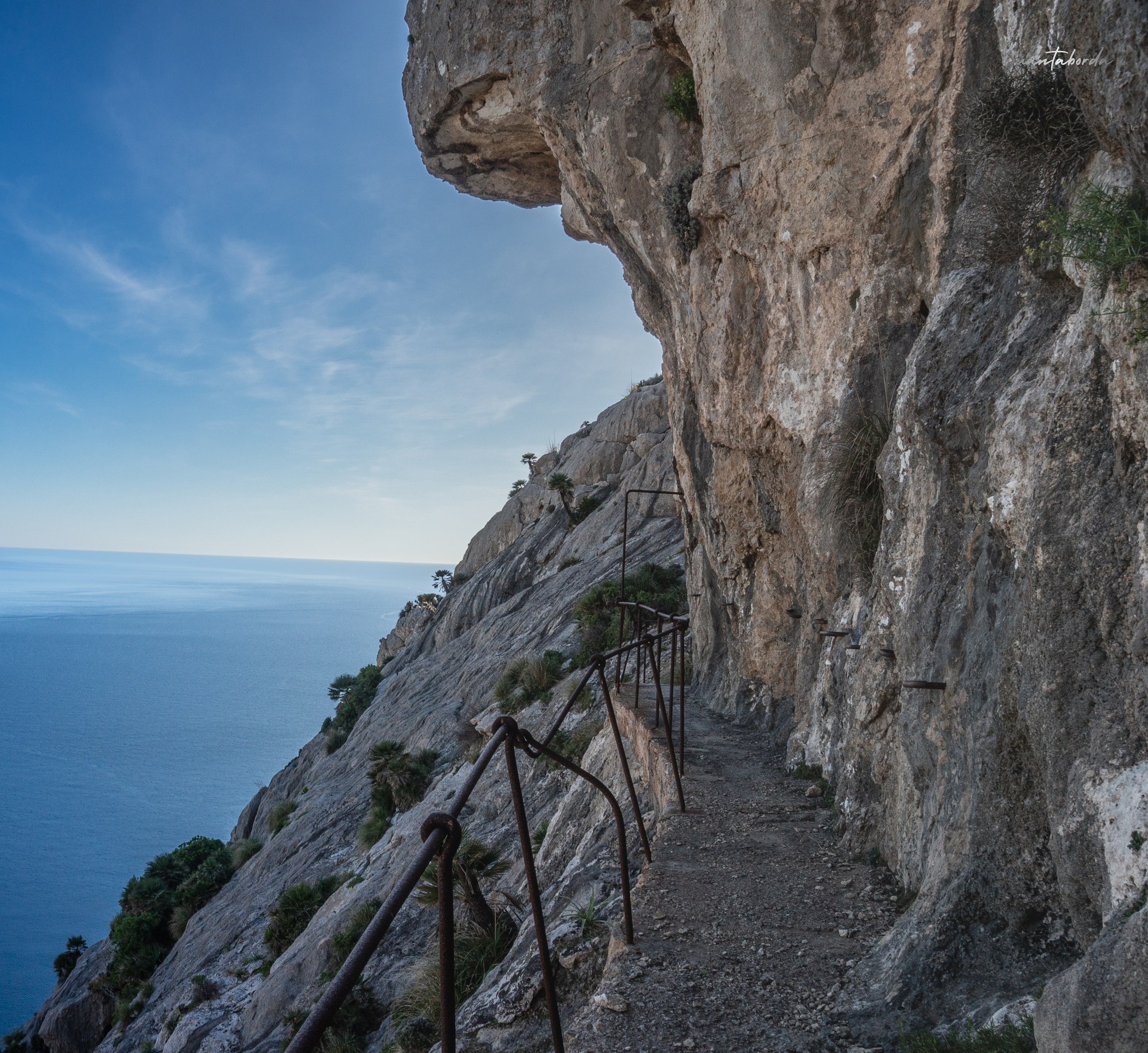
On the Formentor road the pines are everywhere: along the bay, down to the beach and, higher up, on ledges of bare rock above the sea. In what we see, the moment to look at them is early on a dry morning, when the air is clear; on those dawns, from the lighthouse at the end of the peninsula, Menorca appears on the horizon.
The lighthouse sets the story’s timing. According to the Pollença tourist office, it opened in 1863, 210 meters above the sea. Twelve years later, a young man whose family lived on this headland was inspired by it, the tourist office says, to write what it calls his iconic poem.
The poet from Pollença
Miquel Costa i Llobera was born in Pollença in 1854 and died in Palma in 1922. The archive of Palma Cathedral, which keeps his personal papers, describes him in its inventory of the Costa i Llobera collection as the eldest son of a family of rural landowners, the lords of Formentor. He lost his mother at eleven and grew up under the influence of a maternal uncle, the village doctor, who introduced him to the landscape and to the classics.
His father sent him to study law in Barcelona and then in Madrid. The archive notes that a religious crisis led him to give up the career and return to Pollença between 1877 and 1885. He then studied theology at the Gregorian University in Rome, was ordained a priest in 1888 and took his doctorate in 1889. Back home, he gave money and time to the restoration of the church of Monti-Sion, which the Pollença tourist office also records, and preached all over the island. In 1904 he gave the inaugural sermon for Antoni Gaudí’s restoration of Palma Cathedral, and in 1909 he was named a canon of the cathedral.
His death matched his life. According to the cathedral archive, he died while preaching at the Convent of Santa Teresa in Palma.
1875: the first version, “the pine of the shore”
The poem began with a different title. Among the cathedral’s papers is a handwritten poem from 1875, El pi de ribera, “The pine of the shore”, dedicated to the poet’s cousin Pere Llobera Garau. The archive describes it as an earlier version of the poem known today as Lo Pi de Formentor, the older spelling of its title.
Lletra, the literature portal of the Universitat Oberta de Catalunya, dates the poem to 1875 and places it in his first collection, Poesies, published in 1885 (Lletra). It notes that the pine came to stand for Costa’s idea of the poet as someone nourished by the ideal, with roots “on high.”
What the poem says
The poem is short, eight stanzas, and it opens with a confession. In our translation of its first lines: “My heart loves a tree. Older than the olive, / mightier than the oak, greener than the orange tree, / it keeps the eternal spring of its leaves / and fights the gales that batter the shore / like a giant warrior.”
Then the poet explains what makes this tree different. No flower peeps through its branches; instead, in our translation, “God anointed its consecrated head with fragrance / and gave it the rugged ridge for a throne, / the boundless sea for a spring.” It does not feed on the mud of the earth: it “twists its mighty root through the rocks” and lives on rain, dew, wind and burning light. When the storm seems about to topple its crag, it laughs and sings louder than the waves.
The last stanzas turn the tree into a lesson. “Tree, my heart envies you,” the poet writes, and he ends by talking to his own soul: “Upward, strong soul. Pass through the mist / and take root in the heights like the tree of the crags.” The world’s angry sea will break at your feet, the final lines promise, and your calm songs will travel on the wind “like the bird of the storms.” That is how a pine on a cliff became a symbol: of strength against adversity, of staying rooted in hard ground and of reaching for something higher.
Was there one particular tree?
So where is the pine? The Pollença tourist office says Costa was inspired by the Formentor headland, and the poem places the tree on a rugged ridge above the waves, its roots in the rock. The title of the first version, a pine “of the shore”, speaks of the coast rather than of one named tree. What a visitor finds today fits the second reading: pines all along the cliffs, any of which could be the one in the poem.
In the language of the island, and in Spanish
Costa wrote El Pi de Formentor in Mallorquín, the language of the island. Es Baluard, Palma’s museum of modern and contemporary art, calls it one of the most representative poems of the Mallorcan School (Es Baluard Museu). In Pollença, the tourist office credits him with giving the island’s language prestige in literary and official circles.
He also wrote in Spanish. Lletra records that in 1899 he published Líricas, poems in Spanish inspired by the monuments of ancient Rome. Costa also made a Spanish version of the pine poem himself, El pino de Formentor.
A painter answers the poem
Es Baluard keeps a small oil painting on wood titled Pi de Formentor, painted around 1922 by Hermen Anglada-Camarasa during his first stay in Port de Pollença, on long-term loan from the Ajuntament de Palma collection. The museum describes a majestic pine with powerful branches against sea, sky and mountains. Anglada had a predilection for solitary trees, above all pines, which he saw as a symbol of strength and of the struggle against adversity. The title refers to Costa’s poem, and the two men knew each other.
How Formentor became a literary name
The Consell de Mallorca’s Serra de Tramuntana site tells how the Argentine Adan Diehl bought the Formentor estate from the poet’s family, who had owned it “since time immemorial,” and opened the Hotel Formentor there in 1929 (Consell de Mallorca). In 1959 the hotel hosted poetry gatherings organized by the future Nobel laureate Camilo José Cela.
Soon after, the peninsula’s name went around the world. According to the Consell, leading publishers from Paris, Turin, London, Hamburg, New York and Barcelona met at the hotel and created the Formentor Prize and the Prix International des Éditeurs. At the first edition, the Formentor Prize went to Juan García Hortelano for Tormenta de verano, and the International Prize was shared by Samuel Beckett and Jorge Luis Borges. The Biblioteca de Catalunya’s register of literary awards lists the same pair for 1961: Borges for Ficciones and Beckett for his Trilogy (Biblioteca de Catalunya). It was 86 years after a young man from Pollença wrote about a pine on those cliffs.
Where the poet is remembered in Pollença
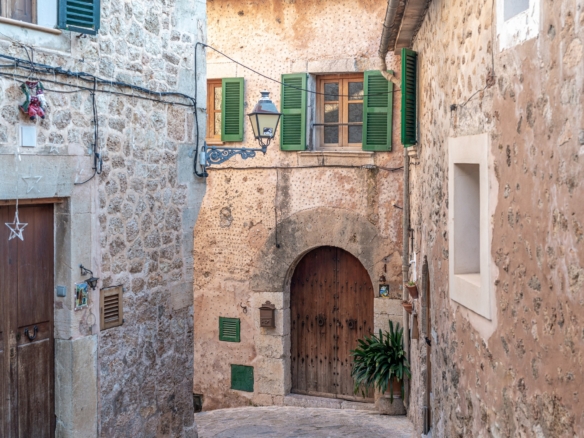
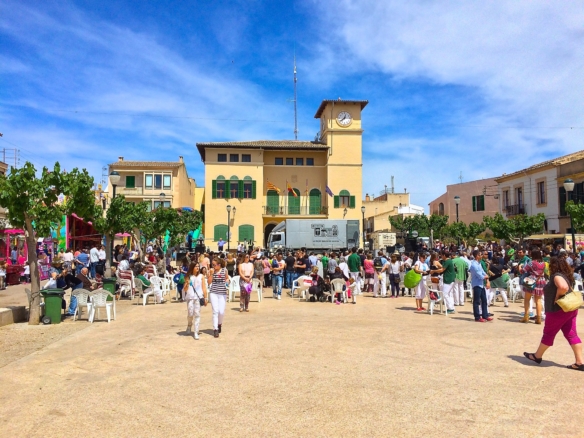
In Pollença, the tourist office notes a square and a monument dedicated to the poet, and its walk through the old town passes his ancestral home, on the street that bears his name, not far from Monti-Sion, the church he helped restore. Daily life in the town, the port and the peninsula is in our guide to Pollença, Port de Pollença and Formentor.
What you need to know
What is “El Pi de Formentor”?
A poem by Miquel Costa i Llobera, written in 1875, about a pine tree rooted in the cliffs of the Formentor peninsula. It was published in his collection Poesies in 1885, and Es Baluard calls it one of the most representative poems of the Mallorcan School.
Who was Miquel Costa i Llobera?
A poet and priest from Pollença (1854 to 1922), eldest son of the family that owned Formentor, who became a canon of Palma Cathedral and died while preaching in Palma, according to the cathedral’s archive.
What language was the poem written in?
In Mallorquín, the language of the island. Costa also wrote poetry in Spanish.
Is there a real pine of Formentor?
The poem describes a pine on a rugged ridge above the sea, and its first version was titled “The pine of the shore.”
Who won the Formentor prizes in 1961?
Juan García Hortelano won the Formentor Prize, and Samuel Beckett and Jorge Luis Borges shared the International Prize, according to the Consell de Mallorca and the Biblioteca de Catalunya.
Where we work
We work across Mallorca from our base in the south-east: homes in Santanyí, homes in Ses Salines and homes in Campos. To compare the north with the rest of the island, see our guide on where to live in Mallorca, or contact Villas y Fincas Mallorca and we will answer in English.
Updated October 2026. Sources: the inventory of the Miquel Costa i Llobera collection in the archive of Palma Cathedral; Lletra (Universitat Oberta de Catalunya); the Pollença tourist office; the Consell de Mallorca’s Serra de Tramuntana site; the Biblioteca de Catalunya; and Es Baluard Museu d’Art Contemporani de Palma, all consulted in October 2026. The poem is in the public domain; the English lines quoted here are our own translation from the original. This story is for general information only.