
The short version: Campos is a large farming town in the south-east of Mallorca, flat, busy all year and about 30 minutes from Palma airport by road. Its municipality runs down to the sea, where Sa Ràpita and Ses Covetes, two coastal communities with a nautical club and a long sandy shore, open onto Es Trenc and the Salobrar, a protected natural park. This guide explains how the town and its coast live and how far everything is.
A farming town with a coastline of its own
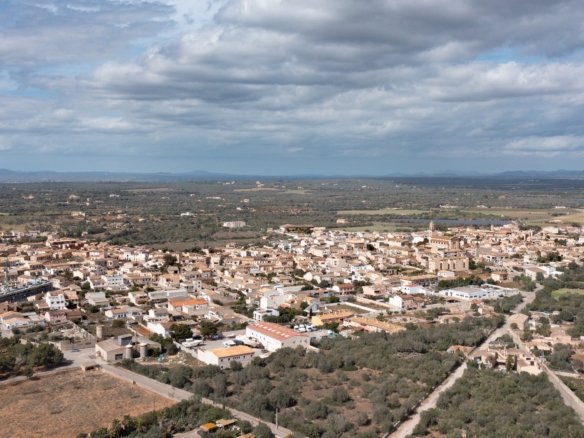
Campos sits in the middle of the plain of the south-east, between Llucmajor, Felanitx, Santanyí and Ses Salines, and it has always looked inland. The town hall puts it plainly: the people of Campos, devoted to farming, lived with their backs to the sea, which they saw as a source of danger, and defense towers against pirate raids still stand across the countryside (Ajuntament de Campos).
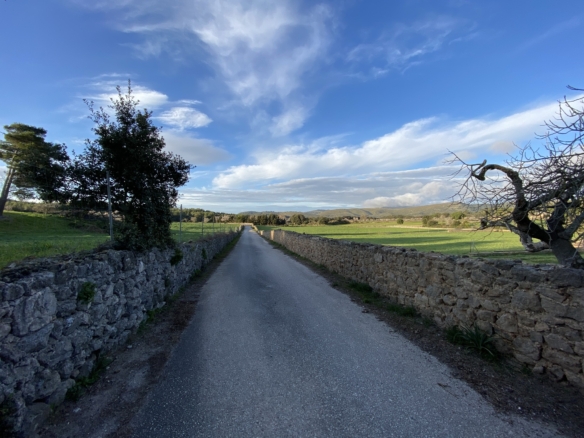
That past is still the landscape. The town hall catalogs sixteen flour windmills in and around the town, and points to the hamlet of Es Palmer, in the south of the municipality, for the countryside at its most typical: windmills, dry-stone walls, livestock and sown fields. In what we see, it is wide, open farmland dotted with country houses. If you are still comparing areas, our guide on where to live in Mallorca places Campos next to the rest of the island.
The town: market days, services and schools
Campos is a working town, and it works for the people who live in it all year. According to the town hall, the Thursday morning market fills Plaça de sa Creu and Plaça Major, and the Saturday morning market runs from Plaça de sa Creu to Plaça dels Tres Molins, with fresh produce alongside crafts, clothing and antiques (Ajuntament de Campos, markets).
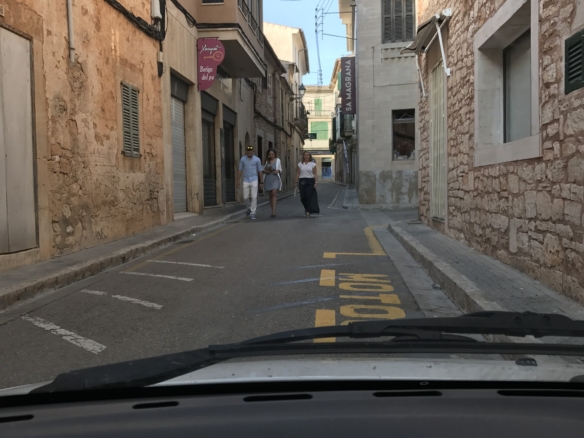
The town’s health center, CS Campos (Xaloc), includes an out-of-hours care point and coordinates the basic health units of Sa Ràpita, Ses Salines and Colònia de Sant Jordi, according to the Balearic health service (IB-Salut). In what we see, residents of the neighboring villages come to Campos for supermarkets, banks, workshops and errands, which keeps the streets busy on an ordinary Tuesday in February.
For families, the town hall lists public primary schools, the Fra Joan Ballester school and IES Damià Huguet, the secondary school, which also appears on the Balearic education department’s register of schools. Our guide to international schools in Mallorca covers the international options; from Campos, Manacor, where Rafa Nadal International School is, is about 26 minutes away by road.
The town’s landmark is the parish church of Sant Julià, built between 1858 and 1873 beside a bell tower raised between 1584 and 1597. Under its vault of 817 blue and white coffers, the town hall lists altarpieces and paintings by Murillo, Mòger, Aguiló and Càffaro.
Where the roads of the south-east meet
Campos is a crossroads. The Ma-19 runs from the town past Llucmajor to the airport and Palma, and from Campos roads branch off to Felanitx, Santanyí, Ses Salines, Colònia de Sant Jordi and the coast. Driving times below were measured on October 19, 2026 with OSRM on OpenStreetMap (car, free-flowing traffic), from Plaça d’Espanya in Palma or the airport terminal to the Ajuntament of Campos, and from there to the center of each town or village:
- Palma airport to Campos: about 30 minutes (34 km), almost all of it on the Ma-19.
- Plaça d’Espanya in Palma to Campos: about 31 minutes.
- Palma airport to Sa Ràpita: about 38 minutes; to Ses Covetes, about 43.
- Campos to the neighboring towns: Felanitx and Santanyí about 14 minutes, Ses Salines and Llucmajor about 15, Colònia de Sant Jordi about 18, Manacor about 26.
- Campos to the coast: Sa Ràpita about 14 minutes and Ses Covetes about 18.
That central position is what makes Campos practical. In what we see, residents reach the airport, Palma and the beaches of the south within half an hour, on flat roads; outside the town center, a car is part of daily life.
Sa Ràpita and Ses Covetes: the coast of Campos
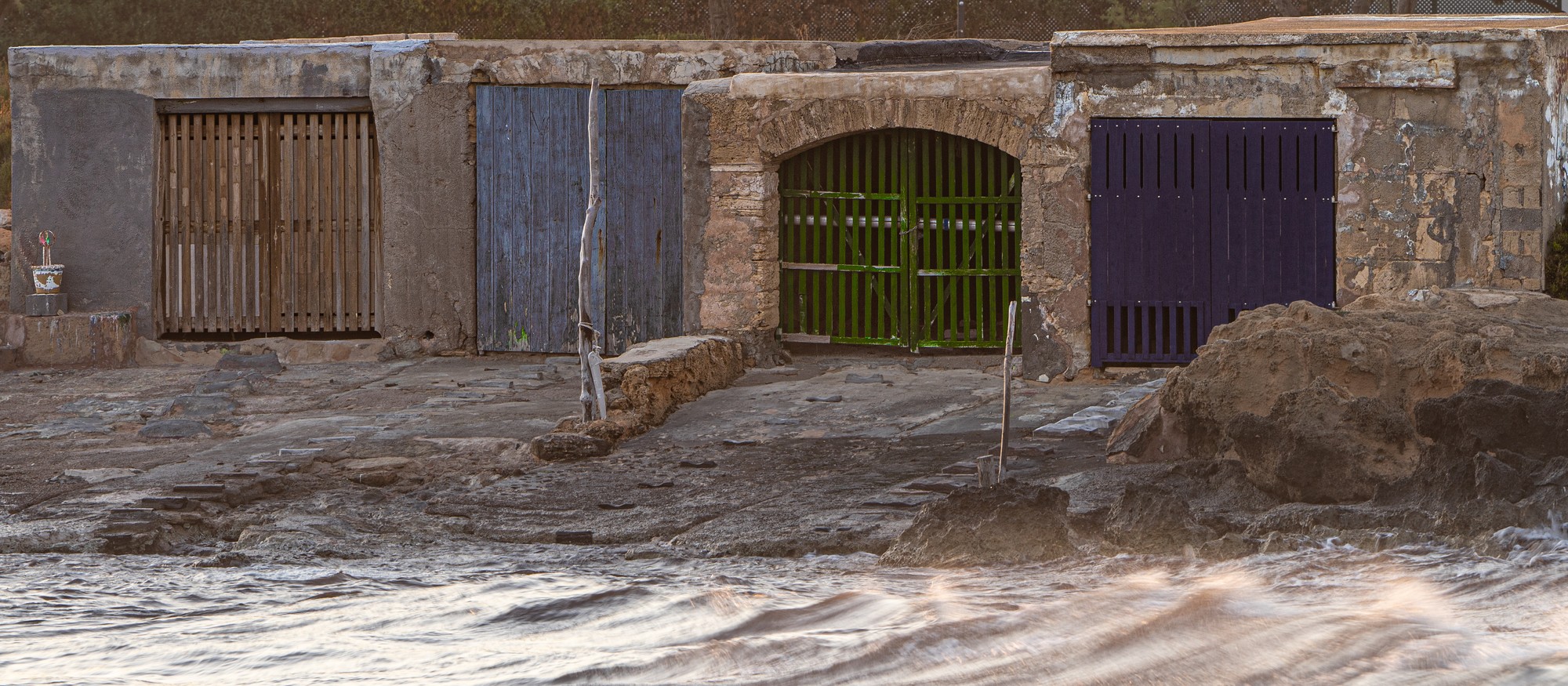
Sa Ràpita lies at the south-west edge of the municipality, on the border with Llucmajor. Its name comes from the Arabic rabita, a fortified hermitage, and a defense tower, the tower of Son Durí, was built here in the sixteenth century. At the start of the twentieth century, families from Campos put up small summer houses and boat sheds on the low, rocky shore; the community grew through the century, and a nautical club was built where the beach meets the rocky coast. On 16 July it celebrates the Mare de Déu del Carme with a procession at sea.
The beach of Sa Ràpita is about 1,100 meters long, with dunes and a pine wood behind it. Ses Covetes, further east, is a hamlet that grew in the second half of the nineteenth century as a summer retreat for families from Campos and Porreres. Sa Ràpita holds its own markets on Wednesday and Saturday mornings in Plaça de ses Palmeres, and TIB bus lines L508 and L518 reach it from the rest of the island. In what we see, both are coastal residential communities rather than resorts, with Es Trenc within walking distance along the shore.
Es Trenc and the Salobrar: a protected coastline
East of Ses Covetes, the sand continues as the Arenal d’en Tem, about 1,700 meters long, and then as Es Trenc itself. The whole stretch between Sa Ràpita and Colònia de Sant Jordi is the Es Trenc–Salobrar de Campos Maritime-Terrestrial Natural Park, which the Balearic government describes as one of the few beach-and-dune systems still preserved on the coast of Mallorca, with Posidonia meadows, dunes, pine and juniper woods and the wetland of the Salobrar, where flamingos gather. It covers 3,768.26 hectares, 1,441.06 on land and 2,327.20 at sea, and is listed in the Natura 2000 network as site ES0000037 (Govern de les Illes Balears; Xarxa Natura 2000). Inside it, the salt pans of the Salobrar cover 154 hectares, where sea salt is still harvested by hand, according to the town hall.
The park is reached from Sa Ràpita, Ses Covetes, Colònia de Sant Jordi and the Na Tirapel car park. In what we see, the paid car parks at Ses Covetes and Sa Ràpita fill early on summer days, and there is no shade in the park itself. Many residents keep Es Trenc for spring and autumn, when the beach is quieter and the light is softer.
Summer and winter in Campos
The town and its coast keep different calendars. In what we see, Campos itself barely changes with the seasons: the markets, the schools, the health center and the shops follow the same rhythm in January as in July. Its biggest festivities are in winter, for its patron saints Sant Julià and Santa Basilissa on 8 and 9 January, followed by the blessing of the animals for Sant Antoni on the Sunday after 17 January.
The coast moves with the weather. In summer, Sa Ràpita and Ses Covetes fill with families from Campos and the rest of the island; in winter, the shoreline belongs to the people who live there all year and to walkers on the dunes.
Who buys in Campos and Sa Ràpita
These are the profiles that buy in this part of the south-east:
- Couples who work remotely, often between 35 and 55, who want to live on the island all year with the airport close at hand.
- Buyers of a second home or an investment, drawn by the combination of farmland and coast.
- Buyers looking for a village house or a country house between Ses Salines and Campos, many of them German, Swiss or American, often working remotely.
What nobody tells you
The coast of Campos is not all sand. Much of Sa Ràpita’s shore is low and rocky, with the island of Cabrera on the horizon, and the long sandy beaches begin at its eastern end. The wind is part of life by the sea, so it is worth seeing a house on a breezy day as well as a calm one.
And the town has an asset most visitors never hear of: the Font Santa, a spring known at least since Roman times, which the town hall describes as the only curative thermal waters in the Balearic Islands.
What you need to know
How far is Campos from Palma airport?
About 30 minutes by road from the airport terminal in free-flowing traffic (OSRM on OpenStreetMap, October 19, 2026), almost all of it on the Ma-19. Sa Ràpita is about 38 minutes away.
When is the market in Campos?
On Thursday and Saturday mornings, according to the town hall. Sa Ràpita has its own market on Wednesday and Saturday mornings in Plaça de ses Palmeres.
Is Es Trenc in Campos?
Yes. The beaches from Sa Ràpita and Ses Covetes to Es Trenc lie in the municipality of Campos, within the Es Trenc–Salobrar de Campos Natural Park, which continues to Colònia de Sant Jordi.
Is there a high school in Campos?
Yes. IES Damià Huguet is the town’s secondary school, and Campos also has public primary schools and the Fra Joan Ballester school.
What is the difference between Campos and Sa Ràpita?
Campos is the inland farming town, with the markets, schools, health center and shops, open all year. Sa Ràpita is its coastal community, about 14 minutes away, with a beach, a nautical club and Es Trenc within walking distance.
Where we work
We work across Mallorca from our base in the south-east, where you can browse homes in Santanyí, homes in Ses Salines and homes in Campos. If Campos, Sa Ràpita or any other area is on your list, contact Villas y Fincas Mallorca and we will answer in English.
Updated October 2026. Driving times, measured on October 19, 2026 with OSRM on OpenStreetMap (car, free-flowing traffic) from Plaça d’Espanya in Palma, the airport terminal and the Ajuntament of Campos, vary with traffic and season; facts about the town, its markets, schools, church, coast and beaches come from the official website of the Ajuntament de Campos, those about the health center from IB-Salut, and those about the natural park from the Govern de les Illes Balears, all consulted in October 2026. The descriptions reflect what we see with our clients and are for general information only.